Showing posts with label life rights. Show all posts

Thursday, April 14, 2022

Opera Composer Seeks Rights to Deaf Poet's Life Story

Dear Rich: I am a composer looking to write an opera celebrating the life and work of British Sign Language poet, Dorothy Miles. I am struggling to find out how I may gain access to the rights to her life story, to compose a 20-minute work. Dorothy passed in 1993, and according to my preliminary research, she has no living descendants or relatives. Would you be able to advise me as to the best course of action in order to set aspects of her life story to music?
If you want to avoid lawyers and limit lawsuits, the best course of action is to base your opera on public records, existing news articles, and other public facts. 
Facts are free. The facts of Dorothy's life are free for all to use. This is true under U.S. and UK law. So, for example, you could dramatize the pertinent facts of Dorothy Miles's life - for example, how she was born with hearing but lost it after contracting meningitis, or how she fell in love with American sign language, and later combined British sign language and poetry, or how she suffered from depression and bipolarity and that led to her death. This use of public facts often provides the springboard for life-story dramatizations, as in the Dorothy Miles documentary, Dot.
Using Dorothy Miles's poetry and writings. If you want to use material taken from Dorothy Miles's books or poetry you will need to investigate its copyright status. Under U.S. and UK law, permission is required from whoever acquired rights from Miles after her death, perhaps Miles' niece, Liz Deverill, or perhaps the British Deaf History Society, the publisher of Miles' works. We couldn't find any copyright claims for Dorothy Miles in the Library of Congress (USA) so you may need to investigate copyright status at the UK's Intellectual Property Office. The rights that you seek for Miles's writing can be narrowly or broadly defined, for example, rights limited to the live opera performance, or rights to also distribute and stream the opera. Similarly, you would need permission to use video clips of Miles, for example, if you plan to display those clips in conjunction with your opera.
Living people. If you plan to identify and portray living people you don't need their permission under U.S. law unless you are trying to prevent three types of legal claims: right of publicity, defamation, or invasion of privacy. We don't imagine this will be an issue for you unless you are casting a living individual in a negative light or unearthing secret information about a private citizen. (We're not knowledgeable about British law but it's our understanding that the UK has no right of publicity.)
Adopting source material. If you're adopting source material, for example working from a biography and taking more than facts, you'll need a derivative rights agreement from the copyright owner. If you are using source material obtained directly from an individual portrayed in your opera, you may need either a release, a consulting agreement, or in some cases life-story rights. The latter agreement prevents lawsuits over fictionalization and releases the producers from any claimed injuries resulting from how the character is depicted. Hopefully, if you follow these suggestions, we'll soon see your opera on this list.  

Wednesday, July 3, 2013

Do You Need Life Rights Agreement if Subject is Deceased?

Dear Rich: Do you need to get a release or life rights agreement from the heirs of a deceased person to make a film about or a film including him/her? If a person could be considered a "public figure," does that make a difference? We're not sure what you mean when you say that your film would "include" the deceased person but if the subject of your biopic or documentary is a deceased public figure, you won't need a life rights agreement. A "life rights" agreement is really a way to block three types of lawsuits from happening: violations of privacy, publicity or defamation. (These agreements may also involve "cooperation" arrangements requiring a living person to cooperate with the filmmakers.) A deceased person has no privacy rights and cannot be defamed. In some states the right of publicity survives death, but documentaries and biopics typically don't trigger these rights -- unlike the sale of merchandise or endorsement of products, for example. Of course, there may still be a need for permissions for copyrighted materials such as photos, music rights --for example in the case of a biopic about a musician, or rights based on a published work such as a biography.
When do you need them?  Life rights agreements are most often needed if liberties will be taken with the facts about a living person, or if the person is not a public figure. Public figures cannot stop a life story documentary or biopic in the U.S. if there are no violations of privacy or defamation ... although they can always threaten lawsuits.  Check out our previous entry on life rights. (BTW, this site explains the life rights rules.)


Monday, September 24, 2012

Wants to Write Fictional Biopic

Dear Rich: I want to write a screenplay about a real life person. This person is deceased and has been the subject of several non-fiction books as well as magazine and news articles. My screenplay would not be directly based on a particular work but would be an original conception using incidents from the subject's life. The real name would be used, though. I was wondering if I could write my screenplay on spec and what, if any, copyright or life right issues I may have to deal with? Write on! A deceased person has no privacy rights and can't be defamed, so you're free to write what you want. However, the same would not be true about those still living. For living folks, you can avoid defamation claims by dealing in the facts, which are free for all to use. Also, you should avoid copying more than the facts from any published nonfiction works about the person. By the way, we explored life rights from another angle in a previous entry.
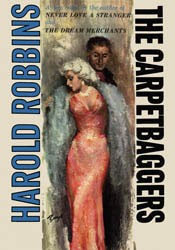
If the person is deceased and real names are not used  ...  In that case, you've shielded yourself from most potential liability -- as did Harold Robbins when he wrote The Carpetbaggers, based on the life of Howard Hughes (though some sources unconvincingly claimed it was based on Bill Lear, designer of the Lear Jet). 

Monday, June 11, 2012

Wants to Fictionalize Baseball Blogs

Dear Rich: I am in the process of writing a fictional novel. Part of the novel involves a romance with a minor league baseball player. Since I know nothing about life in the minor leagues, I've been reading baseball wives blogs. I was hoping to base some of my material on the material written in these blogs. Is this a case where I would need a life rights agreement from the writer of these blogs, or is it considered public domain now that it is written on the Internet? Most of the material from the different blogs is similar in content, and since the story is fictionalized, I think they would have a hard time relating the incidents in the novel to their own blogs. Again, I wouldn't take any specific information, just base my fiction off of their real-life incidences, and for only a portion of the novel. What do you think? We were going to say, "No worries," but we couldn't do it. We think 'No worries,' like it's cousin, 'No problem,' is just another responsibility-shifting language gambit. For example, when we announced that the coffee pot was empty at our local cafe, we were told "no worries," as if we shouldn't feel bad (or we should) for "worrying" about the lack of caffeine. A more traditional response would have been, "Okay, I'll bring you a fresh pot," (or the employee could have said nothing -- grumpy employees are fine with us). We believe 'No worries' is a subvariant of 'whatever' and that its  Australian-U.S. transmutation is a result of a misreading of Meher Baba (who did incorporate responsibility).
Right, you had a question. It's fairly common for novelists to do what you're doing -- fictionalize anecdotal material from true life stories. The case law on the subject leans heavily towards permitting fiction writers to use facts and stories from real life.  Generally, there are two things to keep in mind if you want to be free of hassles.
Avoid using material in a manner in which a specific person can be identified from the retelling. Changing settings, names, dates, etc. can all prevent someone from making a claim that readers identify the characters with specific individuals which could in turn give rise to claims of defamation (if the story weren't true) or invasion of privacy. For example, you are certainly free to create an evil antagonist in your novel who is an ex-hall of famer, owes money to the IRS and is trying to buy a baseball team. But you shouldn't set the story in San Diego, name the character Gwynn or Tony (or something similar) and have him team up with a movie producer. This article explains how to put distance between your fictional character and a real life counterpart.
Rewrite the adventures so that that you only borrow the underlying facts. Avoid claims of copyright infringement by not lifting the language or unique expression provided by the blogger (not merely the anecdotal material or underlying facts). Check out this article for more on copyright, novels and facts.
Animated Gif Dept. Thanks to our readers for finally telling us to turn off the flashing GIFs (sorry, but we need to keep the CLA banner ad on for a few more weeks). Who knew there were government guidelines?
.

Thursday, May 24, 2012

How Much is Paid for Life Story Rights?

Dear Rich: What compensation is typically given to the subject of a life story from the proceeds of the book and/or movie? Do they have rights to receive any? You don't always get paid just because someone creates a book or movie based on your life story. For example, no paychecks were written to Maggie Thatcher, George Bush or Serge Gainsbourg for their recent biopics (all good films btw, though the Dear Rich Staff especially loved Serge's story). If a story is about a public figure and can be told based on public records, existing news articles, and other public facts -- for example, as in this film -- then it's unlikely that the filmmakers will seek rights from the parties depicted in the film. Payments for rights are more likely to be made in films such as The Blind Side involving private figures and for which the cooperation of the depicted parties is required (such agreements are sometimes referred to as Cooperation Agreements, Consulting Agreements, or Life-Rights Agreements). When permission is sought, it is usually to prevent three types of legal claims, right of publicity, defamation, and invasion of privacy. Often these deals permit fictionalization and release the producers from any claimed injuries resulting from how the character is depicted.
How much is paid? According to Dina Appleton's book, Hollywood Dealmaking: Negotiating Talent Agreements, $25,000 to $100,000 is typically paid for TV life story rights, and between $100,000 and $250,000 is paid for motion picture life story rights. Sometimes a fraction of this payment (for example, 10%) is paid as an option and the remainder is only paid if the TV show or film goes into production.
P.S. Check out our previous life-rights post.

Monday, March 19, 2012

Life Rights Agreement, Releases, and Permission to Tell a Life Story

Dear Rich: For the past couple of years I’ve been working on a non-fiction book about the Holocaust, specifically about two guys who escaped from a concentration camp during World War II and lived to tell the tale. I have done many interviews with them and they support this project and have given me verbal permission to use their story in this book. Nonetheless, I would think that both they and I would be better protected (from literary interlopers?) if we all signed whatever the document is called that gives me the exclusive right to tell this story. I'm not sure what the agreement is called -- a “life rights agreement" or “unlimited – or limited – personal release"? The agreement, as I see it, would also include ancillary rights, such as possible movie or television or other deals in the future; and in those cases, I would think that you do need some sort of legal release from the subjects of such a work. Is there a boilerplate form for this? Is there a form in one of your books? Or should I consult with an attorney? The document you'll need depends on how far you plan on taking this story. Below, we've outlined the range of agreements and what they accomplish. These documents may have different names, and many are referred to as "life rights" agreements but don't place all your trust in the title of an agreement; check that it contains the provisions that you require.

You are writing a nonfiction book about the subjects or making a documentary film and that's all you plan to do.
You would need a release from the subjects in which they agree not to sue you for defamation, invasion of privacy, right of publicity, or copyright infringement (in the event that the subject gives you permission to reproduce a copyrighted work). Here’s more about releases and here’s an article about when they are required. An unlimited release would probably do the trick.
You are writing a nonfiction book (or making a documentary film) but you also want to make sure that you have the exclusive right to do so and that the subjects won’t contribute to a competing book or documentary.
You would need the release mentioned above along with an exclusive grant that’s specifically geared to the project you’re working on – that is, exclusive rights to use the person’s persona, materials, and copyrightable works for a nonfiction book or documentary movie. An exclusive grant that limits cooperation with others usually requires a more substantial payment than an unlimited release (which may be granted for nominal payment).
You are writing a nonfiction book or making a documentary film and you would like exclusive rights/access to the subjects as well control over subsequent projects that may flow from your initial project. For example, you seek to control the rights that would be needed if a producer reads your book and wants to make a TV special based on it or a fictional film derived from it. 
This is when you need a life rights agreement signed by the subjects (sometimes called a “depiction agreement”), and you may also want to acquire “adaptation rights.” (This article explains some of the issues.). The life rights agreement is usually based on options – for example, you have the right to exercise an option for certain rights within 18 months or two years and if you don’t, those rights revert to the subject. Life rights can involve a wide range of issues including remakes, sequels, television series, merchandising, live stage and novelization rights. Here’s an example of a Life Rights agreement and here’s an example of a life rights option agreement for specific rights. (And here’s one for sale.) As usual, caveat emptor as we can’t vouch for accuracy or enforceability! An attorney’s help would best preserve your rights. Because you’re in the Bay Area, we would recommend contacting California Lawyers for the Arts.