Showing posts with label defamation. Show all posts

Tuesday, July 27, 2021

Fictionalizing a Science Experiment

Margaret Mead, anthropologist

Dear Rich: I'm writing a novel based on a scientific experiment that was well-publicized at the time. There has since been a documentary on the subject, as well as numerous newspaper articles. The head scientist is now deceased. However, the woman who ran most of the study is not. Some of her diaries of the experiment were also published in 1969. I'm reimagining the story from her perspective, giving credit to her and her work in the acknowledgments. It’s similar to Lily King's book, Euphoria, based on Margaret Mead's experiences. I’d also like to take the experiment as a jumping-off point, changing the names and locations and key details, though not the overall events. I’d state that I used the original experiment as inspiration but that no character was based on a real person, etc. Will I get in trouble? 
Probably not. Courts give novelists wide latitude when creating characters from real people and when fictionalizing true events. Still, fiction can trigger a lawsuit in three ways: if you defame/libel someone (that is, you harm someone by publishing something untrue), if you invade someone’s privacy, or if you infringe someone’s copyright.
Defamation and invasion of privacy. For purposes of defamation and invasion of privacy, you only need to be concerned with living people. The dead can’t suffer these types of injuries. Also, you probably don’t have to be concerned if your characters are based on public figures because the first amendment gives novelists a lot of leeway. Typically, non-public figures who may be recognizable  precipitate most lawsuits. Lower your chances of a lawsuit by changing names, physical characteristics, and other identifying features of the real people upon which the characters are based (and here is some additional guidance).
Copyright infringement. You're free to use facts and concepts, but fiction authors get sued when they lift chunks of descriptive material, or when they borrow characters from others, or when they use unpublished materials. This may be an issue if you borrow lengthy sections from the study manager’s diary, assuming it’s protected under copyright.
PS Dept. If you secure a publishing agreement, the agreement will require you to guarantee that publishing your book won’t result in a lawsuit (a principle known as indemnity). Before signing a deal, you should have your book vetted by a literary attorney.

Monday, May 16, 2016

Are Teachers Public Figures?

the "involuntary public figure"
Dear Rich: I worked for the public schools in Minnesota and after observing many things I didn't like, I resigned and then wrote an expose that I now sell for my Texas based business. This expose discusses things like union monitoring and teachers lying. A former friend said this might get me into trouble since the law might not consider these school employees "public figures." But don't newspapers publish stories of school employees' misdeeds all the time? Also don't I have a right to tell taxpayers what transpires in our schools? 
You can speak freely, but if you make false statements that damage another person's reputation, that person can sue you for defamation. If you are sued, you're more likely to prevail if the person suing you is considered a public figure -- for example, a celebrity, sports figure, politician, or a public official or someone involuntarily placed in the public spotlight (someone accused of a high profile crime). That's because a public figure would have to show that you published your statements with "actual malice" -- that is, you knew the information was false and you published it anyway. Public figures are held to a higher standard because they are expected to have thicker skins.
Are school employees public figures? Courts in a few states -- Arizona, Connecticut, Illinois, Kansas -- have ruled that teachers are public figures (public officials); and a few states have ruled that they are not -- California, Florida, Texas, Maine, and Virginia. Some lawyers contend that the teacher should be considered a private figure unless serving in an official capacity such as a principal or school superintendent; others have argued that teachers should be classified as public officials.
When newspapers publish stories of teacher misdeeds ... they're typically repeating criminal allegations. In other words, they're reproducing charges that are a matter of public record (and at the same time, the arrest may make the teacher an "involuntary public figure.") If a newspaper reports on a teacher's misdeed that is not yet a criminal charge, the newspaper usually has sufficient evidence to prove the truth, an absolute defense to defamation. That's fine for newspapers with the funds (and insurance) to defend these battles. But no matter what rights you may have, the expenses and risks of defamation claims are serious enough that you may want to reevaluate your reporting.
P.S. Dept. Besides defamation, you may also want to consider whether your disclosures could trigger an invasion of privacy lawsuit.

Wednesday, April 27, 2016

Why Can't I Post Erotic Fiction About a Real Celebrity?

Dear Rich: I wrote a short satirical erotica series about a C-List public figure. She already knows as she mentioned me in an online magazine article. One digital publishing platform removed these works because "publishing erotica regarding living people can result in both you and [the publisher] being sued by the person in question." I want to believe I have a First Amendment right to do this as didn't "Hustler Magazine vs. Falwell" affirm this?
The first amendment and freedom of speech rules limit restrictions by the government, not by private businesses like Apple, Amazon or other digital distributors. So if your publication violates the terms and conditions of Kindle or iBooks or some other digital publishing platform, it doesn't really matter what the Supreme Court said in Hustler Magazine v. Falwell, you're likely to get bounced without any recourse.
What did the Supreme Court say in Hustler Magazine v. Falwell? In the Hustler case, the Rev. Jerry Falwell was the subject of a crude sexual parody that described Falwell having sex with his mother in an outhouse. Falwell sued Hustler and its owner, Larry Flynt, for defamation, invasion of privacy and intentional infliction of emotional distress. The invasion of privacy claim was dismissed, and a jury ruled against Falwell on the defamation claim because the parody was clearly fictitious and because Falwell was a public figure. (Public figures are presumed to have thicker skins than us mere mortals and have a harder time prevailing in defamation cases because of what is known as the actual-malice" standard.) But the jury awarded Falwell $150,000 damages for intentional infliction of emotional distress. The Supreme Court in an 8-0 decision reversed the emotional distress award determining that it was basically an attempt to make an end-run against defamation standards -- that is, if there was no defamation, there should not be a damages award. The Hustler decision (unpopular with some legal scholars) would apply to your case only if the C-List celebrity sued you for defamation.
P.S. Dept. The trial was portrayed in The People v. Larry Flynt, a first-rate, first amendment movie with a super cast.
BTW Dept. Larry Flynt and Rev. Falwell eventually became friends.

Monday, July 13, 2015

If You Write It, They Will Sue

Dear Rich: I wrote a novel that is set on the city street I used to live on. The year is 1968. It follows the interaction of a dozen kids, ranging in age. At some points the teasing between the kids gets very intense: “Your mom’s a tramp. Your dad left two years ago and you don’t even know where he is,” etc. The book is essentially a comedy and all of the characters, including the one drawn from me, are presented in a broad amusing fashion. The book will include the standard fiction disclaimer on the copyright page. I have set the novel in a different city, changed all the characters names, physical descriptions, parents jobs, etc. No one would ever read my book and guess that these people were the inspiration for the characters in the book. However, there are about forty of us from that original street who still keep in touch through Facebook and my problem is that if any of those forty people ever read the book they would immediately recognize the street, and they would know who wrote the book.  Although most of them would enjoy the book, I am afraid that over time a few people might feel that they are literally portrayed and might take offense. In short, if I self publish this book, am I setting myself up for a defamation or invasion of privacy lawsuit? 
Most courts tend to provide authors with some leeway when depicting characters derived from real life. Although this freedom is sometimes framed as a first amendment defense, it more likely results from the complaining person's failure to prove his or her case. For example, if an unhappy childhood friend sued you (known as the plaintiff in legal jargon) your friend would have two substantial hurdles. First, the plaintiff must prove that the character actually depicts the plaintiff (an analysis that needs to include the dissimilarities as well as the similarities). Second the court must be convinced that you made a damaging false statement or portrayed the plaintiff in a false light. Some courts have ruled against novelists (blame it on this 25 year old case), but if you haven't completed your novel, there are simple ways to avoid the sound of the judge's gavel.
BTW Dept. (1) The right of publicity -- another claim sometimes made in these situations -- is a hard  argument to win against a novelist. (2) You cannot defame or invade the privacy of someone who has passed on.

Tuesday, May 20, 2014

Can Political Opponent Use Cake Throwing Photo?

Dear Rich: I have a question related to misuse of a photo from a personal profile on Facebook. I have a friend who is running for a public official seat. Someone took pictures of my friend in a party where someone throws a cake on his face. His opponent used this photo in a political ad in another context. Does my friend have a case of invasion of privacy, copyright infringement or defamation? It's not likely to be defamation. You're defamed when someone makes an untrue statement that injures your reputation ... and we're not sure that a face full of frosting ruins a politician's reputation. Politics is a contact sport and free speech reigns supreme. It's also probably not an invasion of privacy unless perhaps the photographer was trespassing at the cake-throwing event.
Copyright. If the photograph was reproduced without authorization, the opponent may have committed copyright infringement. The copyright owner -- probably the photographer -- could bring that claim (not your friend). Copyright lawsuits in political campaigns are used strategically, or to distance a copyright owner from a candidate. Some political infringements are excused as a fair use and most are resolved long after the campaign has ended.

Thursday, August 29, 2013

Wants to Post Debt Collector Voicemail

Dear Rich: I'm a blogger and want to post a voicemail that a debt collector left on my answering machine. Can I get in trouble for posting that? Maybe, but we think it's unlikely.
Consent to recording. The first legal issue is whether the recording was made with consent. By its nature, a voicemail implies consent because the caller knows that a recording is being made of the message. If it was a recording of a conversation (not a voicemail), you would need one or both parties consent, depending on in which state you're making the recording. For example, California is a two-party consent state so both parties would have to consent to the recording.
Have you "injured" someone? Publicly posting the debt collector's voicemail could possibly trigger tort claims. It's possible that the caller may defame some third party, or alternatively, when you write about the caller, you defame the debt collector. It's also possible, though a little farfetched, that the debt collector could claim you have caused an invasion of privacy (which would be a strange role reversal). Your liability can be limited by making sure that the individual speaking, the employer (the debt collection company), or any of the parties involved, are not identified. In any case, the odds of a debt collector proceeding with a lawsuit in this situation are slim and chances of success for the collector's potential claims don't seem that good.
What about copyright? Who owns the copyright in a recorded phone message? Most likely the debt collector although we agree with attorney Emily Bass that there is no "clear answer." So, assuming there is sufficient originality in the voicemail, the debt collector could claim copyright infringement. Like the tort claims mentioned above, this would be a long shot for the debt collector.

Monday, September 24, 2012

Wants to Write Fictional Biopic

Dear Rich: I want to write a screenplay about a real life person. This person is deceased and has been the subject of several non-fiction books as well as magazine and news articles. My screenplay would not be directly based on a particular work but would be an original conception using incidents from the subject's life. The real name would be used, though. I was wondering if I could write my screenplay on spec and what, if any, copyright or life right issues I may have to deal with? Write on! A deceased person has no privacy rights and can't be defamed, so you're free to write what you want. However, the same would not be true about those still living. For living folks, you can avoid defamation claims by dealing in the facts, which are free for all to use. Also, you should avoid copying more than the facts from any published nonfiction works about the person. By the way, we explored life rights from another angle in a previous entry.
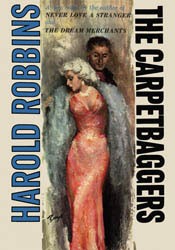
If the person is deceased and real names are not used  ...  In that case, you've shielded yourself from most potential liability -- as did Harold Robbins when he wrote The Carpetbaggers, based on the life of Howard Hughes (though some sources unconvincingly claimed it was based on Bill Lear, designer of the Lear Jet). 

Tuesday, October 25, 2011

Publishing Personal Stories: What Permission is Needed?


Dear Rich: I am creating an online platform for people to share their personal stories that I am going to publish. What kind of legal document do I need to put together? Personal stories? We have a personal story we'd like to post. It's about a blogger who ordered some T-shirts but there was a problem making the registered symbol -- ® -- appear properly on the back (we're not assessing blame just yet) and so the blogger spent a lot of money on shirts with a misplaced ®. It started as a sad story but after some exchanges with customer service, we're starting to think that it will have a happy ending.
Right, you had a question. The good news is that your site can avoid most liability by abiding by the Digital Millenium Copyright Act (which shields you from claims of copyright infringement) and the rules set forth in Section 230 of the Communications Decency Act (which shields you from liability for statements published by others). Keep in mind, you must follow the rules for the shields to work. In general, your concerns for posting personal stories are outlined below:
  • Copyright: You should obtain an assurance that the work is original to the author and that the author has the right to permit publication and that the author grants you the limited right to post it online. If you want more rights -- say to publish a collection of stories in eBook format -- you should acquire those rights now. The same is true if you want the option for more rights. You should learn more about acquiring publishing rights 
  • Invasion of Privacy and Trade Secrets: Personal stories involve personal details. You need an assurance that the posting won't reveal any personal or trade secrets that will cause you to get sued.
  • Children's Privacy: We would suggest avoiding taking any materials from children under 13.  (You can seek an assurance that person submitting the story is 13 or older.) If you start taking information from children under that age, you'll need to deal with a law known as COPPA and that may not be worth the effort.
  • Defamation: Personal stories that include untrue statements about others could lead to defamation suits. You need an assurance there's nothing defamatory.
So, in summary, you need permission to publish and assurances that the publications don't violate any laws. These assurances and permissions can be bundled in a click-to-accept statement that the user must agree to before uploading the information. Any electronic method of assent that can be verified -- checking a box, clicking to accept, etc. --  will suffice.