Showing posts with label copyright. Show all posts

Saturday, December 9, 2023

Kick It! Marital Arts, Choreography, and Copyright

Dear Rich: I am writing a martial arts mobile phone app. The app includes text describing the martial arts movements and choreography illustrating the moves. The martial arts forms have been relatively unchanged since the 1970’s. From what I can tell, the movements have been treated like they are in the public domain, without copyright or trademark notices. Is this accurate?
The various martial arts schools use combinations of choreographic moves called "forms" or "kata" that date back centuries. So, most of what you want to use is in the public domain due to old age, and you can perform or duplicate the moves and describe them in your own language. Alternatively, you can use language from a publication that is in the public domain. You're free to use any text or imagery published before 1928. And you are likely free to use text published before 1964 (probably in the public domain). 
Limited ways to express yourself. If there are limited ways to describe a martial arts movement, you have more freedom to use similar language (known as the "merger doctrine"). For example, if there are limited ways of describing a double-leg takedown (defined as a "takedown where you grab the opponent’s legs while pushing their upper body forward, forcing them to fall back.") you would likely be excused for using the same language in your app.
Here are some things to avoid:
  • Using text or imagery taken from works published since 1964,
  • Taking imagery from a website unless the website provides a Creative Commons license or has dedicated the image to the public domain,
  • Using clips from martial arts videos without permission or
  • Using the name of any martial arts fighter, martial arts program, or martial arts studio if it implies endorsement or association.
New martial arts schools may claim copyright and trademark rights. For example, American Kenpo, founded by Ed Parker in the 1950s, owns multiple trademarks and copyrighted instructional manuals, books, and audio and visual digital content. Also, remember that although a martial arts studio may claim copyright or trademark rights over public domain titles and movements, that does not always make it so. 

Tuesday, January 24, 2023

Does Renewal Apply to Both Published and Unpublished Works?

Dear Rich: A song was first copyrighted in an “unpublished” form in 1950, and subsequently, in the same year, the same song was copyrighted in “published” form. The published registration was renewed in a timely fashion. The unpublished copyright was not renewed. Does the renewal of the published work protect the rights of the composer? Or does failing to renew the unpublished version put the song in the public domain?
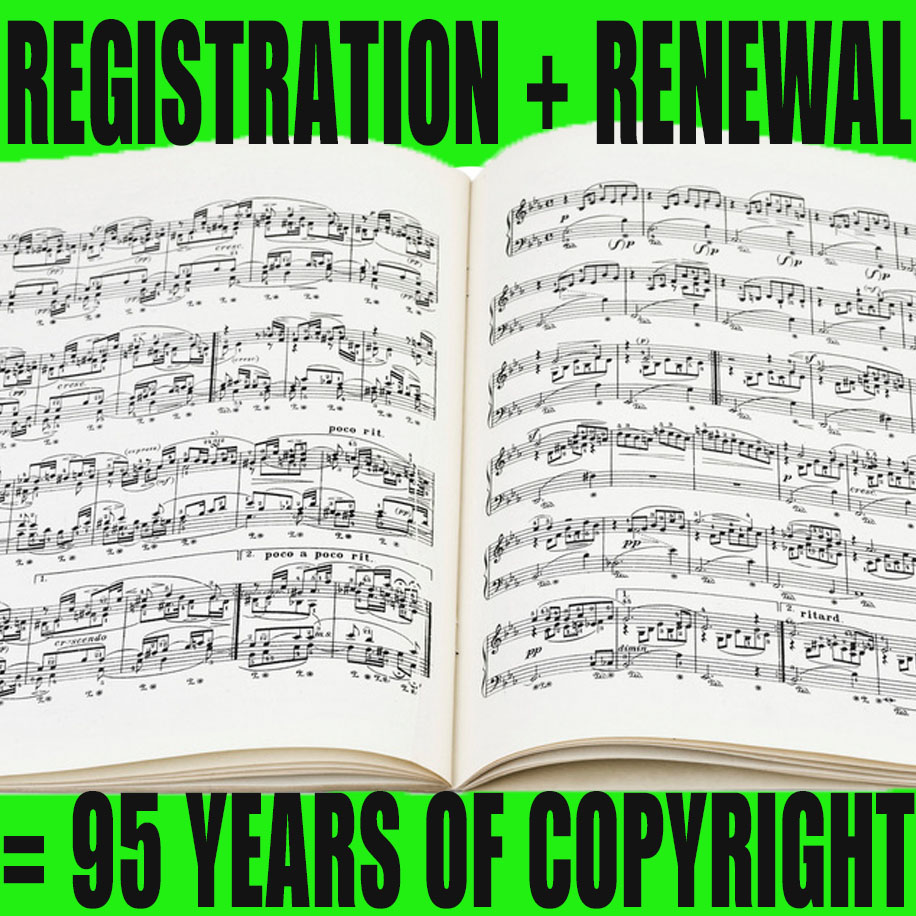
If the copyright was renewed, it’s protected for 95 years from the first publication. If the music was published in 1950, it wouldn't become public domain until 2045. It doesn't matter that the unpublished version was never renewed unless the unpublished version contains material that differs from the published version. For example, if the unpublished version contains an intro that's not present in the published version, the intro would be public domain.

Saturday, March 5, 2022

Reproducing a Photo of a Statue

Dear Rich: As I understand copyright, if I visit a park and take a photo of a statute, I own the copyright to the photo and I can use it in a book. But if I open a magazine and take a photo of an illustration, I still own the copyright to the photo, but using it in a book would be a copyright violation. Why is it different?
Actually, they're not different. It's true you own the copyright in both photos but your copyright only extends to what you contributed, for example, the choice of subject matter, composition, lighting, etc. Your copyright does not extend to the statue, itself. If the statue and the image are protected by copyright, it would be a violation to reproduce them in your book (unless permitted under fair use principles). And, if you register your photos with the Copyright Office, you're required to disclose (and exclude) those items in your application because they are not original to you.
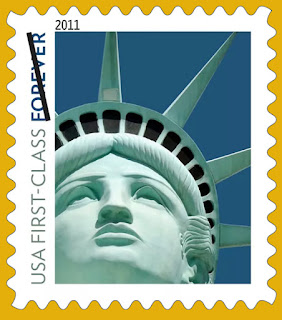
Photos of a statue. In some countries, for example, Canada, art that is permanently situated in a public place or building can be photographed and reproduced without permission. Not so, in the U.S. where unauthorized reproduction of a photo of a public statue can be costly -- as the U.S. Postal Service learned. (The USPS mistakenly used a photo of a Las Vegas imitation of the Statue of Liberty -- one with "a more contemporary, fresher face than the original" -- and the sculptor of the Vegas statue sued and recovered $3.5 million.) The reverse principle -- it is a violation of copyright law to create a sculpture of a photograph -- has also been followed by the courts.
In the real world. Few photographers of publicly-viewable statues need to worry about copyright lawsuits. The incidental appearance of a statue, for example, in a travel photo, a news photo, or an educational lesson is not likely to trigger a dispute and if it did, the reproduction would probably qualify as fair use. In addition, many statues are in the public domain and do not require permission (despite what some owners believe).


Tuesday, June 29, 2021

Wants to Use Lyrics and Tweets in Musician Biography

   
We love musician biographies and memoirs.
(One of our favorites is 
Playing the Bass
With Three Left Hands
 by Will Carruthers.)
Dear Rich: My non-fiction historical biography of a musician examines each album, song, and concert, in a review/analysis format. What are the fair use guidelines for lyrics? Can I use two lines? What if I need to use three lines? Also, what are the legalities regarding tweets inserted to clarify points that I am making in the biography? 
If you're using the lyrics for purposes of criticism and commentary and you’re only reprinting two or three lines, you can rely on fair use as a defense. (Caveat: The copyright owner can still sue you, but you would prevail in the lawsuit.) If you’re inclined to seek permission, the fees for reprinting lyrics in a book are not fixed. (We've provided a "lyric permission" letter in our permissions book). You can research song owner information at Harry Fox or check Hal Leonard, a company that often grants print permissions.
Reproducing tweets. Copying individual text tweets is unlikely to trigger a lawsuit unless the tweeter can demonstrate sufficient originality and creativity to qualify for copyright protection (a difficult task when considering the brevity of tweets). You’re more likely to run into problems when reproducing long threads of tweets or if you post a collection of tweets by one person. This article provides the basics on tweets and copyright.

Saturday, March 16, 2019

When Beatmakers Collaborate

Dear Rich: If a beatmaker gives me a song to write lyrics to, my understanding is that based on their intent to have words created for the beat we split the copyrights and publishing equally. Is my understanding correct? What happens when the beatmaker gives the same song to another person to write a rap or lyrics to it? Can they legally do that?
Your understanding of copyright is correct. Assuming you don't have a written agreement to the contrary, and assuming you both intend to merge your contributions into one song, you and the beatmaker are considered co-authors of a joint work and share in the copyright of the whole song equally. (Note: it's not always clear as to whether "beats" alone qualify for copyright protection.)
Multiple lyric versions. Songs can have more than one lyric -- for example "Love Me Tender/Aura Lee," or "Mr. Sandman/Mr. Santa." Although it may complicate ownership, the beatmaker can solicit different lyrics for the same instrumental tracks. These may be separate joint works, or derivatives of your joint work, depending on the timing of events (whose song is completed and recorded first) and the significance of your contribution (whether your contribution to the song is substantial). The most straightforward course of action is to document your arrangement with a co-writer agreement -- a simple document setting forth the intent of the parties, what the ownership percentages are, and signed by both parties. You can find more information about co-writer agreements at our LinkedIn Learning Course: Music Law: Copyrighting a Song.

Tuesday, February 19, 2019

Can I Post Performer's Image Without Consent?

Photo by Mark Marek Photography 
Dear Rich: I am building a webpage where visitors can register how much they would pay to see an artist's concert. Would the use of an artist's image without their consent be considered fair use?
You probably don't need the performer's permission (more on that later), but you would need permission from the owner of the copyright in the performer's photo. That could be the performer, but more likely it's the photographer, a stock photo business or a record label (or management).
Is it fair use? Your use of the pictures doesn't seem transformative, and whether your site sells tickets, or just operates as a virtual tote board of performer popularity, it's a commercial venture. These factors weigh against a finding of fair use.
But no matter ... You can get by without seeking permission by using public domain or Creative Commons images or promotional photos supplied by record labels or a band's management. Another pre-cleared source of imagery is Wikipedia where the provenance of each photo is provided by double-clicking on the Wiki picture (that's where we got the photo of Motörhead, above). If you're especially concerned about disputes, pay attention to any license limitations connected with the license -- for example crediting requirements.
Right of publicity. Aside from copyright, another legal concern is the right of publicity -- the legal right to prevent the unauthorized use of a person's image for purposes of endorsement. This shouldn't be an issue unless you are using a performer's name or image to promote your website, for example in banner ads.
Hassle factor. You may wonder -- after sorting through this legal maze -- how some sites get away without asking for permission when they use copyrighted photos. Three factors make that possible: (1) the owner isn't aware of the use; or (2) the owner doesn't consider the matter worth pursuing; or (3) the owner sees a benefit to the use and doesn't want to remove it.

Wednesday, November 21, 2018

News Aggregator Chased by Photographer

Dear Rich: I run a news aggregator that uses RSS feeds to pull in a headline, a small photo and a few lines of text. We pull content from maybe 2,000 sources. Visitors who want to read the full story click on a “read more” button and get taken back to the original source. I recently have been sued by a photographer whose photo appeared on our site. We gave the original source credit for the story and the photo, and of course we provided a link back to the original site. This photographer says I didn’t have the right to include her photo on our site. Now it looks like we might be heading to court. If I truly have done nothing wrong and if what I’m doing is considered fair use – whatever that is – why should I be punished or even subjected to all this? My site is relatively new and I have put significant money into the enterprise. I need time to build this up, and now I’m being threatened. I have tried to reach the publication that published the photo to see if it can shed more light on this, but nobody answers my emails or voice messages. It’s a big publication; it’s hard for me to believe they didn’t have the rights to publish on the Internet.
We don't believe it matters whether the big publication had permission to publish the photo. If they did have permission, it wouldn't extend to you. If they didn't have permission, you're still in the same pickle.
So, how do aggregators do it? Not all news aggregators operate from an identical model but it's generally considered "safe" -- meaning you won't hear from any lawyers -- to publish only the headline, a link back to the news source, and perhaps some original text describing the content (without reproducing it). How do news aggregators like Apple, Google and Yahoo! reproduce photos and text? These aggregators pay for permission to reproduce publications like the New York Times and the Associated Press. They don't pay smaller news sources and these publications don't object to being aggregated because they reap the benefits of link backs that result in more traffic. As you can see, a free lance photographer who reaps no financial or linking benefit from aggregation may find it more lucrative to chase infringers, especially small companies that can't afford to fight.
Making a case for fair use. We assume you used the complete photo. And we assume you didn't use it for a transformative purpose. Both of these factors make it hard to argue for fair use. If you had displayed a thumbnail of the photo, you may be in a better position. In a 2007 case, a court ruled that Google’s thumbnail reproductions of images from an adult men’s magazine website were permitted as a fair use primarily because the purpose was transformative -- the thumbnail was used for indexing and searching. (See also this 2003 case.)
What should you do? First get proof that the photographer does own the copyright. Obtain a copy of the registration and look for contradictions -- for example, she assigned the photo copyright to someone else, or the photo was a work made for hire. Second, run an image search for the photo. You should contact the websites who have also reproduced the photo to learn if they have been hassled and if so, what was their resolution?  Third, consult with a copyright attorney and ask for an estimate of your odds and your costs. (Be wary of Pyrrhic victories). Also, check your business insurance just in case the policy covers copyright infringement.

Tuesday, November 13, 2018

How to Donate Book Royalties

Dear Rich: How do I go about donating a portion of royalty proceeds from a book to a charity? 
If your publisher is amenable, the easiest method to donate royalties is to request that your publisher pay a portion of your royalties directly to the charity. You can formalize the payment (or payment system if you wish to cap payments or limit them to a specific time period) by including the details in your publishing agreement or in an amendment.
If the publisher isn't willing to make separate payments to the charity, you can either pay the charity directly from your royalty payments, or you can contact the charity for assistance. Many nonprofits have a mechanism for receiving royalties while the author is alive (or as "legacy gifts" following the author's death).
Taxes. The practice of donating book royalties to nonprofits was popularized in the 1980s when authors and publishers began to reap the marketing benefits of being aligned with a social cause (for example, a portion of royalties for a Rock Hudson biography was donated to an AIDS foundation). Some editors and authors believed the practice would also provide tax benefits. In reality -- unless you assigned the book's copyright (which means you give up ownership of your work) to the charity -- there may not be any tax benefits from donating a portion of the royalties. For example, if your publisher pays 75% of royalties to you and pays 25% to your charity, you would still be taxed for the full 100%. You can receive an income tax deduction for your donation, but this deduction can't be more than 50% of your adjusted gross income for the year -- a formula that may not provide much tax relief.

Monday, October 9, 2017

Fail to Register Song - Lose Copyright?

Dear Rich: I read that the government is planning a song database and songwriters who don't register will lose all copyrights. Can you explain?
The Transparency in Music Licensing and Ownership Act (TMLOA) is a proposed law that, should it be enacted, would create a song database run by the Copyright Office. Supposedly, the database would make it easier to locate the song owner or PRO. Note:  A song owner does not have to register copyright to provide information to the TMLOA database.
Failing to register. A song owner who fails to register will not lose copyright. The "punishment" for not registering is that if the song owner sues a store, restaurant, web radio, or other industries mentioned in the TMLOA, the song owner can only collect the actual damages, not the statutory damages or attorney fees. The underlying effect of the proposed law would be to discourage lawsuits against various industries. The TMLOA is not considered particularly favorable to song owners, and has been characterized as "an all-stick, no-carrot deal."
Bottom line dept. A few things to keep in mind: (1) ASCAP and BMI are cooperating on their own publicly accessible database in order to discourage passage of this legislation. (2) Regardless whether the legislation passes, any song owner who doesn't file for copyright before infringement occurs, cannot collect statutory damages. (3) Considering the track record for proposed copyright legislation, the cost and technology required, as well as the rumors spreading about the TMLOA, the odds disfavor passage of this partisan business legislation.

Saturday, May 13, 2017

Can We Use Ancestry and DNA Information in Book?

19th Century imagery used by abolitionist organizations in
 their efforts to turn northern Americans against slavery. 
I’m helping two authors with a manuscript about their experiences researching their ancestors who were slaves. So they go back to the slave period and continue up to present day. I am unclear about the legal rights associated with certain material including: (1) publication of information found in public records, (2) publication of information from church records, historical society records, family bibles, etc. (3) publication of information gained through personal communication, other family members, community members, or fellow ancestry.com members, or others doing family research, (4) publication of information about DNA test result sharing on ancestry.com type sites. (The information is related to finding other relatives.) (5) publication of family photos taken by family/friends, (6) publication of information from personal communications, informal interviews. Relatives are named and identifiable. So their contemporary descendants can identify their ancestors. I am thinking they will want to inform family members, prior to publication, about the inclusion of information/photos in their forthcoming publication that relate to them.
There are sometimes moral and ethical issues when you start digging up the roots of the family tree. (Do you really want the world to know that your mother's grandfather was charged with indecent exposure?) As for legal concerns, here are four questions to consider:

  • Are you violating the right to privacy? Invasion of privacy can occur when private or embarrassing facts are disclosed about a living individual without relation to a legitimate public concern. This is referred to as "Disclosure of Private Facts." Dead people do not have a right to privacy. 
  • Have you fact checked any statements that could cause damage to a person's reputation? False statements can give rise to libel/defamation claims. For example, you falsely claim that a relative was born out of wedlock. As with privacy, the dead cannot be defamed.
  • Are you violating copyright law? Copyright doesn't protect facts or ideas so you'll have no problems publishing facts found in public records, culled from historical and church records, or provided by an interview subject. Copyright doesn't protect unpublished works whose authors died before 1947 or published works that were published before 1923. You can obtain more details on copyright expiration at the Cornell website. If you interview someone and want to use more than facts -- for example several paragraphs of text -- it's usually best to use an interview release. If you know who holds copyright on a copyrighted photo it's prudent to obtain a permission agreement. You do not need a photo release from the people pictured in the photos. Finally, if challenged, you have fair use as a possible defense. 
  • Do you have permission to reproduce DNA results? If the DNA test taker consents to publication, you are safe publishing DNA test results. Sites like ancestry.com have privacy policies that allow you to reproduce your test results.
SaveSave

Tuesday, August 2, 2016

E&O Insurance Needed for Documentary

Reed Bontecou’s Portraits of Wounded Soldiers (1865)
Dear Rich: I have been working on a historical documentary for about two years now and just started submitting it to film festivals. I have about 50 historical still images in the short film. These images are all from 1860-1900. I have confirmed with film festivals that I should be okay on all rights. However, this piece is now being considered to be televised nationally and I’ve been asked for further confirmation on rights. In addition, I am now being told I need to buy E & O insurance and I’m not sure where to go for that. I created this piece with all of my own time and money. They are not offering me any money to televise it and I’m supposed to pay for the insurance myself. Any thoughts you have on the rights and insurance would be greatly appreciated.
Assuming the photos were published before 1923, (or if unpublished, the photographer died before 1946), the images are in the public domain. In other words, these photographs are free for you to use without permission. However, simply explaining that to a television station is not enough. The company will want you to back that up with insurance, and the insurer may want to consult with an attorney before issuing the policy.
What is E & O insurance and why do you need it? Errors and omissions insurance doesn't just cover claims of copyright infringement. This media liability insurance also protects against claims for right of publicity  and invasion of privacy, trademark infringement, and a few other media-related problems. It is extremely unlikely you will obtain distribution deals or television broadcast without this insurance in place.  According to Michael C. Donaldson's Clearance & Copyright, 4th Edition: Everything You Need to Know for Film and Television, the cost of insurance for a documentary ranges between $3,000 to $10,000 and most policies are issued by three insurers: Axis Pro, Hiscox, and Chubb. We recommend you invest in a copy of Donaldson's book as it explains the nuances of policies, how to apply for E & O insurance and it provides email addresses to write for qualified insurance brokers and clearance attorneys.

Monday, July 25, 2016

Do I Have to Pay to Use Pre-Installed Fonts?

Dear Rich: I own a Macbook Pro computer that came with the fonts Avenir and Avenir Next in the system. I have used these fonts extensively for my consulting work to produce reports, many of which are available as PDFs (with font embedded) online and one of which may now be printed and sold online. I recently read that I may need to pay for the rights to these fonts. I have asked the Apple copyright division and also asked if they could send me the license agreement for the fonts pre-installed on my computer. It seems like a stretch, to say the least, that I should have to pay to use fonts that came with my computer and have presumably already been paid for. However, I have read conflicting things about how copyright law applies to use of fonts.
Here are the general rules regarding copyright and fonts.
Typefaces are not copyrightable; font software is copyrightable. The appearance of a font will not be protected by copyright law. However, the software programs that display, manipulate, and modify the font can be protected under copyright. Practically, when working with design programs and with digital publishing files, the font software is inseparable from the font's appearance --- that is, in order to "see" the font, you need to install the software in programs such InDesign or to "embed" it in PDF or ePub files. Embedding a font stores data about the font (not just the appearance of the font) within the document, so that a third party, receiving the PDF or eBook, will see your font as you intended. If it is not embedded, the third party's computer will substitute an equivalent font, sometimes resulting in aberrations.
Font software is subject to license agreements. Like most software, font software is subject to licensing -- that is, somewhere along the line you must agree to a set of rules about how you can use the font software, for example, limiting the number of computers on which it can be installed. When users violate these licenses and distribute the software without restriction they are infringing copyright. In other words, even though font software may come pre-installed on your Mac, that doesn't mean you can install or embed copies on other machines (any more than you can reproduce software like GarageBand and iMovie on other computers).
Apple's Software License. Apples Mac OS X EULA includes the following statement about fonts:
F. Fonts. Subject to the terms and conditions of this License, you may use the fonts included with the Apple Software to display and print content while running the Apple Software; however, you may only embed fonts in content if that is permitted by the embedding restrictions accompanying the font in question. These embedding restrictions can be found in the Font Book/Preview/Show Font Info panel.
Unfortunately, this isn't particularly enlightening because there are no embedding restrictions in the Avenir section of the Font Info panel of the Mac Font Book (see below). (Actually there don't seem to be restrictions posted for any of the Mac fonts). Font Book indicates that Avenir is owned by Linotype Gmbh, a German company. Linotype Gmbh (also operating as Monotype) has a variety of end user licenses and charges $78 for an ePub embed license.
Bottom line dept. Apple's failure to place restrictions on its pre-installed fonts makes it more difficult to determine your rights and obligations, if any, when embedding pre-installed fonts such as Avenir. It's always possible your use may trigger a cease and desist letter, but we think it is unlikely. Font foundries are primarily focused on unauthorized reproduction of the software fonts, particularly high profile abuses where companies exceed the number of users in a corporate setting, embed fonts in apps, or flaunt unlicensed fonts in marketing materials. Nevertheless, if you are concerned you may wish to consider fonts from sources such as Adobe which have a liberal embedding policy.


Saturday, June 25, 2016

Can I Sell Stuff I Found in a Dumpster?

Dear Rich: Can I legally sell products that I found in a dumpster?
The general rule is that you can keep and dispose of property once it has been deposited in a trash receptacle from which routine collections are made (and once the person throwing it away has left the area). For example, a carpet is abandoned once someone drops it in a dumpster and walks away. The Supreme Court has ruled that once an article has been left for collection, the person throwing it away has no reasonable expectation of privacy in that article.
Diving for IP. If the discarded article is protected by copyright or patent law, you can sell it but you can't reproduce it. For example, studio engineer Bones Howe found Elvis Presley master tapes in a  dumpster behind a Hollywood studio. Years later he sold the tapes back to Elvis's label but Howe never had the right to make copies of "All Shook Up" and other Elvis tracks. At the same time, you have no rights to sell a discarded article if it has been stolen as a Manhattan woman learned after she found a $1.1 million painting on the street. Dumpster diving for trade secrets is common practice for industrial spies. Although some experts disagree, federal courts have held that trade secrets placed in the trash are not legally protected.
Legal problems for divers ... If the dumpster is fenced in or on private property, the dumpster diver may be guilty of trespassing. The diver may also be charged with theft if the items were not actually discarded -- for example, someone puts out furniture for pick up. Or, alternately, the diver may be charged with littering if trash is scattered after the dive or under nuisance/disorderly conduct laws if the diver has made a scene. And of course, diving for the purposes of identity theft is verboten.

.

Friday, June 10, 2016

Can You Copyright an X-Ray?

Dear Rich: I am developing a mobile educational app using diagnostic x-ray images obtained from free access websites. Are x-rays subject to copyright protection in the U.S. and the rest of the world? Would I even be able to use x-ray images from published books?
We can only speak to U.S. law where the position taken by the Copyright Office is that copyright will not protect diagnostic medical x-rays.
X-rays are useful articles. The Copyright Office Compendium Sec. 924.3(D) states that "Generally, the U.S. Copyright Office will not register medical x-rays or imaging, regardless of whether they are claimed on an application as photographs, images, artwork, or graphics. These types of images are considered useful articles, because they have an intrinsic utilitarian function, and the skill or craft used to create the images (if any) is dictated by that functional purpose." This rule also applies to MRIs, echocardiograms, mammograms, ultrasounds, iodine imaging, angiograms and electrocardiograms.
Exceptions: compilations and x-ray art. The Copyright Office will register x-ray imaging in two situations.  First, the author of a textbook or website that incorporates x-rays may register the compilation of images. A compilation copyright protects the order and selection of the images but does not protect individual x-rays. Second, copyright will protect imaging technology when it is used for artistic purposes in which case the purpose of the imaging "must be conceptually separable and sufficiently creative." Examples of x-ray art include works by artists Hugh Turvey and Nick Veasey.
P.S. Dept. Avoid posting x-rays with any identifying information that violates patient privacy laws.

Monday, February 15, 2016

Why Do I Have to Pay to Use My Own Work?

Dear Rich: I have written regular columns, articles, abstracts and summaries of research that I've done for various publications, most often for the Institute of Electrical and Electronics Engineers (IEEE). Recently I wrote something for a Wiley Encyclopedia in which I included several graphs and figures of my own work that had been included in IEEE publications. When I explored how to request copyright permission from IEEE for this purpose, I found that it could cost hundreds of dollars to do this. This is all material that I generated. Why should I have to pay for permission to use my own work?
We can't confirm or deny that you need to pay for permission to re-sell your work but we can look at some factors that will determine the answer.
Are you "using" the work? The way you framed your question implies that you are using the graphs and figures. You may think this is hair-splitting, but we disagree; we think you are selling Wiley the right to use them. IEEE offers some fairly liberal republication rights to contributing authors. For example, under some IEEE publishing contracts, it's possible for authors to reproduce their work at personal websites, employer websites and at funding agency websites. IEEE also makes it possible for authors to reproduce their works under Creative Commons license. What IEEE seeks to avoid, like many publishers, is your sale of the same material for a competing commercial use.
What's in the figures and graphs? Copyright doesn't protect facts, processes or methods, nor does it protect "works consisting entirely of information that is common property and containing no original authorship." So, assuming your charts and figures consist of publicly-available data, you may be free to re-create those charts, perhaps with minor variations in appearance, and in doing so, avoid any claims of infringement. It's also possible you may be able to defend your wholesale use of the charts (without changes) under a theory known as the merger doctrine. The trouble with these types of claims is that your contract with Wiley may require that you warrant that your work doesn't infringe and there is no guarantee that you will prevail if IEEE brings an infringement lawsuit. In general, your chances of success increase the more simplistic the chart -- for example a simple bar graph or pie chart.
What's in your contract? We assume you were not an IEEE employee and that you contracted with IEEE when you originally sold the materials. (If you were an employee, IEEE would likely own all copyright under work made for hire rules.) We also assume that you've reviewed your contracts to be sure what rights you relinquished. If not, you should do so, now. Publishing contracts vary  and although it's a long shot, it's possible you retained some rights, some rights may have reverted to you, or in the case of decades-old contracts that certain electronic rights were never acquired.

Friday, February 5, 2016

University Claims Copyright on Formula

Dear Rich: I am looking to license a copyright for a creative process -- a method of calculating something -- that was developed within a university. I developed my own formula and process for which a provisional patent application was filed. One of the developers developed the initial copyright with the university and now they are claiming a derivative work. We have agreed to a royalty rate from our technology but can not find an example to compare for a rate. The original copyright is maybe 1% of our overall new technology. Can you help me with a suggested fee?
Much as we'd like to help, we wouldn't know where to start. The fact that the original university innovation accounts for 1% of the overall technology is not a helpful indicator, especially if that innovation contributes more than 1% of its value. This is why intellectual property valuations are complex and typically managed by experts.
Copyright on process? Our other concern is that the university is claiming a copyright on a process. The Copyright Office states that "ideas, procedures, methods, systems, processes, concepts, principles, discoveries, or devices" are all ineligible for copyright protection. At best you can copyright the description, explanation, or illustration, that is used in connection with the procedure or process. So, we're unclear as to how someone can assert a copyright claim over material that is not copyrightable. Normally, to stop someone from using a process or method, the owner would need a patent (or an obligation to maintain trade secrecy, if the process were a trade secret) not a copyright. In addition, the fact that the university process may not be protectable could affect the patentability of your formula (should you follow up with a patent application).
Maybe we're wrong ... Perhaps we are misinterpreting what's at stake - -for example, maybe you are referring to the use of software code protected under copyright. In any case, with so many factors in play -- the university, the developers, patents and copyrights -- we think you're best off consulting with an intellectual property attorney.

Wednesday, January 27, 2016

How Does Fotog Dad Leave Copyrights to Kids?

Dutch children photographed at Ellis Island
Dear Rich: My dad is a fine-arts photographer. His photographs have been exhibited in gallery shows many times. On his computer, he has many thousands of images, pretty much all the same quality as those he has shown. He does not mention his intellectual property or copyrights in his will, only"his artworks" meaning the ones hanging on the walls of his house. What should he write in his will if he wants his five kids to be able to split the profits equally from these images, should they ever get published within the copyright period but after his death, and actually produce a royalty or money from their sale? 
We can't provide the language to use in a will -- state laws differ and we're not an estate planning expert -- but we can highlight five important issues.
Artworks. You state that your Dad is using the term "artworks" and that it refers to pictures hanging in his home. To avoid confusion your father may want to make it clear that the term "artwork," as currently used in his will, does not refer to the prints of photographs he created.
Photo copyrights and photo prints. The existing prints of your father's works are tangible assets; the copyrights in the photos are intangible assets. Both should be transferred by will. In other words, your father must specifically reference the copyrights when transferring their ownership. If he fails to do so, the copyrights will likely fall into what is known as the residuary estate and be divided according to the residuary estate instructions.
Copyrights. Your father owns the copyright in the photos unless he assigned rights to someone else or he created the photos as part of his employment. If he grants rights to all five siblings equally they would all be co-owners (and each could exploit rights as long as the other co-owners were compensated). This may not be an ideal method for exploitation in which case, the siblings may decide to transfer all rights to another entity -- for example, an LLC -- and set up a system for exploitation and decision-making.
Any existing deals. If there are currently royalty-generating deals in place, your father's will should assign the right to receive royalties from those deals to the children.
Bypass the will and assign them now. Your father may want to make the grant of rights prior to death. In that case he need only execute an assignment of copyright to the children as co-owners.That decision may require consultation with an attorney to determine if there are any IP, tax, or estate considerations as explained in this article.
P.S. Dept. Now may be the time to organize and register group collections of your Dad's photos

Monday, December 28, 2015

Using Prayers in Romance Novel

Dear Rich:  I recently published a romance novel (as has everyone apparently). I used some liturgical prayers in it, and cited the source on the book copyright page, but I never got permission. Does the citing of the source of material obviate the need to obtain permission to use it? Citing source material -- always an honorable gesture -- is not a defense to copyright infringement. The good news is that most liturgical prayers are in the public domain (as are most traditional prayers). Some, more contemporary twentieth century prayers are still protected under copyright. The general rule is that any prayer, first published in the U.S. before 1923 is in the public domain and is free for you to use. Of course, using a portion of a copyright-protected prayer may also be excused under fair use principles -- and we are inclined to believe that a prayer used in a romance novel is a transformative use.

Wednesday, November 25, 2015

How Does Copyright Office Know Whether I've Published?

Dear Rich: I understand that the unpublished and published works have different fees and filing processes. But when I'm registering a not-yet-published-work, when is it OK to publish them on my website after filing? I heard it could take months for them to review/process the submissions. If I publish the work on my website a few weeks after mailing (or submitting) the copyright registration, how does the copyright office know that the work was indeed unpublished before I sent the application? Do they check the wayback machine or something? How do they verify that the publication date was indeed after the application has been submitted? Or should I simply file as a published work, since I'm planning to publish it soon? 
The Copyright Office doesn't verify whether publication has occurred; they take your word that the information you've provided is accurate. That's because you've promised (Section 8, Certification) that "the work identified in this application and that the statements made by me in this application are correct to the best of my knowledge." You can publish your work during the period that the application is being processed. However, the benefits of registration would not apply to changes made in the published version.
Should you wait? As a general rule, if you know that you will soon be publishing your work, it's better to wait until you've published before registering it. That's because the version that's published is typically the "final" version, that is the one that is unlikely to be modified. Registration within three months of publication guarantees certain rights. As always, we remind you that you have copyright in the work without registration. Don't operate under the mistaken impression that it's a race to the Copyright Office (or that you should mail yourself a copy) to claim priority over other similar works that are registered after that date.

Monday, November 9, 2015

Can My YouTube Video Get Fair Use?

Dear Rich: Can you check out my video and let me know if I can get fair use?
We can't tell whether your video qualifies as a fair use because Viacom has "blocked it on copyright grounds." We also can't tell you the basis for the YouTube takedown --  this article explains the possibilities (and this one explains YouTube's Content ID system). We do hope Viacom considered fair use before issuing the takedown -- here's why. As for fair use, here are the rules used by judges and summaries of some of the cases.