Showing posts with label infringement. Show all posts

Thursday, March 12, 2015

Five Lessons from the "Blurred Lines" Case

We've received many inquiries as to the verdict in the "Blurred Lines" case (in which a jury determined that the song, "Blurred Lines," written by Pharrell Williams and Robin Thicke, infringed Marvin Gaye's song "Got to Give It Up"). The jury awarded Marvin Gaye's heirs $7.4 million, reflecting the profits earned by "Blurred Lines," which (hard as it may be to accept) was the longest running number one single of the entire decade (racking up sales of $14.8 million copies). The case's outcome is dumbfounding, particularly for musicians. Hindsight, affording us excellent vision, reveals five lessons.
  •   Declaratory actions don't always succeed - The Gaye family didn’t file the lawsuit; it was Thicke and Williams who filed, using a procedure known as a declaratory action (used when a party has been threatened with a lawsuit and seeks a pre-emptive ruling). It's like the reverse Pacman strategy in which the pursued becomes the pursuer. The procedure has its advantages – Thicke and Williams got to pick the location for the case -- but the procedure can also backfire, as some legal experts believe happened here. By initiating the lawsuit, Williams and Thicke may have ruined the chances of a quiet resolution before the song became a super mega hit.
  •  Don't bother with the "high as hell" defense –Sometimes, one party to a lawsuit is perceived as a villain, and its all downhill from there. Thicke admitted during the trial that he wasn’t present when the song was written and was too high on Vicodin and alcohol to compose anything, anyway. That testimony painted him unfavorably as a lying pop star who wanted credit when the song was a hit but who denied liability when accused of infringement. Character judgment shouldn't be a factor when determining substantial similarity … but any case can get derailed when one party's veracity is put into question.
  • Don’t announce you want to copy someone’s song. Thicke told GQ Magazine, “Pharrell and I were in the studio and I told him that one of my favorite songs of all time was Marvin Gaye's 'Got to Give it Up.'  I was like, 'Damn, we should make something like that, something with that groove.” Similar comments were made to other publications. Later when asked by the Gaye Family lawyers what he meant, Thicke's defense was that his comments couldn't be trusted because he was “high and drunk” when he did interviews.
  • Don’t prevent jurors from hearing both versions. Many music listeners don't hear much similarity – aside from the uncopyrightable "live party" elements -- when comparing the recording of "Blurred Lines" with Gaye’s performance of "Got to Give It Up". But the jury never got the chance to make a similar comparison because they never heard Gaye's version. Lawyers for Thicke and Williams argued that Gaye deposited sheet music when he registered his copyright back in 1977 (standard operating procedure for the time) and therefore, the Gaye family’s claim could only be limited to the elements in the sheet music. In hindsight, limiting Gaye's claim to the sheet music may have worked against the "Blurred Lines" crew because it allowed the family's lawyers to take a non-holistic approach to the songs. Instead of getting a total feel for each song, the lawyers disassembled the sheet music and focused on eight distinct notated similarities.
  • Juries are unpredictable. 'Nuff said.

Thursday, March 13, 2014

Wants to Post Movie on Facebook

)
Dear Rich: My friend wants to upload a Hollywood movie in four parts so that his family can watch it on Facebook, one-fourth of the movie at a time. I told him that will be seriously illegal based on my limited (lay person) understanding of copyright laws. I cannot find the exact answer to the question. Considering that you and your friend have probably spent a disproportionate amount of time in front of warnings like the one shown here, these PSAs must be classified as epic fail. Yes, copying movies without authorization is an infringement. The punishment for Facebook users fits the crime -- if you're caught, you'll be blocked from uploading videos (usually for about six months). Facebook's user agreement also permits the company to terminate your account (horrors!!) and movie studios can also pursue you if they wish (unlikely). So, if Facebook membership is crucial for your existence, it's best not to risk your online presence for the sake of an illegal download.


Wednesday, January 15, 2014

MyBookez Stole My Book

Do I have any recourse against an almost invisible entity, muebooks.com, which is offering a free download of a book for which I co-own the copyright? Alas, there's probably not much you can do about the activity occurring at muebooks.com aka MyBookez. According to Network Solutions Whois, the site is based in China and owned by Xin Net Technology Corporation. We doubt that a DMCA notice to the ISP owner would  have much effect and we didn't find any previous notices at the Chilling Effects repository, either. In any case, here's an explanation of the DMCA procedures and here's a DMCA template. You can also send a copy to Google (here's where to start) which may result in your MyBookez page disappearing from Adsense or Google Search results. You can also try a company like DMCA.com (although we can't vouch for the effectiveness or reliability of fee-based third-party DMCA notifiers).

Monday, October 7, 2013

Hired to Make Words With Friends Christmas Card

Dear Rich: I have a client who wants me to make her Xmas  card using the Words with Friends scrabble board....approximately 130 cards.  I'm not sure if I'm able to do this because of Zynga copyright laws.  She is only using this for her Xmas cards and will not be selling these.  However, she will be paying a small fee to me to cover my time and paper expenses.  Is this legal? If you mean, will you get hassled for making the card, the chances are pretty slim (unless Don Mattrick is on your Christmas card list). Zynga may have a copyright in its board game's appearance and structure (note its non-infringing differences with Scrabble) but we doubt whether the company would chase after someone who printing a limited edition Christmas Card collection for private use. (They're too busy chasing porn apps and recovering from their stock slide). As long as you're not commercializing or competing, you're not likely to get a cease and desist letter.

Wednesday, September 25, 2013

Did eBay Steal our T-Shirt Guide?

@dearrichblog Dear Rich - can you weigh in on eBay plagiarizing our guides (see our blog for details)? What can we do? Has eBay changed enough of the text to avoid infringing on our material? Does the fact that we original wrote the first two guides on eBay mean that eBays own the content posted? eBay doesn't own the content you post but the current eBay user agreement states that "When providing us with content or posting content using eBay's Services, you grant us a non-exclusive, worldwide, perpetual, irrevocable, royalty-free, sublicensable (through multiple tiers) right to exercise any and all copyright, publicity, trademarks, database rights and intellectual property rights you have in the content, in any media known now or in the future."
That seems to give eBay a nonexclusive right to copy and post materials that you post on the site. That makes sense because eBay doesn't want to get your permission every time it reposts or features content and photos for listings, ads and promotions. However, we're not sure that extends to the right to modify or copy guides. Unfortunately, the user agreement is ambiguous enough for eBay to argue that it has the right to do what it's doing. (Of course this is all premised on the fact that you joined eBay and consented to the user agreement.)
A bigger problem. We think you may have a bigger hurdle than the user agreement. When there are a limited number of ways to express something -- for example how to search eBay for a brand of t-shirt -- copyright law permits a liberal amount of copying (this rule is known as the "merger doctrine"). At the same time, you have no proprietary right to use the brands -- Screen Stars, Hanes, Sportswear, Logo 7, Artex, Trench, Brockum, Giant and Gem -- mentioned in your guide. Yes, their reappearance in the eBay guide proves that somebody had their fingers on your work ... but even if it's plagiarism, that doesn't mean it's copyright infringement (as we discussed in a recent entry).

Thursday, September 19, 2013

What Good is "Patent Pending"?

Dear Rich: If I send in a patent application can I then put "patent pending" on my product? Do I have any protections against somebody stealing my idea during my wait to receive my patent. "Patent pending status" is achieved by filing either a regular patent application (RPA) or a provisional patent application (PPA). Placing the "Patent Pending" wording on your product puts the world on notice that the USPTO is in the process of examining your great idea (and hopefully will approve and issue a registration). If your application is rejected (or a year passes after your PPA is filed and you haven't filed an RPA), you should remove the "patent pending" tag. During this pendency period -- before the USPTO approves your application -- you cannot use patent law to stop others from making, using, or selling your invention. You must wait until the patent issues before you can chase infringers.
18 month rule. There is one twist: If your RPA is published (which usually occurs 18 months after filing the RPA) and the infringer is made aware of the publication, you can later sue (after the patent is issued) and collect damages for the period starting with the date of notification. In other words, you must write to an infringer and let them know that the patent is published and that you're coming after them once you get your registration.
Non-patent claims. Even though you cannot pursue the infringer under patent law, it's possible that you may have a claim that they copied your trademark or your copyrighted designs, or they used unlawful means to obtain your trade secrets.

Thursday, August 15, 2013

Blog Gets Copied: Plagiarism v. Infringement

Dear Rich: A blog post of mine was republished almost word for word on another site. The publisher at the other side attributed it through an "acknowledgement" and a link. Is that enough? What constitutes "plagiarism" in copy? What you describe is not plagiarism but it may be copyright infringement. Plagiarism is when someone else poses as the originator of your words or ideas. For example, we wrote this article for Nolo, and a competing legal site later plagiarized it.  Copyright infringement is when someone makes unauthorized use of your copyrighted material.   Attribution has zero effect on determining whether copyright infringement has occurred -- it's kind of like if someone stole your car but was nice enough to paint your name on the side; you're still the victim of car theft. It's possible that attribution may be considered as a mitigating factor when determining damages for copyright infringement (which is more likely if the borrower sought to locate the copyright owner but failed) or a judge may consider it an aggravating factor (proof that the borrower knew you were the author but went ahead and ripped you off anyway).
How do you deal with theft of a blog entry? That's a tough call. You can write to the borrower and ask them to remove it, citing your copyright ownership. You can exert rights under the DMCA and have the borrower's ISP take down the entry. But filing a lawsuit would probably not be worth your efforts unless you could demonstrate a financial injury that would justify the attorney fees.

Tuesday, August 13, 2013

Wants to Curate and Re-Post Content

We would like to curate, gather and re-post content from other publishers or creators -- sort of like Buzzfeed, Tumblr and Pinterest. These sites seem to walk a thin line between curating and plagiarizing/stealing content from other creators. Can you define that line and tell us when it's okay and when it's not? No, sorry, we can't define that line because there's no measurement of how many words you take to constitute infringement. The law regarding curation/aggregation is unclear and most legal cases regarding these issues are settled before a final decision is made. (See this article for more information.) In general, infringement is determined on a case-by-case basis using a standard known as "substantial similarity" --  which generally means somebody had access to your work and copied it such that an observer would believe that the similarities in expression are more than trivial and not coincidence.
Infringement isn't the issue. Anyway, the "line" that most people care about is, “Will I get in trouble for doing this?” -- that is, "Will I get involved in a legal confrontation, typically a lawsuit or the threat of a lawsuit, or some other legal mechanism such as shutting down an account?" In that way infringing is a different issue from getting hassled, much like littering is different than being fined for littering. There are three common ways that a curator/aggregator could get hassled:
  • It's business. You are a suitable commercial target, taking content from another established business – a business to business dispute. For example, that's what happened when the AP sued Meltwater.
  • It's easy. You are an individual or business and you are an easy target for a business – for example, it’s quite simple for Getty Images to determine if someone has infringed one of its photos and to demand a licensing fee from them (see our previous blog entry). Ditto for lawsuits brought by the RIAA or by copyright trolls.
  • It's the principle. Third, you’re an individual or business and a copyright or trademark owner just feels strongly about your use and wants to stop it – for example, you're using their photo in a manner they consider offensive.
Therefore, unless you are competing in business, easy to locate, or your use bothers a principled copyright owner, you're likely to get away with your curation regardless of whether it is an infringement.

Wednesday, July 24, 2013

Any Defense from Getty Images Claims?

Dear Rich: My company purchased several images from Getty Images for a client about six years ago. We used pieces of the project as a self promotion on our website. Getty License Compliance contacted us about it and we immediately removed the image from our site. Now they are nicely asking me how long the image was on the site because they want to collect for the usage. Do I have any defense in this case? If we could see into the future, we visualize you writing a check to Getty Images. You may have a reasonable defense -- fair use based upon your use for self-promotion (the equivalent of creating a resume) -- but chances are that when you measure your chances of success and compare that to the expense of a lawsuit, you'll find yourself reaching for your checkbook.
Getty isn't just chasing you ...  Getty is very active as a copyright enforcer and pursues approximately 40,000 instances of infringement in the United States each year. However, according to Getty, the company disfavors litigating:
"For cases of identified infringement, Getty Images typically attempts to recover damages in the form of lost license revenue and enforcement costs. Damages sought vary depending on the image used, and the nature and duration of use. Typical damages range from several hundred to several thousand dollars. While many of these cases are resolved amicably, many others are not. For those cases that are not resolved, litigation is available, but is prohibitively costly for either Getty Images or its individual contributors. The costs associated with litigation far outweigh the damages sought, and render litigation a completely ineffective option, unless a rights holder elects to make the investment to make an example of an infringer, regardless of the economics of the process."
If this is an accurate statement of policy, then a strong fair use defense that's part of a court case may achieve a more favorable settlement, particularly if Getty fears a precedent-setting decision about fair use of its images.  You can compare the facts in your case with other photo fair use cases and if you feel you have a decent fair use defense, consult an IP lawyer for confirmation. (You may also find this advice to be helpful.)

Thursday, March 21, 2013

Someone Stole My PowerPoint!

Dear Rich: A colleague of mine is getting ready to submit an article for publication. While finalizing things, she came across her own PowerPoint presentation on the internet that she and some other staff had created together for educational purposes. When she found it, someone else had slightly altered the presentation (although not much) and attached their name to her work. My colleague had not copyrighted the work so we were wondering how to proceed. Your friend has a copyright on her PowerPoint regardless of whether she has done anything affirmative -- for example, registering with the Copyright Office. The government graced her with copyright once she completed her presentation and saved it to a server or hard drive. That's because in most countries, including the U.S. and Canada, all that is required for a work to acquire copyright protection is that it be "original" and "fixed." "Original" means that the presentation is original to your colleague and that it was not copied from another source. A work is "fixed" when it exists in some tangible manner such as saved onto a computer disk. You can register it and registration has some benefits.
What can do you about the stolen presentation? You can write to the Internet Service Provider (ISP, or network service provider hosting the site) that has posted the infringing PowerPoint online and ask them to take it down. This can be accomplished using the DMCA procedures outlined in this video. That should deal with removing the illegal posting. Assuming it does, your colleague can also pursue the interloper with other federal copyright remedies.

Tuesday, February 26, 2013

Can I Be A Disney Party Princess Impersonator?

Dear Rich: I want to be a princess party entertainer for kids. If I make a costume (not licensed) and NOT call the princess by its "Disney" name, can I charge for my party entertainment services? Is there a loophole on the whole copyright thing? What about celebrity impersonators? Can't I be the blue princess celebrity impersonator? (Dress blue and white, not licensed). Sorry, I'm not trying to get you in trouble with "The Mouse." We're not sure what you mean about being a celebrity impersonator princess ... is it something like this. As for a copyright loophole, we assume you're seeking a legal means of escaping liability for infringement. We doubt whether you would qualify for any of the existing methods -- for example, fair use, the first sale doctrine, etc. Under copyright law, Disney can go after anyone who reproduces or exploits a substantially similar version of one of their proprietary princesses. Even so, we believe most "liability evasion" occurs because Disney hasn't learned about the infringement or is so booked up with legal matters that it cannot act on princess rip-offs. As usual, the lower your profile -- don't book a show on Buena Vista Street in Burbank -- the better your odds of evading detection. Also, you might want to check out our past entry on Disney princesses

Wednesday, August 1, 2012

Did I Infringe at ESL School Abroad?

Dear Rich, I taught at two for-profit, non-compulsory private English as Second Language (ESL) schools overseas that both used reading guides for the reading books that they assign the students to read or listen to as an audio recording. The guides included quotes, references, and pictures directly from the books assigned. The students had to buy the guides and novels (or audiobooks). I am not sure how the recordings were made, or if they were officially licensed by the publishers. I didn't bring this up with my employers for fear of losing my job. Was I using pirated material? It's possible you're asking because you want to report your ex-employers for copyright infringement. That's not unusual. Disgruntled ex-employees are a major source for reporting intellectual property violations (and they're often rewarded for their reporting). 
In any case, we couldn't tell you with any certainty if a copyright owner could pursue an infringement claim. Most likely the unauthorized audio recordings constitute infringement but as for the rest, that depends on the amount taken, whether the use is excused as a fair use, whether the copyright owner can maintain a lawsuit in the foreign jurisdiction (or has a basis for suing in the U.S.), and who committed the alleged infringement. 

Thursday, February 2, 2012

Re-Drawing Movie Still at a Website

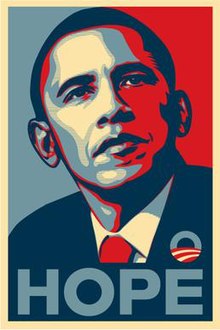
Dear Rich: I saw your entry on "Using Movie Stills at a Website." What if I draw a picture from the scene? Is that still copyright infringement? Would the quality of reproduction also have a factor (i.e. a very realistic recreation of the still vs. something more paint-like)? As we mentioned last February, unauthorized reproductions are infringements unless excused by a defense such as fair use. The same rules apply for unauthorized derivative works and these can trigger the same legal responses as straight infringements (as Shepard Fairey learned when he created his artsy Obama Hope imagery -- which has triggered its own derivative infringements). You don't protect yourself by making a more "artistic" derivation.  It's infringement as long as a lay observer believes that the underlying (or preexisting) work has been copied (for example, as in the example, above). In any case, this legal mumbo-jumbo we're spouting is ignored by millions of people on the web every day. So, the real question is whether your creation of an unauthorized derivative work based on a movie still will make somebody so mad that they'll come after you, take your home, car and new Mac laptop. As usual, we couldn't tell you ... though as we've mentioned before, you're likely to be better off if you use smaller images (thumbnails are best), you don't poach from popular licensing sites such as Getty Images (that regularly troll for their digital fingerprints), and you don't use the image more than once, or for commercial purposes such as merchandise. And of course, the popularity of your site may also make you a more likely target.

Tuesday, January 17, 2012

Getting Paid for Reporting Software Infringement

Dear Rich: Is it true you can get paid for reporting software infringement? I would love to report an ex-employer. Does it matter if I am in Ohio and the ex-employer is in Indiana?  Yes kids, here's another way to make money at home! Apparently, you can earn some serious bucks for reporting software infringement (provided the report results in a settlement or judgement). The Business Software Alliance will cut you in on payments it receives as result of your reports. You need to fill out a form and proceed through the BSA process. It doesn't matter where you are located as long as the employer is located in the U.S.


Wednesday, December 21, 2011

Does the VEOH Case Affect My Website?


Dear Rich: We're a web startup (a pre-startup, actually).  Can you explain the effect of the recent VEOH ruling regarding website infringement? Wow, a pre-startup! That sounds hopeful!
The case you're referring to -- UMG Recordings v. Shelter Capital, Partners -- has to do with the level of policing required by a website when users post infringing content. Veoh, a site that permits users to upload video content, was sued by Universal Music, after infringing videos were discovered on the site. Veoh had complied with all requests to remove content and had used software to seek out and identify infringing content, but some infringing music videos still made it on to the site.
DMCA as a shield. Universal argued that Veoh (our source for the kitty video) must have known of the "apparent" infringements and should not be able to use the Digital Millenium Copyright Act (scroll down) as a shield. The 9th Circuit Court of Appeals -- the first appeals court to rule on this issue -- held that the burden was on Universal to report the infringements to Veoh, stating,"Copyright holders know precisely what materials they own, and thus are better able to identify infringing copies than service providers like Veoh." The ruling doesn't shield websites from liability for infringement but it does permit websites to use the DMCA as a shield when the website has anti-infringement policies and has otherwise responded to all requests for takedowns.

Thursday, December 1, 2011

Can We Paraphrase Three Paragraphs?

Dear Rich: What is the rule on paraphrasing. I was told that it's okay to paraphrase articles from the web at our site if (1) the original work has been posted for more than a year and (2) only three paragraphs are paraphrased. I can't find anything about this rule on the Internet. That's because there is no such rule. The idea that paraphrasing always excuses infringement is one of the more popular copyright myths. We can't tell you the quantity of paraphrasing that's permissible but here are some cases to guide you:
The caselaw. In a 1974 case, a text book publisher took a popular child psychology book and hired a series of freelance writers each to rewrite the chapters of the book so the result was all paraphrasing. The writers were instructed to maintain the same sequencing of topics and weighting of subject material. A court found such massive copying to be an infringement. Another court later stated, “We recognize that even in the absence of closely similar language, courts have found copyright infringement on the basis of “recognizable paraphrases.” The Second Circuit Court of Appeals stated that infringement occurs when “an alleged infringer borrow[s] virtually an entire work and attempts to avoid liability by doing little more than changing the verbatim language or slight details in the structure.” But wait, there's more: Another 1970 case held that extensive paraphrasing amounts to infringement including the rewording of legal agreements, and in 1972, a court would not excuse extensive paraphrasing when the defendant rewrote a book about guitar playing.
Bottom line dept.  Courts examine paraphrasing on a case by case basis. Don't assume that changing the words automatically absolves you from liability.

Friday, November 11, 2011

Can I Get Away With Selling Counterfeit Goods?

Dear Rich: My cousin sells knockoffs from a famous fashion brand. She makes a quite a bit of money with this 'side busines's and she's offered to set me up. The initial investment is a few thousand dollars. I know it's illegal but what I'm trying to find out is the likelihood that I will get in trouble. What are the chances? We can't tell you the chances for getting caught for selling counterfeit goods. That depends on luck, geography, your online presence, whether you have any acquaintances who have a reason to turn you in, whether your supplier gets busted and decides to flip you, or whether you fall for a sting operation. The sad part of the story -- from a business plan POV -- is that the more successful you become, the more likely you will become a target of all this mishigas. We get similar questions occasionally, so we've posted an article on the subject detailing the legal rules.

Tuesday, September 27, 2011

Can't Find Copyright Owner: What Do You Do?

Dear Rich: If one has tried and failed to locate the copyright holder of an image or if they no longer are in business or are unknown to the author (myself), is it sufficient to use a disclaimer such as "All reasonable attempts have been made to contact the copyright holders of all images," and perhaps "You are invited to contact ____ if your image was used without identification or acknowledgment." We recently watched an excellent Vidal Sassoon documentary and at the end was a similar statement – something to the effect of “For those photographers whose images we used without permission, we tried to find you and couldn’t and thank you for your wonderful contributions.” Orphan works. What you're dealing with is an “orphan work” --- one that is still protected under copyright but whose owner is missing in action and there's nobody to contact for permission. (There was an attempt to legislate rights for orphan works a few years ago but sadly that failed.) A disclaimer like this won’t relieve you of a claim for infringement but it could go a long way towards limiting your damages if (1) somebody appears out of the woodwork to chase you, and (2) you can demonstrate you made a reasonable good faith to search for the owner. A typical good faith search would include an Internet search and a search of the Copyright Office records.

Thursday, June 9, 2011

What Does It Mean to 'Induce' Patent Infringement?

Dear Rich: Thanks for explaining the Supreme Court's decision in the Roche v. Stanford patent case. Could you make that a regular feature? Wow, we're really torn. On the one hand we love to come up with new regular features, and on the other hand so many bloggers already discuss these big cases (in the case of  patent law, check out Patent Baristas and Patently-O). On the other, other hand (wait, is that three hands?) we have to write about something!
Right, you wanted to hear about a Supreme Court case. Last week, the Supreme Court decided Global-Tech Appliances v. SEB. SEB patented a deep-fryer whose exterior was cool to the touch. Global-Tech Appliances, operating outside the U.S. copied everything but the cosmetic aspects of the SEB deep fryer. Global-Tech then branded these deep fryers for sale by Sunbeam, Montgomery Ward, and others. SEB sued Global-Tech for inducing others to infringe its cool-touch patent. Global-Tech defended itself by arguing that it couldn't induce others to infringe because it had no actual knowledge it was infringing SEB's patent. (Global-Tech had vetted its device with a patent attorney but had failed to disclose to the attorney that their device was copied directly from the SEB deep-fryer.)
Justice is (Willfully) Blind. The Supreme Court ruled for SEB. Yes, said the court, inducing infringement required knowledge of the existing patent, but that knowledge could be inferred using a legal standard referred to as "willful blindness." As the Court stated:
Many criminal statutes require proof that a defendant acted knowingly or willfully, and courts applying the doctrine of willful blindness hold that defendants cannot escape the reach of these statutes by deliberately shielding themselves from clear evidence of critical facts that are strongly suggested by the circumstances.
The Court went on to distinguish willful blindness from a lower court's standard known as "deliberate indifference." As for the differences, we won't go into all the details, but practically, the bottom line is that when asking an attorney to render a legal opinion (Does my deep-fryer infringe?), don't hide information (like, 'I copied this from another deep-fryer').

Tuesday, May 10, 2011

Accused of Selling Knockoffs: What If I Do Nothing?

Dear Rich: I buy handbags from an importer and resell them online. I advertise them as knockoffs at various sites, including eBay. I never claim they're originals ... I always tell people they're copies. Recently, I got a letter from a lawyer saying I had to stop selling them or I would get sued.  Would I be better off running my business as a corporation so that I won't be personally liable? What will happen if I don't respond to the letter? Sorry, but the Dear Rich Staff has lost its ability to predict the future. (We think it happened when Google implemented Panda One and switched its search algorithm.) In any case, any of the following scenarios are possible after receiving a cease and desist letter:
  • you keep selling the knockoffs, the lawyer files a lawsuit, gets a default judgment and enforces it against you personally (assuming you're not an LLC or incorporated) or against your business
  • you stop selling the knockoffs, the lawyer drops the whole thing
  • you stop selling, the lawyer sends a second letter, gets no response and files a lawsuit and gets a default judgment. 
  • you blow off the letter, keep selling the knockoffs, and the lawyer is impressed with your moxie, and decides to hire you as an investigator of trademark counterfeiting. You do really well in that position, give up your handbag business and eventually write a book about the knockoff industry. 
Actually, the last choice --the Catch Me If You Can approach -- isn't very probable at all. If you continue to sell without either fighting the letter or otherwise responding, the lawyers will most likely pursue you because, as the young people say, that's how they roll.
Does forming an LCC or corporation shield you from these lawsuits? Converting your business to an LLC or corporation can establish limited liability and will shield you from personal liability in some instances -- the lawyers can only go after your business assets. But your liability is likely to be tied to your status at the time of the infringement. So if you're a sole proprietor when you got the letter, then you're probably going to be treated that way (personally liable) in court, as well, even if you later convert to an LLC or corporation. In addition, keep in mind that the LLC/corporate shield also won't protect you from the following:

  • You personally guarantee a loan or lease.
  • You owe federal or state taxes. 
  • You act negligently (people are injured by your handbags).
  • You fail to abide by corporate rules. 
That Said Dept. That said, perhaps you should reconsider your business model (as well as your business entity). First, you need to determine whether the lawyers are right -- that is, are your bags infringing? If yes, you should abandon the infringing items. If you're not infringing, you should consider whether you want to fight or move on. If you fight, you may be able to have some luck fighting takedown notices (we'll talk about them more this week) but keep in mind that if you're dragged into court, you'll be hit hard in your bankroll and the only guaranteed winners will be the lawyers.