Showing posts with label software. Show all posts

Thursday, September 17, 2015

How Often Do We Register SaaS Software Copyright?

Dear Rich: I can't seem to find any recommendations for how to handle copyright registration of software that is changing frequently. Now that SaaS (software as a service - ed) software companies are publishing software updates weekly or even daily, it seems that the pace of copyright registration might not be keeping up. The copyright office was pretty noncommittal, suggesting that the safest route would be to register whenever the code changed "substantially." Care to take a stab at suggesting a 'best practices' cadence here?

We agree with the Copyright Office. Unless the code changes dramatically or unless you are offering features that are materially different from previous editions, it doesn't make business sense to register each weekly change. This is premised on the fact that the major benefits from registration -- statutory damages, the possibility of attorney fees, the ability to file a lawsuit -- are related to infringement disputes. Assuming the version of the software that is infringed contains the key elements and code that were previously registered, you could proceed with your dispute and reap the benefits of registration. Even if there were a gap between what was infringed and what was registered, you still own the copyright (it's automatic regardless of registration) and could, if necessary, expedite registration to incorporate the features (and claim the actual damages for infringements of those new features). In summary, register the key versions of your code -- those versions, which if infringed, would cause you significant damage.

Wednesday, May 18, 2011

What's a Reasonable Assignment Provision?

Dear Rich: The other day you criticized a contract clause that a developer sent you because the clause claimed rights to the developer's own software tools. Can you give an example of a clause that wouldn't do that? We usually don't like it when someone responds to a question by saying "Good question." It seems gratuitous and a bit of a stalling tactic, doesn't it? It reminds us of our grandfather (left) who could hear okay but whenever you asked him a hard question, he made you repeat it so that he would have more time to answer.
Right, you had a question.  Flakasoft, one of our favorite app developers, responded to our recent work-for-hire entry and sent us a contract they had just received. It included the following provision.
Ownership of Inventions. To the extent that, in the course of providing the Services, Consultant jointly or solely conceives, develops, or reduces to practice any inventions, original works of authorship, developments, concepts, know-how, improvements or trade secrets, whether or not patentable or registrable under copyright or similar laws (collectively, “Company Inventions”), Consultant hereby assigns all rights, titles and interest to such Company Inventions to the Company. “Company Inventions” shall not include any software, owned or developed by, or licensed to Consultant, or methodologies, techniques, software libraries, tools, algorithms, materials, products, ideas, designs, and know-how (including all copies, enhancements, modifications, revisions, and derivative works of any of the foregoing) that existed prior to the date hereof or are acquired by Consultant from a third party thereafter or developed independently and outside the scope of this Agreement.
It's possible to draft a more specific or more favorable clause for protecting developer tools but this will give you a basic idea of what could work in terms of turf protection and fairness. And thanks for the good question!

Monday, May 16, 2011

Should I Sign Work for Hire Clause?

Dear Rich: I'm a developer and I work as an independent contractor. Can I get your thoughts on a "work for hire" clause that a client wants me to add to my IC agreement.
Work for Hire. The deliverables (including any underlying technology) created pursuant to this Agreement shall be deemed a “work made for hire” as that term is defined under Section 101 of the U.S. Copyright Act, and the Company shall be considered the person for whom the work was prepared for the purpose of determining authorship of any copyright in the deliverables. If for any reason the deliverables are determined not to be a “work made for hire” under U.S. law or the law of any other jurisdiction, Developer hereby assigns and agrees to execute such written instruments and do such other acts as may be necessary in the opinion of the Company to assign, to the Company, without additional compensation, all of Developer’s right title and interest in and to the deliverables.
Ah, yes, the old "either/or" clause, popularized after a 1989 case in which a sculptor disavowed a work made for hire agreement. Companies didn't like the uncertainty of independent contractor (IC) status and this clause became de rigueur: the IC agrees that it is a work made for hire, and if for some reason, it isn't, the IC assigns ownership. Either way, the person who signs this is giving up all rights in the thing created.
What about the technology? One thing we're wondering about is giving up on the underlying technology incorporated within your deliverables. You may develop software tools or other programs that may have many uses in your work. Is there a way that you can carve out ownership of such technology? Or perhaps, can you and the company share nonexclusive rights?
Marwencol. We gave up searching in Google Images for "work for hire"  and decided to display the poster for our most recent favorite documentary. That got us thinking about a comment somebody made that they didn't know if the fantasy world of Marwencol was a form of therapy or an escape mechanism. Was Colonel Hogencamp treating his problems or evading them? If we weren't so concerned about our precious and ever-precarious blog metrics, we'd have an opinion on that.
[Note: There's a follow-up to this post here.]

Monday, April 18, 2011

Are Incomprehensible Words Protected Under Copyright?

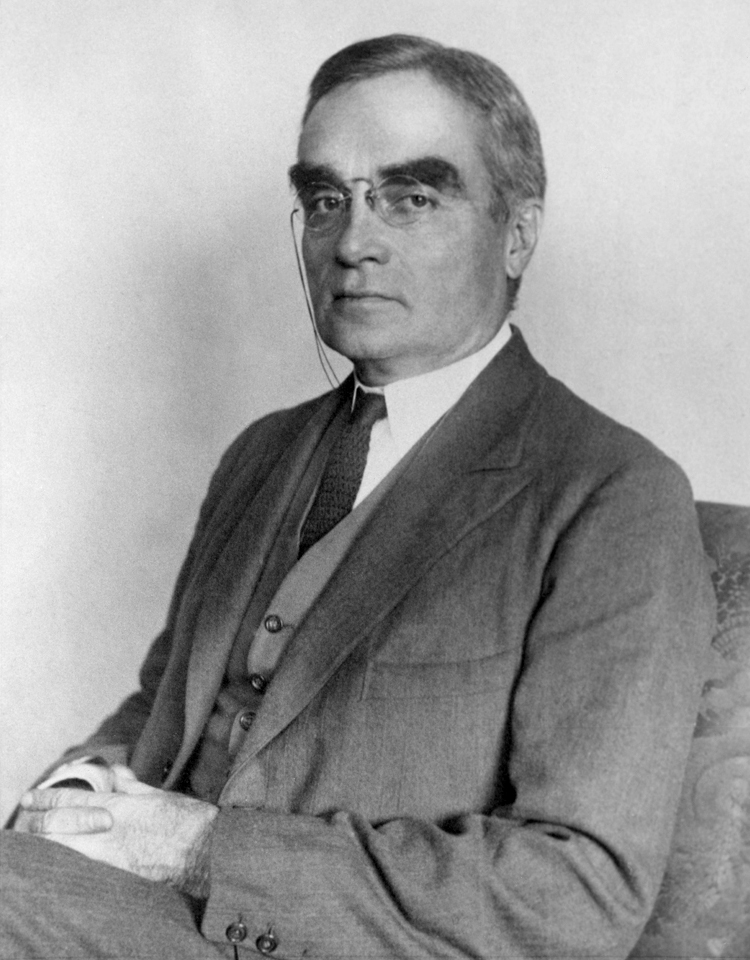
Tell It To The Hand! We decided to celebrate our fourth year on the Internets by discussing five great copyright decisions by Judge Learned Hand. Yes, we know many of you have pressing questions (and we promise to get to them soon) but they'll have to wait while we finish our tribute to the most Zen jurist ever to sit on the federal bench.  ("Life is not a thing of knowing only," he once said. "Mere knowledge has properly no place at all save as it becomes the handmaiden of feeling and emotion.") And we have to love a federal judge who wanted every courthouse and church entrance emblazoned with Cromwell's words, “I beseech ye in the bowels of Christ, think that ye may be mistaken.” The L-man's advantage in copyright law (and the reason why he could redirect that law into the 21st Century) was because he understood (and was in awe of) the creative mind. Ennyway, the proof's in the pudding.
Reiss v. National Quotation Bureau, Inc. Learned Hand decided Reiss in 1921, a remarkable year for the arts -- Picasso's Three Musicians debuted as did Mondrian's Red, Yellow, and Blue, and Eubie Blake was having a hit with his ragtime jazz piano roll for I'm Just Wild about Harry. Within a year of the Reiss decision, James Joyce would publish Ulysses.
In Reiss, a man had published a book of 6,325 “coined” or nonsense words that could be used as a secret code by telegraph operators (who would assign private meanings to the meaningless words). A publisher copied the code words and when sued, defended himself by arguing that copyright could not protect the book because the code words had no "meaning." Judge Hand established a principle that we now take for granted: copyright law does not impose a standard of comprehension on works of authorship. Like Picasso, Mondrian, Blake and Joyce, Hand understood that the narrative sensibility (whether in stories, imagery or music) was no longer essential, if it ever was.
"I see no reason why words should [not be protected] because they communicate nothing. They may have their uses for all that aesthetic or practical and they may be the productions of high ingenuity or even genius." 
The code words, said Hand, were like "an empty pitcher" in that they had a prospective meaning, but as yet had not received it.
"Not all words communicate ideas; some are mere spontaneous ejaculations, some are used for their sound alone, like nursery jingles, or the 'rhymes of children in their play. Might not some one, with a gift for catching syllables, devise others? There has of late been prose written, avowedly senseless, but designed by its sound alone to produce an emotion. Conceivably there may arise a poet who strings together words without rational sequence - perhaps even coined syllables - through whose beauty, cadence, meter, and rhyme he may seek to make poetry."
Fifty-seven years after Reiss was published, it became a cornerstone for protecting computer code; it was used by the CONTU Commission to validate protection of computer code, and served as precedent for the seminal case protecting operating systems and object code.  Thanks Judge.

Thursday, March 24, 2011

What Version Do You Deposit for Software App Copyright?

Dear Rich: We have a popular app that's gone through several versions and is available for Apple and Android platforms. We've never copyrighted the app and now we're trying to do it. We started with the electronic registration but we're confused. Do we register the current version of the program or the first version. The Dear Rich staff is feeling kind of strange these days and we're not sure whether it's world events, Liz Taylor's departure, the behavior of the tides and moon, Charlie Sheen's trademark activity, or all of the above. In any case your question triggered memories from back in the 80s when we worked for a software company that developed networking software. And one day the company's developer hooked up the software in our office and somebody in another office sent us our first message from their computer and it was just like one of those "Come here Mr. Watson" moments.
Right, you had a question. If you're concerned about infringement, you should register both the first version and the most recent version, and you should probably do the same for all platforms. Yes, it's true that you get copyright automatically once you create a work. But in reality, the copyright is not so automatic when you want to sue someone. That's because you have to file a registration before filing your suit. When completing the application, the Copyright Office rules require that you (1) list the first date of publication, (2) that you acknowledge any preexisting material that you incorporate in your version, and (3) that you deposit the best edition of the first publication. Those three criteria can cause confusion. That's because software programs (like video games and websites) go through a series of substantial changes after they're first offered to the public.
Date of first publication; preexisting material. The Copyright Office wants you to provide the date of first publication for your software program. But if you're offering a series of version, each constitutes a separate "first" publication. For example, there's a first publication for your iPod version, your iPad version, your iPod 2.0 version, your Android 3.0 version, etc. And whenever you register your work you can claim only what is new over the previous version. As a result, you must file a series of registrations as described here.
Depositing the best edition. Consider the software developer who no longer had the first published version of his source code from 1990. In order to deposit the first published version, he reconstructed it by removing all of the code he'd added since the program was first created. Not good enough said a court who claimed that reconstructions of code would not suffice. Therefore, we hope you have maintained copies of the source code for each version and you can furnish it according to these requirements. P.S. For more exciting legal info on apps, check out our O'Reilly Mini eGuide.