Showing posts with label public performance. Show all posts

Tuesday, June 24, 2025

Getting Rights for Clergy Abuse Survivor Play

Dear Rich: I am writing a play based on the life of Phil Saviano, the clergy-abuse survivor who was featured in the movie Spotlight (portrayed by actor Neal Huff). Phil was an avid fan and personal friend of singer/songwriter Judy Collins. Judy Collins is a character in the play. The play features portions of fifteen songs that Judy Collins has recorded. Two of these are in the public domain. Among the rest, Judy Collins wrote a few, but others were written by six different songwriters (Leonard Cohen, Richard Farina, Rolf Kempf, Randy Newman, Joni Michell, and Stephen Sondheim). Early in my endeavor, I notified Judy Collins’ management and sent them draft scripts as the play developed. They have responded to my queries, so I know they are aware of the issue. However, they have not chosen to be involved in the development of the piece to date. I have also notified all the other characters who represent actual people in Phil’s story (Actor Neal Huff, members of the Spotlight team, etc.) and sent them draft scripts. The play does not include any direct quotes from any of them. All of the    dialogue is invented, as described in a disclaimer on the script’s title page. However, I    have revised the script to reflect comments I received from ‘actual people’ in an endeavor to portray them accurately. To date, the play has undergone several workshops with actors and directors but has not had any public performances. I am planning to hold a pair of extended workshops with a full cast of actors, which will result in staged readings open to the public by invitation only. I want to obtain the necessary rights in advance of those readings. It is my understanding that I have to obtain song permission for each of the songs in the play from the music publishers of     the various songwriters. I also believe that I will need to obtain grand rights from Judy Collins’ publisher, as Judy Collins is a character in the play, and many of the songs are to be performed in her style. Since the play includes no actual recordings of Judy Collins, I do not believe I have to obtain recording rights to any of the songs. Are there any rights or permissions that I need to obtain from any of the characters based on    actual people? I appreciate any guidance you can offer about the bouquet of rights and permissions I will need.
You’re on the right track by notifying and engaging with the people depicted in your play. Your planned staged readings and your ultimate public debut may require permissions and releases. Here are the legal rights you should consider: 

Right of Publicity. The Right of Publicity protects a person's name, likeness, and persona from unauthorized commercial use.  However, this right is not absolute — it is limited when balanced against First Amendment rights, especially in works of drama, literature, or biography. Because you are creating a dramatic, biographical play and not promoting or endorsing a commercial product, you are likely protected under the First Amendment and not required to obtain releases from living individuals (or estates) for this expressive use. 

Defamation. If a living person believes the portrayal is false and harmful to their reputation, they could sue.  

False Light. Even without explicit defamation, implying something untrue (e.g., suggesting a person said/did something they didn't) could potentially result in a claim.

Sound Recording Rights. You're correct that you do not need sound recording rights if you're not using actual recordings. 

Public Performance Rights. Public performance rights are permissions required if the play is performed publicly. Permission is usually obtained through ASCAP, BMI, or SESAC. Workshops and invited readings, although they are low-risk, may still require clearance.

Grand (Dramatic) Rights. Grand rights may be required because the songs are integrated into a dramatic narrative with distinct characters and a well-defined plot. Portraying Judy Collins as a character singing songs she recorded, even in her style, may strengthen the need for grand rights. Since you've notified her management and they haven't objected, that's a good sign. But continued good-faith communication is wise. 

 You must secure grand rights from each copyright holder or their representative publisher. ASCAP/BMI does not cover these.  You will need to contact the music publishers (not just songwriters) for Leonard Cohen (Sony/ATV or Universal),  Joni Mitchell (Sony/ATV or Joni Mitchell Publishing), Stephen Sondheim  (Rilting Music (now administered by Concord Theatricals), Randy Newman (WB Music or Universal), and Richard FariƱa (typically represented via his estate). Judy Collins' original compositions will likely be controlled by her publishing entity or through Warner Chappell, Universal, or another publisher. (We couldn't find any leads for Rolf Kempf). Note that music publishers will often license limited grand rights for non-commercial workshops or staged readings, especially if you're clear it's not a complete commercial run. 

What now? Continue documenting communication with real-life subjects. Reach out to music publishers with your request for limited dramatic rights for staged readings. Keep your disclaimer visible and consider insurance if you go forward with public or commercial productions (e.g., Errors & Omissions coverage). If you are moving towards a full public production, consult an entertainment attorney to confirm that your rights are fully secured.

Wednesday, February 12, 2014

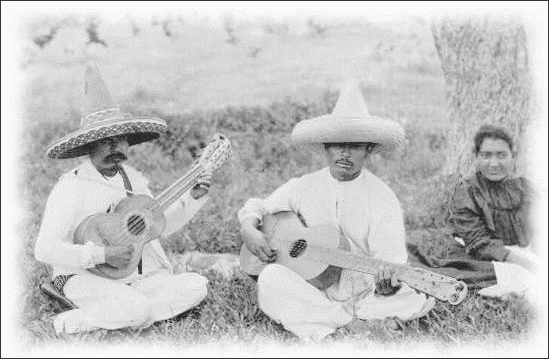
Why Can't I Play Cover Songs at Farmer's Market?

Dear Rich: I sing and play guitar (for about 50 years now). A few years ago I started playing and singing at a local farmer's market. About a month ago the manager of the market said I couldn't play cover songs anymore. ASCAP had contacted them and threatened to sue. I just assumed this wouldn't apply to me since I am not paid to play and the market does not advertise live music. I just play for tips ($10 - $20 for four hours!) and this is a public place. So, if I play out on the street corner in downtown Tucson is ASCAP going to threaten to sue me? Also, is there some kind of fee I could pay just for the privilege of playing copyrighted songs? [Disclaimer: Members of the Dear Rich Staff belong to BMI, ASCAP's rival.]
For those readers who are unaware, ASCAP is a performing rights organization/society (known as a PRO or PRS) that collects money from those who play songs in public ("public performance"). It then, in turn, pays the owners of those songs, typically a songwriter or song publisher. PROs collect money from malls, radio stations, TV stations, restaurants, and any other institutions or merchants who broadcast or perform songs from the ASCAP repertoire. Lately the PROs have begun to pursue an overlooked venue -- farmer's markets. Here's what a typical ASCAP letter might look like. The Farmer's Market Coalition is amenable to working out an arrangement but has balked at the stiff fees demanded by the PROs. The organization has retained legal counsel to look into the issue.
Will they pursue me? We're sorry to learn that your busking career has been so drastically altered, especially after having enjoyed the gig for several years. If you decide to return to the streets, we don't think you'll be hassled by a PRS. Performing right societies don't pursue individual musicians, they pursue and license the establishments where the music is performed. You can't pay an "individual" fee for performing cover songs because ASCAP only collects from the businesses, establishments or sponsoring organizations.
Isn't it unfair? That depends on who you ask. Your arguments -- you're not being paid, the market doesn't advertise live music, it's a public place -- may work for espousing free speech, but they don't line up with copyright law or commercial reality. The right to "perform" a song is controlled by the copyright owner. In any case, you're free to play music in a commercial setting as long as it's not ASCAP music. So your original or public domain compositions won't get anyone in trouble. Whether you get paid or not is of no consequence because the market benefits in the same way Urban Outfitters and Whole Foods benefits by presenting a more "pleasing" shopping event. (Note, slow music makes people spend more!) If it weren't so, the music would get turned off. (PS. The Dear Rich Staff is old enough to remember when you didn't have to listen to music when you shopped for English muffins!)

Tuesday, April 3, 2012

Do I Get Any Money From Cover Song Play?

Dear Rich: Our band covered a song and it's getting good airplay on Live 365 and at some other places. Do we get paid for this? How do we get the money? Most of the money generated from the playing of music --  whether on the radio, at an American Apparel store, or even on Internet stations --  is collected and paid to the songwriters, usually by performance rights societies. So, performing a cover song is usually not the best route to a guaranteed royalty stream. However, there is one way you can earn money for the public performance of your recording. Performers and record labels get paid for every performance of a song by a non-interactive webcaster – for example, Internet radio stations such as Live 365, Pandora, Sirius XM, Cable TV music channels, or virtually any digital transmitter in which the listener is unable to choose the specific song that's played. This money is collected and distributed by SoundExchange and you can sign up with them and list your tracks. The sign-up process is a little labor-intensive but once you are in their system, things should move smoothly.

Friday, December 16, 2011

Can We Report Neighbor for Blasting Copyrighted Christmas Music?


Dear Rich: Every year, my neighbor blasts Christmas music (and some non-Christmas music) with a synchronized Christmas light show. As you can imagine he goes overboard and drives most of the neighbors crazy. We've asked him to turn it down (or off), complained to the authorities, and none of it does much good. We're thinking of suing him as a nuisance. One of the neighbors wondered if we could report him for playing copyrighted music without permission. Is that possible? To whom do we report it? That's the Christmas spirit! We can totally relate. We once visited a Dear Rich Staff member in the hospital at Christmas time and somebody down the hall was blasting 'Silent Night' on a toy piano (talk about an oxymoronic choice of material). What is a 'humbug,' anyway?
Right, you had a question. The neighborhood blasting of copyrighted music would likely qualify as a public performance (sidebar on right) under U.S. copyright law. In other words, it falls into the same category as playing music at a ballgame or at a bar, and requires permission. If it is done without permission, it would be considered an unauthorized use of the music -- that is, an infringement. The gatekeepers for almost all of these public performance rights are two organizations, BMI and ASCAP. They grant permissions on behalf of thousands of songwriters. They also enforce rights and sue organizations and individuals who publicly perform music without permission. You could report your neighbor to the appropriate organization although you would need to identify the copyrighted songs from the performing rights organization's repertoire -- for example, BMI has over 7,000 registered songs with the word "Christmas" in the title. The organization could then choose to enforce rights. That's where you might run into a problem. Following the strange flap over the Girl Scouts/Macarena debacle, performing rights societies might be gun-shy about going after a homeowner playing Christmas music in his cul-de-sac. We think you and your neighbors would be better served by handling this in the traditional American way -- small claims court.

Friday, September 23, 2011

Rights to Perform Show Tunes

Dear Rich: I represent some members of a theater musicians organization. My question is about transcribing theater numbers from a CD, and performing them in public. Do we have to pay any copyright fees to anyone? Do we have to pay the  Tams-Witmark people who own the rights to the music? Actually, the Tams-Witmark company doesn't own the musical performance rights to musicals; they control what are known as "grand rights," which refer to the permissions necessary to stage an opera, play with music, or a work of musical theater. So, you need to consult Tams-Witmark if you are putting on the show, but not if you are only performing songs from a show -- for example, playing songs from The Wiz, Wicked or West Side Story.
BMI and ASCAP. Performance rights organizations such as BMI and ASCAP collect for such performances by charging venues with an annual blanket fee. So the venue ends up paying for it, not the musicians. The business of transcribing the music may technically require permission, but it is unlikely anyone will chase you for writing out the chord changes and melody of a song unless you attempt to sell these transcriptions.
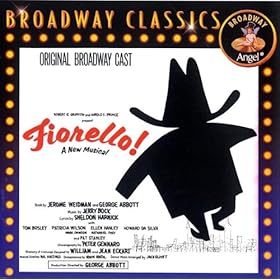
The Name's Laguardia. Can you believe that there was once a hit broadway show about Fiorello LaGuardia and it won the Tony and Pulitzer Prize? The Dear Rich Staff remembers it fondly (probably because we had the lead in one high school performance).

Wednesday, April 27, 2011

Does Downloading MP3s Trigger Public Performance Payment?

Dear Rich: In your Getting Permission book, when you discuss digital download permissions for MP3s, you write that "Music publishers currently seek to get paid in two ways (referred to as “double-dipping”), once for the reproduction of the MP3 file and again for the transmission of the file over the Internet." I thought that they could only get paid for the downloads. You're right. The statement in the book is outdated. In a 2007 decision, a federal court held:
"Although we acknowledge that the term “perform” should be broadly construed [cite omitted] we can conceive of no construction that extends it to the copying of a digital file from one computer to another in the absence of any perceptible rendition. Rather, the downloading of a music file is more accurately characterized as a method of reproducing that file."
It's true that music publishers are still seeking to get paid both ways and that they petitioned Congress to revise the copyright law accordingly. But their desires have not yet been transformed into law and we'll report if and when things change.