Showing posts with label music. Show all posts

Wednesday, February 21, 2024

Do I Owe Former Collaborator for a Song He Didn't Co-Write?


Dear Rich: I used to write songs with a musician friend until we had a falling out. Fast forward four years, and I'm now releasing an album of original songs with a California-based indie label. My ex-songwriter friend heard my demo and said that one of my new songs is based on another song that we wrote together. He says that he should be given credit and a portion of the music publishing income. He's threatened to get a lawyer. I don't want this to mess up my record release. 
We can provide you with the legal rules that apply in your situation, but if you're concerned that the dispute will jeopardize your label relationship, you should seek the advice of an entertainment attorney. There are two likely arguments that your former collaborator can make; that he is a co-author of the new song, or alternatively, that the new song is a derivative of the earlier collaboration.
Is he a co-author? It's unlikely that your former collaborator would qualify as a co-writer of your new song. That's because a co-writer (or joint author) must intend for their contribution to merge with your new work. Other factors that are important are: 
    • each co-writer must make an independently copyrightable contribution to the new work,
    • each co-writer must exercise control over his contribution (he had some creative control or supervisory power over the creation of the work)  and 
    • the audience appeal of the work is derived from both of your contributions (and "the share of each contribution in the song's success cannot be appraised"). 
Is the new song a derivative work? Your former collaborator may argue that your new song is a derivative of your earlier collaboration. The performer, Lizzo, ran into a similar problem in 2019 when two former collaborators claimed that her hit song, "Truth Hurts," was derived from an earlier co-written composition entitled "Healthy." Although the trial court dismissed some of the copyright claims in favor of Lizzo, the former collaborators were allowed to continue their lawsuit on other related claims. As a result, the case dragged on for three years and was finally settled confidentially in 2022. 
Takeaway. Get an attorney's opinion on your former collaborator's chances in court. Analyze your financial risks and determine whether it could be more convenient and less expensive to reach a settlement. 

Monday, January 31, 2022

Does My Teenage Son Need to Declare Streaming Income?

Dear Rich: My teenage son has been streaming music on various digital platforms. Does he need to file taxes on the money he has generated?
That depends.
Did your son earn more than $12,550 in 2021? Your son does not owe taxes or have to file a return unless he earned more than $12,550 during 2021. That's assuming your teenage son is living with you and is listed as a dependent on your annual tax filing.
Did your son receive a 1099? Were taxes deducted from your's son's payments? Even though your son might not have any income tax liability, two situations may warrant a separate tax filing: (1) in the unlikely event he receives a W-2 form (he was an employee) and taxes were deducted from his payments, he would need to file in order to get a refund; and (2) if he received more than $400 as a self-employed musician (for example, he received a Form 1099 indicating a $500 payment), he would need to pay self-employment tax. Note, the $400 figure is determined after deducting your son's expenses from his total income. So, for example, if he received a Form 1099 indicating a $500 payment but he had $200 in studio expenses, your son would not reach the $400 threshold.  

Thursday, December 13, 2018

All the News That's Fit to Recite With Music

Dear Rich: I'm a musician who composed a piece of instrumental music inspired by a 1995 New York Times article. When performing the music, there is a section during which I recite 110 words of the 2,443-word article. I am familiar with the Gerald Ford case, and I don't believe the text in question would stand out as the "heart" of the story. When I perform the piece, I tell audiences the source of the text. I'm now planning to record it, and credit for the text will be noted in the attendant printed material.  Does this sound like fair use? If not, what do I do? Pay for a reprint?
We think your work qualifies as "fair use" (as explained below). If the New York Times finds out about your use, we hope their lawyers agree with our analysis and leave you alone. But if they don't, they can file a lawsuit and make you prove your right to fair use. That could quickly turn into a battle of financial attrition in which your legal rights take a backseat to your bank account.
What about asking for permission? We believe that you're performing, editing, and adapting the article to a new medium, so pursuing reprint rights won't help. The Times doesn't seem eager to encourage adaptations like yours.
Editing and adaptation of New York Times content is generally not permitted, and must be approved by The New York Times. Use of article excerpts is possible with permission from The New York Times, without alteration to the intended meaning of the original text. 
You can try asking the Times for clearance. If they entertain your request, expect to pay a fee of more than $200. If the Times turns down your request, you'll find yourself in an awkward position because the newspaper is now aware of the details of your work. That doesn't prohibit you from using the article and claiming fair use (as this Supreme Court case indicates).
Is it fair use? Juxtaposing text from a New York Times article with original music gives the text a different character, a new expression, and "new aesthetics with creative and communicative results distinct from [the original work]."(Cariou v. Prince). There are other factors to consider when a judge determines fair use but as the Supreme Court stated two decades ago, "[t]he more transformative the new work, the less will be the significance of other factors." Nonetheless, two of the other three factors lean in your favor -- the amount and substantiality of the portion taken (4.5%, and it's not the heart of the work), and the effect of the use upon the potential market (what potential market is there for a 23-year old news article?). BTW, the Gerald Ford case was primarily about the right of first publication which doesn't apply to your situation.
What should you do? We want you to achieve your musical vision and we want you to stay out of court. As for the latter, here are some things to consider.

  • Is the Times likely to find out about your use? Obviously, you're better off if the answer is "No."
  • Will the Times pursue the matter if they find out? We like to think that the Times would be reasonable, recognize your borrowing as fair use and, as champions of free speech, would not want the publicity of going after a music composer.
  • Are you a worthwhile target? If you're not wealthy and not selling a lot of records, you're usually less appealing as a defendant.

Sunday, April 9, 2017

Lyric Writer Wants to License Song

Felice and Boudreaux Bryant,
cowriters of Bye Bye Love, Wake Up
Little Susie, All I Have to Do Is Dream,
Rocky Top, and other great hits


Dear Rich: I write song lyrics and about three years ago collaborated by email with a composer. He sent me a musical composition that I have since written lyrics to and would like to pitch for a TV ad campaign and CD production. Unfortunately, I get no response from email and Soundcloud page from composer is inactive. Can I use music legally or do I have to have written permission? Can't think of any other ways to contact person to get authorization. 
It sounds as if you and the composer -- like Felice and Boudreaux (left) -- intended to combine words and music into "inseparable or interdependent parts." That makes you and the composer joint copyright owners of the song.
Rights of joint owners. With one exception (see below), joint copyright owners can separately grant permission (a license) for someone to use the song, provided that each writer shares the income with the others. If the writers have not agreed on the percentages, courts often start with the presumption that all songwriters contributed equally. Because you cannot locate the composer, you should put aside the composer's share of any income as a demonstration of your good faith.
First authorization of song. There's one question that's unresolved: Do all cowriters have to consent to the first release of the song? We think so because the first release makes the song available for anyone who pays a fee to record the song. Keep in mind that others may disagree because there is no explicit requirement in copyright law that all writers agree to first release. If you've used best efforts to locate the composer and you've documented your efforts, you may be better served disregarding our advice in this situation.

Wednesday, May 4, 2016

Never Say Forever: Music Master Ownership

Dear Rich: The term "in perpetuity" appears in record contracts quite often in regard to ownership of masters yet that same term is quite often the subject of many problems, in particular as they relate to the statute of frauds. I am in the process of negotiating a joint venture agreement with my band. The record label that is planning to sign the band will co-own the masters for 10 years from the release date after which it will give full ownership of the masters back to the band. Since the band is planning on just one album and the joint venture agreement has an expiration date, "in perpetuity" seems to be the only way to go regarding the ownership after the record deal and joint venture are done. Any insight?
For those unaware of the term, "in perpetuity" is legalese for "forever" (and synonymous with "until hell freezes over"). (Note, when it comes to grants in perpetuity, lawyers can sometimes transform "forever" into "whatever").
Should your band acquire the masters in perpetuity? We don't think the "in perpetuity" language is necessary. On a  technical basis, no copyright transfer can be forever. That's because a copyright has a fixed term -- for example, life of the author plus 70 years -- after which the work falls into the public domain and anyone is free to use it. So, in reality, a grant in perpetuity is a grant for the life of the copyright. In any case, the "in perpetuity" language seems like overkill especially if your band wants to later sell or license rights.
Contract concerns. The joint venture agreement should state that after the venture ends, all rights granted under the agreement revert to the band and the label will cooperate with any paperwork necessary to make the reversion possible. (The agreement may also provide for a sell-off period to get rid of existing stock.)
Who's going to receive the reversionary rights in 10 years? What happens if the band breaks up or members leave over the next ten years? If you're concerned about these issues, you'll need to formalize the band's arrangement -- that is, whether it is a partnership, sole proprietorship, LLC, or corporation. That's discussed in our Music Lawbook.
Statute of Frauds. The Statute of Frauds requires certain contracts be in writing to be enforceable -- for example, contracts that can’t be performed within a certain time period (typically one year). If you're using a written contract, the Statute of Frauds isn't an issue.

Sunday, April 10, 2016

How Do I Stop Compulsory License?

Dear Rich: How does one prevent a compulsory license from being obtained? For example, what if I don't WANT anyone else recording MY song? Can a publisher and/or a copyright owner refuse to grant a compulsory license? What if some non-respectable band decides to record and release a song that I have published, which then tarnishes my band's reputation with our fans? Nobody ever gets clearance to cover Led Zeppelin without authorization. How does that work? I mean, doesn't a compulsory license kind of render copyright null and pointless?
First, a little background: The compulsory music license permits a musician or record company to distribute a version of your song on a compact disc, vinyl, or digital download (all referred to as "phonorecords") if they pay the statutory rate, currently 9.1 cents per copy. The compulsory license does not permit you to use a song in a movie, TV show, commercial or a music video. Those uses would have to be licensed separately. The compulsory license is available only after you have first distributed copies of the song to the public. It's not available if you never distributed your song as a phonorecord -- for example, if your song was only used in a movie or TV show. The compulsory license is also not available if the musician covering your song wants to make substantial changes to the music or lyrics -- for example, Weird Al Yankovich negotiates permission* to create his parodies. The compulsory license has been around for over 100 years and was considered a boon to songwriters when it was first enacted because it guaranteed compensation for "mechanical" reproductions. Should your band sign with a label, the label is required to pay songwriters the compulsory license fees (or a lesser negotiated amount known as a three-quarter rate).
Right, you had a question. As for your concerns about another artist tarnishing your reputation, we have doubts about that. Other artists might release versions of your song that you don't like but we don't see why that would tarnish your cred. We didn't care for Britney Spears' remake of "Satisfaction," or Jessica Simpson's version of "These Boots Are Made For Walking," but they didn't diminish our love for the original versions (and from a financial perspective, we think the songwriters were okay with these lesser gems, as well). And of course, sometimes, a mundane cover reveals something unexpected or sometimes a cover is so good, fans believe it is the original version.
Copyright realities. Finally, you need to keep in mind the goal of copyright: the government is granting a limited monopoly because it wants to encourage creativity. The compulsory license fulfills that purpose. In fact many people wish that compulsory licenses exist for photography as well as for all intellectual property.
* BTW -- here's the happy ending to the Weird Al/Gaga story)

Thursday, March 31, 2016

Why Is It So Hard to License Pop Music for Podcasts?

Dear Rich: Are there standard fees negotiated for using pop music in podcasts? Does music licensing work as it does in commercial use, where one must obtain both master and mechanical licenses?
No, unfortunately, music licensing for podcasts doesn't work as predictably as it does when licensing music for CDs, downloads or streaming. The music industry has made it especially difficult for a podcaster to license pop music and we assume that most podcasts that use Adele, Taylor Swift or any other contemporary music in its intro, as background, or as a featured musical track is either infringing copyright, or possibly is excused under fair use principles.
Why is it so hard to obtain the right to use pop music in a podcast? Pop music is based on two copyrights: a musical works copyright owned by the songwriter or music publisher that protects the musical composition; and a sound recording copyright owned by the artist or record company that protects the recorded version of the song. In order to reproduce a song on your podcast you need permission from both copyright owners.
Music publisher permission. Because the song copyright owner is usually a music publisher, you can find the contact information by searching the song records at www.ascap.com, www.bmi.com, or www.sesac.com. Once you know that, you can contact the publisher directly and negotiate a podcasting license. Alternatively, you may be able to do obtain the license from the Harry Fox Agency, which represents many publishers. However, how Harry Fox -- which classifies podcasts as user generated content -- accomplishes the licensing is a mystery to us (and the company hasn't responded to our inquiries).
Sound recording permission. In addition to the song copyright, you would need to obtain the rights for the sound recording copyright. SoundExchange represents the rights of sound recording copyright owners, but alas, it’s not empowered to license music to podcasters. So, you’ll need to determine the owner of the sound recording copyright – most likely a record label -- and then contact the company and negotiate a sound recording license. As you can imagine the whole experience may prove to be frustrating, expensive, and completely fruitless. Even more frustrating, if you plan to use music with a video podcast, you would also need what is known as a synchronization license from the music publisher and a master use license from the sound recording owner.
Podsafe music. That leaves podcasters with two choices: operate without permission (and hope to be excused as a fair use if hassled) or acquire Podsafe music. One source of Podsafe music is under Creative Commons license -- go to http://search.creativecommons.org and choose a music resource such as SoundCloud, and type in your search – for example, blues, rock, or electronic. Note that sources such as SoundCloud may offer a Creative Commons License for a remix of popular music, say a Janet Jackson remix. In these cases, beware, that the provider may only be granting a license for the sound recording, not the underlying musical composition. If the provider has created and owns the underlying song, then you are good to go and no further permission is necessary. Also, although not free, the musical loops that come with GarageBand (as well as loops from other providers) can be used to construct Podsafe intros and backgrounds. And of course, if you have a budget for it, there are always production music libraries (PMLs) or you can hire a musician to create music.

Monday, November 16, 2015

Grouping Songs and Sound Recordings on One Application

Dear Rich: I'm a musician and have a question about filing my sound recording and song copyright applications. The copyright circular says that they can be registered in a single application provided the owners are the same. If I do a copyright assignment to my publishing company, does that mean the owners are now different and I couldn't use a single filing for both?
As you know, there are two copyrights at work in music: a song copyright and a sound recording copyright. The song copyright protects the composition. The sound recording copyright protects the recording of the performance of the song. If you're interested in registering both copyrights using one application you can do so if the copyright claimants (that is, the owners) are the same. That would not be the case if the songs were owned by a publishing company and the sound recordings were owned by another entity (see this previous post).
What about DBAs? In some cases, a songwriter's publishing company is a DBA -- that is, the songwriter is simply doing business under another name. In that case the songwriter is the owner for purposes of claiming copyright. If the songwriter also owned the sound recording copyright, both could be registered on one application.
What to do? If songs and recordings are owned by separate entities, the easiest thing to do is to register the songs and sound recordings on separate applications. If your budget is tight, register the songs first, then the sound recordings.
Does it matter if the sound recordings are published or unpublished? Yes, publication matters. The rules differ when registering groups of published and unpublished works.
By the way dept. If you’re registering a sound recording copyright and song copyright in the same electronic application, you would choose "Sound Recording" from the dropdown "Type of Work" menu. As we mentioned in a previous post, we discuss copyright applications in our online course at Lynda.com.
P.S. Dept. Our newest online music law course just dropped!!!

Wednesday, January 14, 2015

Can Musician Terminate Management Contract?

Dear Rich: I have a contract with an artist who is now seeing some success. He decided out of nowhere that he wanted to redo our contract after he got success. I refused. So he had a lawyer tell me that it’s terminated. We have 2 albums worth of songs. I’m also the indie label he signed to within the confines of the management deal he signed with me. Can I release an album if I co-wrote songs and co-authored audio production? I also co-own the masters. His lead vocals are on the album. Lastly, am I able to use his name and image? The contract says I can, but again, he says the contract is terminated. Can someone terminate a contract without a court ruling? 
The artist can't arbitrarily terminate the contract simply because he's had some success and wants out. He'll need to come up with a a valid legal basis.
What's a valid legal basis to terminate? If you failed to honor a  material term of the agreement, for example you deliberately failed to account to the musician for royalties and wouldn't correct the error, the musician could say, “That’s it, we’re done,” and terminate based on the material breach. In that case, the musician may have a reason to stop honoring the agreement. (This approach is sometimes employed when under-age musicians disaffirm management deals.) But if the reason is bunk -- a lawyer is just trying to bully you with legal hocus-pocus -- you may need an attorney's help to stop the insanity. If you prevail in a dispute, you would be entitled to payment of damages (usually what you would have received if the contract were performed). Claims of breach in management contracts are often preludes to settlement. In other words, how much will it  cost the musician to buy his way out of the contract? (BTW, a more peaceful way to terminate  would be if your management contract contains provisions that trigger termination or provide a right to terminate at will or under certain conditions, for example if the term -- the period of a time during which the contract is in force -- has ended.) Finally, as to using the musician's name and image, that may depend on whether the management agreement stands or falls.
What about the co-writing and co-ownership? It's tough to tell what your rights are as a co-writer or co-owner. The traditional rule is that any co-owner of a copyright can exploit the copyright (sell it or license it) as long as the other co-owners are compensated. But those rules may be trumped by your agreement --  for example, you may have agreed otherwise, or you both may have assigned the song copyrights to a publisher or the sound recording copyright to the indie label and established rules as to how that material can be used. In short, you need to consult with a lawyer. If you're low on funds, perhaps there is a lawyers-for-the-arts group in your area.

Wednesday, November 12, 2014

Charles Ives Fair Use?

Dear Rich: Here's a question for you regarding published music. Charles Ives Variation on America is a piece of music arranged for band and protected through copyright with the Theodore Presser company. I would like to take 11 measures of the Trumpet 1 part to post in a small Facebook group (private) of trumpet players that will be discussing this excerpt to prepare for future auditions and performances. Do you believe that for this educational purpose, I can post this small excerpt and not have to worry about copyright? Reproducing short excerpts of a work for purposes of commentary, criticism, scholarship, or research is often considered a fair use. So, it's possible you will prevail in a legal dispute. But only courts can determine fair use standards and we assume you don't want to get involved in a fair use battle (just as we assume you don't want to be the recipient of a DMCA takedown notice at Facebook).
Your previous contact with the publisher. We note that you've contacted the music publisher and asked for permission -- a good first step according to the Copyright Office. On the other hand, that puts the publisher on notice of your intended use. Because the response from the publisher was so reasonable (the proposed permission fee was reduced to a token payment), we think it's worth accepting the publisher's offer ... even if its just to put some spare change into the Charles Ives tip jar.

Sunday, July 13, 2014

Do I Sign Solo Artist, Band, or Both?

Dear Rich: I recently started a music production business and I am in the process of signing a new artist as his manager. I have some questions regarding the contract between myself and the artist. He has a solo singer-songwriter act and a small band, that I will oversee. Do I need two separate contracts, as a manager for both his band and his solo act? He has agreed to a five album term instead of year by years contract. Can I change the terms of the contract, in your Music Law book, as we both agree on our terms? If the solo artist and the band operate as two separate entities, you should sign two separate contracts. That will allow you as a manager to keep separate accounts reflecting income and expenses. Otherwise, income destined for the band may be hijacked to pay off the solo artist's debts. If they are not separate entities -- for example, the solo artist hires the band as contractors and pays them an hourly rate -- then one management contract with the solo artist should suffice and there is little need to sign the band.
What about changing the agreement? It's more common to sign a management contract based on years (or financial goals), not on number of albums. (It sounds like you are crossing a record contract with a management agreement.) After all, what happens if the artist doesn't have (or keep) a label deal? Does that mean the management agreement ends? In any case, you're free to make any changes you wish to the agreement but we would suggest that when modifying the standard agreement, always review the instructions that accompany the agreement. Also, beware that in some cases, managers may need to be licensed in California.

Friday, April 11, 2014

So Many Copyright Questions ... So Little Time

Dear Rich: (1) What is the length of time the U.S. Copyright Office takes to approve or not approve a copyright application? (2) If I secure a lyrics copyright on a public domain melody for commercial purposes can someone else use that same melody with different lyrics --- say a competitor -- and secure another lyric copyright on that same melody? (3) Regarding the renewal of copyrights, is a renewal of copyright application sent out to copyright owners at the appropriate renewal time, by the copyright office or is there a formal time frame that copyright owners must adhere to? How many times or how often is that renewal required? (4) When using public domain music, it is difficult for me to not have a doubt the melody could have copyright protection. Does using a disclaimer provide some helpful consideration in the case of an infringement? Does using a disclaimer absolve the defendant from fines if the cease and desist notices are honored and observed? (5) If a request for a copyright on an established (for sure) melody in public domain has not been approved or affirmed by the copyright office, and an opportunity to negotiate a deal for that completed song arises, what are the risks if the business is carried out despite the fact the copyright and request had not been confirmed? We'll go through your questions, below, but first we wanted to remind you that copyrights are not like patents or trademarks for which "approval" by federal government examiners is essential for protection. Copyright is automatic and registration is necessary only if you want to sue an infringer. Here are your answers by number:
(1) It takes three to five months for an electronic copyright application to be processed. It can be expedited if you are suing someone.
(2) Yes, anyone can receive copyright protection by creating lyrics for a public domain melody (ask Elvis).
(3) Copyrights no longer have to be renewed. Renewal obligations ended for works created after 1963.
(4) Music is either in the public domain or not. If you need help determining public domain status, consult this website or use this book. A disclaimer may have some effect in a trademark infringement case but a copyright disclaimer -- especially the meaningless and confusing use of "No copyright intended" -- has little to no effect mitigating copyright infringement. 
(5) You can't acquire copyright protection over a public domain melody. You can only acquire protection for original material that you add to the melody, or for the manner in which you creatively re-construct the melody.

Tuesday, April 1, 2014

Fortune 50 Company Rewriting Pop Songs

Dear Rich: The company I work for -- for-profit Fortune 50 -- has been creating songs as learning tools for its employees and clients' employees. These adapted songs keep the tunes of popular music and simply change the lyrics to fit the subject matter.  Does this fall under parody? Or would this be a copyright infringement if the company does not ask or get permission from the original artists?  If the company is recording or performing copyrighted songs without permission, it's infringement. If the company is simply rewriting the lyrics and encouraging others to sing it to a certain melody that may be an infringement (as we discussed recently). Lyrics are separately copyrightable and if the company is borrowing too much from the originals, they would create an infringing derivative.
Are these parodies or fair use? We doubt whether the changed lyrics qualify as fair use/parody. Most judges believe that a parody of a song makes fun of the underlying subject matter (although one judge claimed a parody doesn't even have to involve humor). In any case, if the use is commercial, and the company is recording or performing the complete song, this would be a hard sell as a fair use defense. In addition, the Fortune 50 classification and the accompanying deep pockets also make the company an appealing target ... should the song owners learn of the infringement.
By the way Dept. Permission is not required from the original artists; it's required from the owners of the song copyright (usually a music publisher).

Friday, March 28, 2014

Can I Use Public Domain Films That Contain Copyrighted Music?

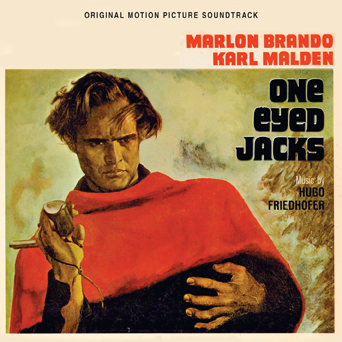
Dear Rich: I have a sizable film collection of 16mm music films (soundies) from the 1940’s that I would like to assemble into a program for online distribution. All the films fell into the public domain but many of the songs are still under copyright. You can see all kinds of Soundies on YouTube and the Internet Archive whose music is still under copyright and they don’t seem to be bothered by the copyright owners. Should I play it safe and request permissions from the owners of the films I want to use? Or, has there been some recent court ruling regarding the status of copyrighted music in public domain films I haven’t heard about? No, there haven't been any recent rulings and we wish we could provide a clear course of action. But as public domain expert and author Stephen Fishman writes, “In most cases, if a film was not renewed neither was its music. No court has ever decided the question of whether, in this event, the music is in the public domain along with the rest of the film.” As evidence of the confusion, Fishman cites two examples: a situation involving the 1961 public domain film "One-Eyed Jacks" which was not renewed but the film's score was timely renewed in 1989; and the elimination of four songs by the distributors of a DVD version of the public domain film “McLintock!” The songs were removed to avoid paying clearance charges of 48 cents per unit. It is possible that posters on You Tube and at Internet Archives offer these films with the music (and you may be able to do the same thing), but the more popular and/or lucrative your venture becomes, the more likely you will hear from a music publisher.

Wednesday, August 28, 2013

Wants to Use 50-Year Old European Recordings


Dear Rich: I'm thinking of starting a a business that re-packages recordings on memory sticks. I'm in San Francisco and I have a partner in London. In England, recordings that are over 50 years old are in the public domain so we're timing things so that we can release collections of music from the so-called British invasion - Stones, Beatles, Kinks, etc. We figure if we sell these tracks out of Europe -- our website server is in Brussels -- then people in America can buy the tracks as an import. What do we need so that we don't get in trouble? We think you may need a new business plan. British law used to provide for expiration of copyright of recordings after 50 years. In fact, the Beatles 1962 single of Love Me Do b/w P.S. I Love You was one of the last recordings to fall into the public domain. Then, thanks to some kicking and screaming by British labels fearful of enterprises such as yours, the law was changed from 50 years to 70 years. As a result, in Europe, a recording issued in 1963 won’t fall into the public domain until 2034. There is an exception to the rule -- if labels don’t make 50-year+ recordings available for “consumption and purchase,” the artist will be able to claim copyright.
Two more caveats. Even if a recording falls into the public domain, the underlying song copyright--protected for the life of the songwriter plus 70 years -- is not likely public domain. So you will have to obtain mechanical licenses from the music publishers. In addition, music labels are a territorial lot. If they find a company engaging in substantial exports of copyrighted music (that is, recordings that are still protected by copyright in the U.S.) across borders, they will pursue the company with litigation. As a result, you may need to revise your plans -- for example, here's how a Canadian music website handles the public domain issue.

Friday, July 5, 2013

Wants to Use Song Snippets For Guitar Lessons


Dear Rich: I am working on a "for profit" project to create musical exercises for instrumentalists. Part of this will be to use a "snippet" of a popular song as the basis of the exercise. In one case, this is one measure of the guitar part with no reference to the lyrics or the greater song. The exercise would introduce some slight variations on the pattern and then would then transpose the pattern in each key. Would this be considered "fair use" since I'm building a "new work" from this very small kernel of a previously published and performed work? I've learned from your blog that providing an acknowledgement of the composers, the song name, and the album the song originally appeared isn't a factor, but I'm planning on doing that anyway. As you may be aware there are two copyrights on music recordings. One is the sound recording copyright (the recorded performance), usually owned by the record company; the other is the songwriting copyright for the song (the chords, melody and arrangement -- basically what you see on the sheet music). If you're using a snippet of the original recording -- for example, a segment from a Jimi Hendrix recording -- it's possible (though unlikely, as we'll explain) you could be liable for infringing both copyrights.  If you've recreated the segment by recording it yourself, you've reduced your liability somewhat because there's one less entity that might hassle you -- the record company that owns the original recording -- although you still may be hassled by the song owner. (You can read more about sampling here.)
Fair use. We think that the smaller the size of your snippets, the stronger your fair use argument. We're not sure about the rest of the factors ... and we're not sure that you're actually transforming the work or building a new one. Transpositions and retiming of a sound wave are likely to be viewed as superficial transformations (and the variations could be perceived as derivative infringements).
The reality. We can point you to a few cases ... one that says that any use of a sound recording is an infringement (we think that's an aberration), and one that says that just sampling a short segment of the song copyright may be excusable as a fair use (you can read about both in a previous entry). But we don't think either case really offers much guidance. As usual, it really comes down to whether record companies and music publishers discover your use and care (or are too busy pursuing pirate sites to go after your business). After all, zillions of YouTubers are offering similar styled guitar lessons without apparent hassle. If you're concerned about the risks, we'd suggest building your project in steps ... post a few lessons at a time. If you get a cease and desist letter from someone, take down that lesson instead of trying to fight it.
P.S. And check out our video above to learn Bruce Anderson's great guitar/sitar solo.

Monday, May 20, 2013

Bringing in a Musician After the Song is Written

Dear Rich: I have many songs that were written/recorded to a drum beat (loop) or with no music. I write the lyrics, arrangement and compose the vocal melody. My understanding of publishing splits is 50% lyrics and 50% music. If I bring in a musician after the fact to help write the music, what is the publishing split since the music was written to my melody and vocal arrangement? A publisher told me the vocal melody is considered part of music composition. Is this true? Some musicians/composers often ask for 25% publishing since the song was written when they got involved and some want 50%. Which is correct and/or fair? Also, what would their copyright share be? When I co-write with someone from scratch, we split everything 50%-50%. I like to keep the math easy and both of us happy. If you are bringing in musicians after the song is written, there is usually no reason to share songwriting revenues. You can, if you wish ... Many people in your position simply pay the musician a fee and have them assign any rights to you. However, if the musician is doing more -- for example, rewriting the melody -- or you just want to share songwriting revenues instead of paying for an assignment, read on.
Three things:
  • There's a difference between sharing co-writing copyright credit and sharing revenues. Only someone who has materially contributed to the writing of the composition is entitled to copyright co-ownership. On the other hand, you're free to share your songwriting revenues with anyone.
  • A lot depends on how you structure the music publishing. We can't go into the gruesome details here but you can learn more about music publishing (and see examples of royalty splits for a band) in our Music Law book (or check out Randy Wixen's The Plain and Simple Guide to Music Publishing).
  • There are no fixed rules for dividing songwriting revenue.  
What's Common? Music publishing originated in the days of Tin Pan Alley. Songs were sometimes co-written by a lyricist (words) and a composer (music) -- the formula for classic show tunes like The Sound of Music and for rock tunes such as Satisfaction. Sometimes, as in the case of the latter tune, the lyricist also contributes the vocal melody. Typically these teams split the revenue 50/50. The Tin Pan Alley model is still around and so are lots of other variations, some of which reward people who had nothing to do with writing the words and music. Nowadays contributions that result in the song's success are given songwriting royalties -- for example, a DJ whose beats become the secret sauce for a new club hit.  Whatever you decide, formalize the arrangement in writing, even if it's just a slip of paper that you both sign indicating songwriting splits.

Wednesday, May 1, 2013

Music Publishing: Admin v. Co-Publishing

Dear Rich: May I ask for some advice towards various factors that may affect income (including net receipts/at source deals) between administration and co-publishing deal? The biggest factor is the reputation and trustworthiness of the company you're dealing with. If the company doesn't have a rep for timely and accurate payments, it's not worth signing on the dotted line. The second most important factor is you. If you're a songwriter who can pave your own way as a performer and attract attention and deals, then an administration deal is all you need (and will probably be more profitable). If you're a songwriter who needs the muscle of an aggressive song publisher to get your tunes into TV, movies or the hands of other artists, a co-publishing deal (with the right publisher) will generate more income. In either case, the third most important factor is the length of the arrangement. The shorter the time period -- say five years if you can manage it -- the better for you as it allows you to either eject from a potentially unfortunate arrangement, or renew a profitable one. You're more likely to get a short deal with an admin agreement.
Differences ... As you're aware a music publisher is a company that owns and profits from song copyrights. Some music publishers serve solely as "administrators," making sure you're properly registered with performing right societies and collecting revenue. For these tasks of managing your songwriting business they collect a fee, for example, 5 to 25% of your revenues. A co-publishing deal requires that you give up more, including half of the copyright, in the hopes that you'll get more in return. The co-publisher earns 25% to 50% or more of the songwriting arrangement under a convoluted system that's discussed in more detail in our Music Law book. We talk about the differences in a previous entry.

Monday, December 24, 2012

Musician Claims Contract Signed Under Duress

Dear Rich: I recently resigned as a guitarist from a band I had co-founded due to harassment. Upon leaving (and under duress), I was forced to sign a 'departure contract' formed by one of the band members (no legal background). This contract had stated that I am not to be paid any money for the work I had put into the band. I was the main songwriter and producer in this project and wrote guitars, bass, drums. They gave me performance credits on the album but will not acknowledge compensation for this work. The band has been getting some strong publicity now and I would like to know what my rights are as a now departed member of the band?  Should I contact a music lawyer? Should move on or wait it out? I would just like to get closure and know that the work I put in wasn't rewarded to someone else. In order to reach a state of epistemic "closure," you must "uncloud" your uncertainties (at least that's what Wikipedia says). So here goes.
Can the contract be enforced against you? A valid contract is one that a court will enforce. Some reasons your contract might not be enforceable are if (1) it violates the law or public policy, (2) there's no consideration -- you didn't receive any benefit from the arrangement, (3) the other side fraudulently induced you to sign, or (4) you were coerced (duress) into entering into the agreement. If fraud or duress are present, then you can void the contract. All parties are released from their obligations and you can pursue your claims against the band. In cases of intentional fraud—for example, if a band mate deliberately lied to induce a deal, you can elect to seek additional damages under tort law. (BTW, even if the agreement is valid, you may also have claims that the other side breached it, thereby terminating the agreement.)
What is duress? Duress occurs when a party’s consent to a contract is physically or mentally coerced. A party under duress lacks the legal free will to refuse to sign. Therefore, the agreement is not voluntary and the contract that results must be voided. Threats of physical force are rarely used as a means of inducing a contract. Instead, economic duress has emerged as a bigger issue. Economic duress (also known as “business compulsion”) occurs when, for example, a supplier of goods jacks up the price on a customer who is in desperate need of goods, or one party threatens to breach an existing contract unless the other party agrees to some further demand. But keep in mind that proving duress in a court or at an arbitration -- which is where you'll have to prove it -- requires more than threats. You'll also need to show you had no other choice but to comply, a sometimes difficult task.
Does the agreement transfer copyright? The musical compositions and the musical performances are works that are subject to copyright. In order for the band to acquire those rights, the agreement (or some other written agreement) must specifically transfer these rights. If the agreement doesn't say anything about copyright ownership, your rights in those works may be unaffected and you are probably free to register your rights in your name. Along with that, you can exploit your interest in the songs and collect royalties for their use.
Bottom Line Dept. If you want true closure, you should see a music attorney.

Monday, June 4, 2012

When Does a Version of a Song Qualify as Fair Use?

Dear Rich: I am working on a tribute album and I'm trying to figure out the distinction between derivative works and transformative fair use.  At what point is a song transformative enough to be considered fair use, vs. a derivative work? And how can I use this knowledge to negotiate with publishing companies, prior to recording/selling and performing the songs? If I am not given permission to create or sell a derivative work and I only perform them live, what is the risk and potential liability of infringement? Sorry, we would have gotten to your questions sooner except we've been obsessed with creating animated GIFs ever since Photoshop Elements 10 arrived (finally, you can change the timing on the animation). We expect to get over it soon, and yes, we know they're annoying to watch. 
Right, you had a question. If you're doing a tribute album, we assume you're doing cover versions of existing songs and that it is a "tribute" to a band or performer. There are two legal rules at work here.

  • Compulsory license. First, under Section 115A of the Copyright Act, a music publisher must permit you to record any song that has previously been recorded and released to the public. However, you cannot use the compulsory (mechanical) license if you change the basic melody or fundamental character of the song. For example, a singer cannot alter a song’s lyrics without permission. That said, many people change elements of songs without a problem (as we mentioned in this previous entry).
  • Derivatives and fair use. A derivative work is one that is based upon or modifies an existing work. A fair use is when an existing work is used in such way that a court, balancing four fair use factors determines that permission is not required. The transformative quality of the work is an important factor but so is another factor -- the amount and substantiality of the portion taken. In most music cases where fair use is found it's because a relatively short segment of the original work is used. We don't think providing a full-length cover of a song will qualify as a fair use -- even if it is as transformative as this.

The "So What" Issue. Even if you believe you have a strong fair use argument, a music publisher is likely to respond, "so what?" Only a court -- not you or your lawyer -- can verify that it is a fair use, so a publisher is unlikely to feel pressured to grant permission based on your arguments. What you might wish to consider --  although this advice is contrary to Section115A --  is to simply pay the mechanical license fees even though you have modified the songs. Our experience is that most publishers just want to be compensated and don't want to have to deal with special permissions. As for performing the songs live -- any venue where you play will have to pay performing rights fees for each song -- so it is unlikely that music publishers will care about your version just as long as the song title is correct.