Showing posts with label movie. Show all posts
Thursday, October 9, 2014
Can I Use Carpet Pattern from The Shining?
Dear Rich: I am an independent knitwear designer, and I designed a caplet using the brown, orange and red carpet pattern from the Shining. Initially I did it entirely for personal use as part of costume. However now that it is finished, I'd like to make the pattern available for sale to other knitters, who may or may not use the iconic colors, but like the the design and want to make their own. I'm at a loss though on how to navigate this issue legally. From reading your blog I understand that movie costumes are not covered by copyright, but are set details like the carpet, or other furniture patterns or background art covered by either copyright or trademark laws? Would this be a trademark issue? Would the copyright/trademark apply if the design was made in different colors? And now that Stanley Kubrick has passed away how do I determine who to contact for permission, if needed? We'll spare you the lengthy legal explanation regarding derivative rights (yes, some elements within films are separately protectable) and protection of fabric patterns (yes, copyright protects the designs) because it appears as if the owners of the film are not claiming (or enforcing) proprietary rights for the carpet. How else to explain its use on fabric patterns, earrings, as well as sweaters, cardigans, scarves, ski masks, door mats, and area rugs. And of course, the carpet was also reproduced in another movie. (We don't see any indication of proprietary markings on the product pages so we assume these are not licensed uses.) Most likely the owners of the film copyright are not asserting rights and you should be free to use the design as you wish.
Friday, August 2, 2013
Wants to Write Sequel to It's a Wonderful Life
Dear Rich: My question is that I would like to write a sequel to “It’s a Wonderful Life” in novel/e-book format. I have been trying to determine whether the original film’s characters and storyline, or anything from the short story on which the film was based, are in public domain. Or if not, how I would find out how to obtain permission to write a novel sequel to the film. I read your article entitled Public Domain Trouble Spots in which you wrote that although the film was in the public domain, the sound track was not. Was the film itself never copyrighted, only the soundtrack? And wouldn’t the new copyright laws now protect the originators of such works, even if they were created before the laws were changed in the 1970’s? Although it's fine for the film to be the inspiration for your flower shop, band and shawlette (who knew?), you should probably rethink your plans for an It's a Wonderful Life eBook sequel. That's because the story on which the film is based is still protected. The copyright for the story was renewed in 1971 and is protected until 2039 (95 years from the date of publication). If you proceed with your plans, the owner of rights -- we presume that's the estate of Philip Van Doren Stern -- could come after you for copyright infringement. It's possible (but unlikely) that your derivative work will be protected under fair use (And authors in similar situations have worked out settlements.). In either case, it would be expensive to prove that you're correct and unless you're sure your work will fly below the copyright owner's radar, it's best to come up with a new idea.
Wednesday, May 15, 2013
Do I Trademark My Documentary?
Dear Rich, I am filming a documentary. Should I trademark it? Should I brand my documentary? How do I do that? Just in case you don't understand what a trademark is, we provide some background here. We can save you some time -- a single book title or movie title cannot be registered at the U.S. Patent and Trademark office. You can, however, register a title that's part of a series, for example, the Up series. (Here's an article with some workarounds for acquiring trademark protection for single movie titles.)
Branding. We remember when "to brand" meant to burn the flesh of an animal to indicate ownership. Ouch! Nowadays, of course, it refers to all kinds of marketing stuff typically related to a product or service line. In addition to product branding, there's personal branding, faith branding, nation branding, and employer branding. We're going to assume that branding your documentary means that you want to expand your "product line" to as many happy customers as possible. We couldn't tell you how to do that and if we could, we'd probably be doing something else.
Monday, October 15, 2012
He Wants to Use B-Horror Movie Samples
Dear Rich: I have two questions but if you guys are too busy then I think the first one is the most important. I'm recording an EP with my band and we've been considering the idea of using audio samples from maybe a few horror B-movies. I've tried searching the blog for a similar question but no luck so far. I've heard that maybe a few seconds doesn't count as infringement? Our other concern is: A few months ago we found a picture which is basically a scene from a very popular movie. We edited a lot and placed the band name on top of it and then joked about making a limited run of T-shirts with that image on it. Turns out people did like them and asked if we were going to make them. Some say that since we edited the image that we now own that image, but It doesn't really reassure us that much. Would we get in trouble if we sold a few or even give them away? The blog already has helped us a lot and I'm thinking of buying your Music Law book on Amazon. Hmm... You're thinking of buying our Music Law book? Is that a passive-aggressive incentive? Will we close the sale by answering? (Or perhaps if we do answer, will you be less likely to buy?)
Right, you had two questions. It is infringement to copy audio samples from B-movies. Taking a few seconds may qualify as a fair use -- though keep in mind that at least one court has (perhaps illogically) held that taking any audio sample (regardless of its size) violates the sound recording copyright. You're okay to use the samples if the film is in the public domain. (Note, even in public domain films, composers have claimed separate musical copyright.) You may be able to defend your activities depending on the fair use factors. But as we always point out, you can only "win" a fair use argument if you're prepared to fight it in court. Considering the vast amount of unchecked sampling, we think the bigger issue is whether the owner of the B-movie rights will ever learn of your use, or will care if they find it.
Using the movie picture on a t-shirt. If you edited the image you can stop others from using your modifications. But you don't "own" the image. You only own what you added. The owner of the underlying copyright can still stop your derivative use. We don't know if you would get it trouble for using the image -- BTW, it wouldn't make any difference whether you sold them or gave them away for free. Again, that's a matter of anticipating the likelihood that the film's copyright owner would spot your use and care. Our guess is that you'll fly below the radar. (We answered a related question in a previous entry.)
Right, you had two questions. It is infringement to copy audio samples from B-movies. Taking a few seconds may qualify as a fair use -- though keep in mind that at least one court has (perhaps illogically) held that taking any audio sample (regardless of its size) violates the sound recording copyright. You're okay to use the samples if the film is in the public domain. (Note, even in public domain films, composers have claimed separate musical copyright.) You may be able to defend your activities depending on the fair use factors. But as we always point out, you can only "win" a fair use argument if you're prepared to fight it in court. Considering the vast amount of unchecked sampling, we think the bigger issue is whether the owner of the B-movie rights will ever learn of your use, or will care if they find it.
Using the movie picture on a t-shirt. If you edited the image you can stop others from using your modifications. But you don't "own" the image. You only own what you added. The owner of the underlying copyright can still stop your derivative use. We don't know if you would get it trouble for using the image -- BTW, it wouldn't make any difference whether you sold them or gave them away for free. Again, that's a matter of anticipating the likelihood that the film's copyright owner would spot your use and care. Our guess is that you'll fly below the radar. (We answered a related question in a previous entry.)
Thursday, September 6, 2012
Night of the Living Kids Book
Dear Rich: I work for a children's publisher and one of the things we periodically produce are young reader editions of horror classics, such as Dracula and Frankenstein. In the last decade, another horror favorite has risen (from the grave) in popularity: the zombie. Now, the ur-text for the zombie, as people today think of them, is the 1968 film 'Night of the Living Dead'. Famously, the original film is in the public domain owing to some error made by the production company. So my question is, does that mean the story itself is public domain, too? For example, would it be legitimate to produce a book using the same name, character names and plot? Or, failing that, would it be legitimate to produce a book that copied the story but went under a slightly different name (e.g. 'Night of the Zombies'), and changed the character names? Copyright experts agree that the 1968 film, Night of the Living Dead, is in the public domain in the U.S. and -- thanks to a case involving a 1962 John Wayne film -- so is the underlying screenplay. That would leave others free to duplicate the story, plot and dialogue and create derivatives. The characters such as Ben, Barbra, Harry, Helen, Tom, and Judy, would also fall into the public domain, as this case has indicated. Finally, the title of the work has also passed to the public domain as the Supreme Court has held that the title of a work that enters the public domain cannot be protected as a trademark. Which means that a children's re-telling, as you propose, would not violate U.S. copyright law. However, your derivative work could only be protected to the extent of any new or "incremental" material added to the original.
Muddy waters. Although the story, title, plot, dialogue, and characters are in the public domain, the original screenwriters (George Romero and John Russo) went gone on to create copyrighted sequels and remakes of the original using the same characters. (The two screenwriters couldn't agree on a sequel and Romero acquired the right to movie sequels using "Of the Dead" and Russo acquired rights to "Living Dead" movie sequels. Russo also went on to create a series of Night of the Living Dead comics using the characters and plot from the original.) No trademarks have been federally registered for "Night of the Living Dead" for books but the comics publisher has a reasonable claim that the term is used as the trademark for the series. All of this adds to the confusion surrounding copyright (and explains why a squadron of would-be and oft-bogus enforcers swoop down in opposition whenever the film is loaded on YouTube).
Bottom Line Dept. We think the coast is clear for a young reader's edition in the U.S. but you may want to get an opinion letter from a copyright/trademark lawyer, if possible. You have a good chance of prevailing on copyright claims but we think your activity may possibly attract lawsuits, anyway. In addition, we can't confirm copyright status of the film in the U.K. (where you're located).
BTW ... For those interested in "monetizing" the film, it's also unclear whether certain "separable" elements of the film are also public domain -- for example, the music (credited at different times to William Loose and Fred Steiner and to Scott Vladimir Licina), and the trailer for the film.
Muddy waters. Although the story, title, plot, dialogue, and characters are in the public domain, the original screenwriters (George Romero and John Russo) went gone on to create copyrighted sequels and remakes of the original using the same characters. (The two screenwriters couldn't agree on a sequel and Romero acquired the right to movie sequels using "Of the Dead" and Russo acquired rights to "Living Dead" movie sequels. Russo also went on to create a series of Night of the Living Dead comics using the characters and plot from the original.) No trademarks have been federally registered for "Night of the Living Dead" for books but the comics publisher has a reasonable claim that the term is used as the trademark for the series. All of this adds to the confusion surrounding copyright (and explains why a squadron of would-be and oft-bogus enforcers swoop down in opposition whenever the film is loaded on YouTube).
Bottom Line Dept. We think the coast is clear for a young reader's edition in the U.S. but you may want to get an opinion letter from a copyright/trademark lawyer, if possible. You have a good chance of prevailing on copyright claims but we think your activity may possibly attract lawsuits, anyway. In addition, we can't confirm copyright status of the film in the U.K. (where you're located).
BTW ... For those interested in "monetizing" the film, it's also unclear whether certain "separable" elements of the film are also public domain -- for example, the music (credited at different times to William Loose and Fred Steiner and to Scott Vladimir Licina), and the trailer for the film.
Thursday, February 2, 2012
Re-Drawing Movie Still at a Website
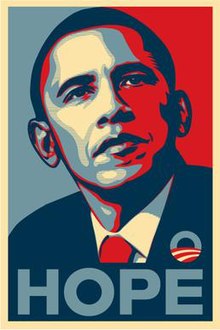
Dear Rich: I saw your entry on "Using Movie Stills at a Website." What if I draw a picture from the scene? Is that still copyright infringement? Would the quality of reproduction also have a factor (i.e. a very realistic recreation of the still vs. something more paint-like)? As we mentioned last February, unauthorized reproductions are infringements unless excused by a defense such as fair use. The same rules apply for unauthorized derivative works and these can trigger the same legal responses as straight infringements (as Shepard Fairey learned when he created his artsy Obama Hope imagery -- which has triggered its own derivative infringements). You don't protect yourself by making a more "artistic" derivation. It's infringement as long as a lay observer believes that the underlying (or preexisting) work has been copied (for example, as in the example, above). In any case, this legal mumbo-jumbo we're spouting is ignored by millions of people on the web every day. So, the real question is whether your creation of an unauthorized derivative work based on a movie still will make somebody so mad that they'll come after you, take your home, car and new Mac laptop. As usual, we couldn't tell you ... though as we've mentioned before, you're likely to be better off if you use smaller images (thumbnails are best), you don't poach from popular licensing sites such as Getty Images (that regularly troll for their digital fingerprints), and you don't use the image more than once, or for commercial purposes such as merchandise. And of course, the popularity of your site may also make you a more likely target.
Tuesday, April 5, 2011
Can We Make Custom Movie Posters?
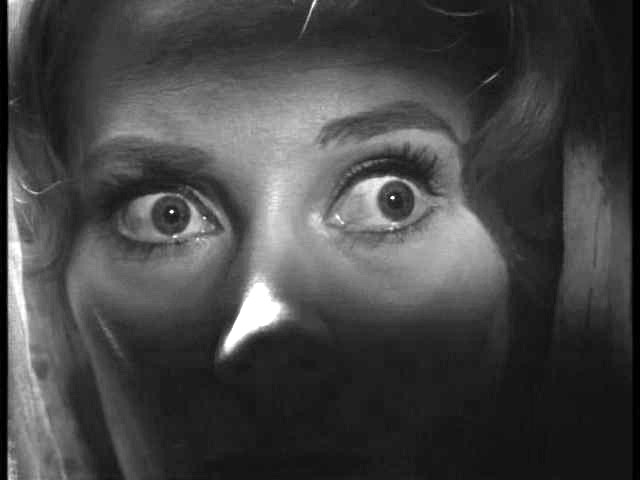
Right, you had a question. We love your theater for presenting older films (no subwoofers needed for these movies) and we love your theater for making original posters of the film. (Can we pre-order Carnival of Souls?). We hope our love for you doesn't affect our judgment but the short answer is that we think your creation and sale of movie posters will probably be fine.
The difference between music posters and movie posters? Yes, there is a diff. Movie posters usually include copyrightable elements from films or copyrighted characters from those films -- think Sam Spade, Superman, or the Terminator. That's not the case with music posters where the emphasis is on the artwork and the event. We bring that up because the only way we can see you tripping any alarms is if you use copyrighted stills or imagery from a film (or as in the case of this lawsuit, you copy a non-film copyrighted image into your poster). But if we were a betting blog, we'd bet that the copyright owners of these films (if they are even aware of your use) won't bother chasing after a hip Ottawa movie theater which may after all, be one of the few paying venues showing such films. Takeaway: If you're really paranoid, keep in mind that the more original the poster -- and the less use of stills from the films -- the less chance for hassle.
This just in from our CYA Dept., We're not experts on Canadian copyright law which differs in many ways from U.S. Copyright law (also, note the distinction between "fair dealing" and "fair use").
Tuesday, March 1, 2011
He wants to use image from concert video
Dear Rich: I have some old Who videos from a concert about 35 years ago that I took one frame out of and made my own electronic art out of it. While what I created is quite different then the original frame, it is the foundation of my art picture that I am left with. If I were to hang that up or sell it, would I be violating copyright laws. It was from a very old concert and the frame that I used as a my foundation for what I created could have come from anywhere. And, if I am violating copyright, is it really enforceable and/or do you think it would be an issue with anyone if I were to sell this edited image? Short answer dept. No we don't think your use is likely to become a legal issue. As we explained in yesterday's entry, using a single still can constitute infringement though it's usually not likely to result in a lawsuit. The concert film is most likely protected under copyright law as the Who haven't been around long enough to trigger any of the traps that would drop the movie into the public domain -- for example, if it was published before 1964 and not renewed.
Fair Use Dept. It sounds as if you have the makings of a decent fair use argument (although we'd prefer if you didn't get embroiled in that type of dispute). Here's a link to compare your use to other visual arts fair use cases.
Staying out of trouble dept. Are you selling only a single print? Problems are more likely to develop if you market the work in bulk. So if you're paranoid about being hassled, don't mass produce your prints.
Fair Use Dept. It sounds as if you have the makings of a decent fair use argument (although we'd prefer if you didn't get embroiled in that type of dispute). Here's a link to compare your use to other visual arts fair use cases.
Staying out of trouble dept. Are you selling only a single print? Problems are more likely to develop if you market the work in bulk. So if you're paranoid about being hassled, don't mass produce your prints.
Monday, February 28, 2011
Using movie stills at a website
Dear Rich: I am planing to make a site that shows screenshots from the movies that I love. A movie might have 50 or so, (or even more?) screenshots in it. There will be no critics or teaching material. There might be an affiliate link to purchase movie. Of course I want them to be in good quality so these might not consider as thumbnails but not wallpaper size also. I made a quick research and have a roughly an idea what might be considered as copyright infringement. It seems like a very fuzzy area in my opinion. On one hand it is promoting the work but on the other hand copyright holders might ask for permission. History Dept. Did you know that prior to 1912, the U.S. Copyright Office did not recognize film as copyrightable subject matter? Early filmmakers had to print out every frame of the film and register each movie as a series of photographs. The law was amended in 1912 because, as a Congressional report announced, movie production, “has become a business of vast proportions.”
Yes, you're infringing. It's not really that fuzzy. Unauthorized reproductions are infringement unless excused by a defense such as fair use. You probably can't afford to fight a fair use battle, so the question you're probably more concerned about is whether movie companies will come after uses like yours. After all, a lot of websites freely use movie stills to discuss films and don't run into problems. Our suggestion: follow Aristotle's advice, "Everything in moderation." If you use two or three stills or only use thumbnails, you're unlikely to get much fanmail from movie company lawyers. But when you begin using 50 full-size images, you're more likely to show up on their radar screen.
Are you promoting the film? Many infringers argue that they're actually promoting the work they've ripped off ... and you can certainly bring that up as part of your fair use defense. But that argument rarely succeeds. First, you can promote the film without infringing copyright. Second, like many bloggers and website owners, it looks like you're really concerned with promoting your own site and earning money from affiliate sales. Finally, copyright owners might not want to be promoted in the manner you do it at your blog. Part of the benefit of owning a copyright is that you can control, to a limited extent, the manner in which the work is promoted.
Speaking of theft ... We recently re-watched this heist film (we love Akim Tamiroff) and when we Googled it, we noted (wistfully) that the movie itself had been heisted.
Yes, you're infringing. It's not really that fuzzy. Unauthorized reproductions are infringement unless excused by a defense such as fair use. You probably can't afford to fight a fair use battle, so the question you're probably more concerned about is whether movie companies will come after uses like yours. After all, a lot of websites freely use movie stills to discuss films and don't run into problems. Our suggestion: follow Aristotle's advice, "Everything in moderation." If you use two or three stills or only use thumbnails, you're unlikely to get much fanmail from movie company lawyers. But when you begin using 50 full-size images, you're more likely to show up on their radar screen.
Are you promoting the film? Many infringers argue that they're actually promoting the work they've ripped off ... and you can certainly bring that up as part of your fair use defense. But that argument rarely succeeds. First, you can promote the film without infringing copyright. Second, like many bloggers and website owners, it looks like you're really concerned with promoting your own site and earning money from affiliate sales. Finally, copyright owners might not want to be promoted in the manner you do it at your blog. Part of the benefit of owning a copyright is that you can control, to a limited extent, the manner in which the work is promoted.
Speaking of theft ... We recently re-watched this heist film (we love Akim Tamiroff) and when we Googled it, we noted (wistfully) that the movie itself had been heisted.
Subscribe to:
Posts (Atom)