Showing posts with label NDA. Show all posts

Thursday, July 14, 2016

Will Fictional PR Consultant Get Sued?

Dear Rich: I would really appreciate your input on a piece of fiction I am writing, involving a public relations employee. In my book, the PR employee divulges information about one of her clients to a newspaper reporter, The reporter then publishes the information about how the client has been lobbying to have a law created. I'm thinking that the PR employee would have signed a non-disclosure agreement. Could she be sued? Is it likely that her employer would bother, since she is young and has little money.
Being young probably won't make any difference in the employer's decision to sue the PR consultant (unless the employer suffers from Ephebiphobia). However, the PR employee's impecunious status may be one factor affecting the decision; other factors include the value of the confidential information disclosed (or financial damage caused by the disclosure), the financial status of the employer, the emotional composure of the employer (litigious or avenging?), the relative strength of the case, and the desire for (or avoidance of) public scrutiny.
Would the PR employee have signed a nondisclosure agreement? It is very likely that your fictional PR consultant used a letter of agreement or a more formal contract and it's also very likely the agreement includes confidentiality provisions. These arrangements are SOP for PR professionals, publicists, and crisis communications specialists. If the PR person is an employee, not a consultant, the employee would be bound to maintain confidences even without an agreement.
What would happen to a PR professional who breached confidences? A public relations consultant who breached client confidences would face three potential problems: a lawsuit or arbitration filed by the client, professional discipline (expulsion from the Public Relations Society of America for violation of their code of ethics); and loss of business (who's going to trust a PR consultant with loose lips?). Assuming your PR person can be dragged into court the disgruntled employer must still be able to demonstrate that the information disclosed amounted to a trade secret. If it's not a trade secret -- that is, it was publicly known information before the disclosure -- then the employer will have a hard time claiming it's a breach of confidence.

SaveSave

Wednesday, June 17, 2015

Making an NDA With Someone in Remote Location

Dear Rich: Can you advise me as to the best process for arranging a non disclosure agreement with a party in a remote location? Can the agreement be signed and attached in an email? Would this be sufficient or is an original necessary?
Thanks to the federal e-signature law, contracts that are signed and executed electronically are as valid and enforceable as paper contracts. All you need to do is email it to the remote party who emails it back with an electronic signature. People use different types of e-signatures, including typing the signer's name into the signature area, pasting in a scanned version of the signer's signature, clicking an "I accept" button, typing in the name between forward slashes, or using cryptographic "scrambling" technology.
Jurisdiction: Where does the remote party reside? Always keep in mind that enforcing the agreement -- that is, keeping your secrets a secret -- requires a lawsuit. If you are suing an American worker -- even one temporarily at a remote location outside U.S. borders -- you're okay because U.S. courts have jurisdiction over those who reside in the U.S. But if the NDA is with a foreign national or a foreign company with insufficient ties to the U.S., you may have difficulty enforcing your agreement, especially if you must sue in a foreign country. It may help to include an injunctive relief provision and a foreign arbitration provision.

Monday, July 29, 2013

What is "client stealing"?

Dear Rich: I was asked to sign an agreement with a company in L.A. that creates music for film trailers and production music libraries. The agreement says that I am not permitted to contact the clients of the company and if I do, it will be considered "client stealing"? What does that mean? One way or the other, we think the company is trying to prevent you from competing against it in the future.
Is it a noncompete? If the agreement is viewed as purely a noncompete agreement -- that is a court considers it as preventing you from competing -- a court is unlikely to enforce the agreement in California where such arrangements are prohibited.
Is it an NDA or nonsolicitation agreement? If however, the client list is considered to be confidential information -- that is, it's not easy to determine who is a client or to locate the client pool through typical industry sources -- then this information may be considered a trade secret. In that case the company can enforce the agreement. If, however, the company's clients are publicly known and a simple Google search could turn up a list, it's less likely that the provision will be enforced under an NDA or under a nonsolicitation agreement.

Thursday, July 25, 2013

Is Spouse Bound By NDA?

Dear Rich: I signed an NDA with my employer and one of the things it said was that my spouse was also bound by it even though she didn't sign it. Is this legal? If you're asking, "Will a court enforce the NDA against your spouse?" the answer is "No."  Unless your spouse is a party to the nondisclosure agreement and signs it, the agreement can't be used against him or her. That's not to say there won't be consequences if your spouse discloses confidential information that was obtained from you. In that case, the employer can pursue you for making the unauthorized disclosure in the first place. Similarly, if your spouse obtained the confidential information through improper means -- for example, your spouse stole your password and downloaded the info without you knowing about it -- the company could pursue your spouse under state laws. (You can find your state's trade secret laws here.).

Wednesday, February 29, 2012

Does Employer Have to Furnish Copy of NDA to Employee?

Dear Rich: Is it required by law that employers provide a copy of the signed nondisclosure agreement to the employee after they have signed it? In most states, yes, the employer must furnish a copy of each signed agreement including NDAs. If the employer doesn't provide a copy at the time of execution, then the employer usually must allow the employee to view and copy the agreement upon written request. These laws, sometimes referred to as "access to personnel records" legislation differ from state to state and you can find more about your state's law in this article.

Wednesday, February 8, 2012

Claiming Glazing Technique as Trade Secret

Dear Rich: I have a crafts business and I've developed some ceramic glazing techniques that are pretty unique. I took on an assistant in 2008 and trained her to do these techniques. I've always told her not to tell anyone about the process or materials used in the glazing and as far as I know she never has. The trouble is that she has gone out on her own and is now competing against me at local fairs and stores using some of these glazing techniques. Is there anything I can do? Maybe. If you can claim that the techniques are your trade secrets, you may be able to prevent your former assistant from using them. As we explain here, you need to prove that the process is not generally known within your industry and that you've taken reasonable steps to keep it confidential. Here is an article detailing the steps you should take if a secret is stolen (and you can follow up with a cease and desist letter). You don't have to have a nondisclosure agreement (NDA) with your former assistant because most states have laws in place that prevent trade secret misappropriation (theft).  It may also make a difference if the assistant is characterized as an employee or as a contractor. By the way, in the future, you might want to use an NDA and at this site we've provided a basic one (click on the section titles for explanations) as well as a selection of specialty NDAs. Also, if the assistant has copied any of your ceramic imagery or copyrightable designs, you may be able to pursue the assistant under copyright law. Check out our crafts law book for more details.

Tuesday, December 20, 2011

Does Filing For Patent End NDA?

Dear Rich: If company A and company B have both signed a legal nondisclosure agreement (NDA) and then company A applies for a patent on the business plan covered in the NDA, does that make the information public and therefore make the NDA null and void? Information in a patent application becomes public when the USPTO publishes an application 18 months after filing. If the applicant does not plan on filing in foreign countries, the applicant can opt out of the 18-month publication program. If the applicant has opted out, the application will only become public if the application issues (or the applicant changes position on foreign filing). (We've discussed that previously, here.)
What happens after publication. Whenever the information is published, that information can no longer be protected as a trade secret and will not be subject to an NDA. That doesn't necessarily make your NDA "null and void." If other nonpublished information has been included as part of the NDA, that should still be protected. For more on the subject, check out our NDA site.

Thursday, December 15, 2011

What's the Meaning of "Relationships" Clause in Contract?

Dear Rich: I was reading the basic NDA on your website and I'm unsure of one clause you included. "5. Relationships. Nothing contained in this Agreement shall be deemed to constitute either party a partner, joint venturer or employee of the other party for any purpose." This is a confusing statement. Would you be able to explain what this means? Any help would be appreciated. Thanks! If you were reviewing an NDA at our NDAsforFree.com site, then the explanation should have been available to you by clicking on the hyperlink for "Relationships." If you were unable to access it, here's an explanation below. (Note that this clause is also sometimes referred to as a "No Joint Venture" clause, too.)
Your relationship with the receiving party is usually defined by the agreement that you are signing -- for example an employment, licensing or investment agreement. To an outsider, it may appear that you have a different relationship, such as a partnership or joint venture. It's possible that an unscrupulous business will try to capitalize on this appearance and make a third-party deal. That is, the receiving party may claim to be your partner to obtain a benefit from a distributor or sublicensee. To avoid liability for such a situation, most agreements include a provision like this one, disclaiming any relationship other than that defined in the agreement. We recommend that you include such a provision and take care to tailor it to the agreement. For example, if you are incorporating the NDA provision in an employment agreement, you would delete the reference to employees. If you are using it in a partnership agreement, take out the reference to partners, and so forth.

Tuesday, November 1, 2011

Will NDA With Foreign Company Prevent Theft?

(c) Sasha Stim-Fogel
Dear Rich: I have a patent pending here in the states but I want a Chinese company to manufacture my product. Unfortunately, I don't have any intellectual rights overseas. Will a nondisclosure noncompete agreement keep a foreign company from stealing my idea? Neither a nondisclosure (NDA) or  a noncompete will keep anyone from stealing your idea whether in the U.S. or abroad. Agreements don't prevent wrongdoing, they merely establish the rules in the event wrongdoing occurs. An NDA is no different. For example, your NDA may establish the location of the lawsuit, whether the winner gets attorney fees, whether arbitration is mandatory, or the ease with which you can get an injunction.
Back in the U.S.S.A. NDAs enforced in the U.S. usually have a predictable outcome. But once you leave American jurisdiction, the results of enforcement are not as predictable and the costs of enforcement are far more expensive. That increases the odds that your NDA will be breached and that a foreign manufacturer will duplicate molds, copy packaging and send knockoffs out the backdoor and into countries in which you have no intellectual property rights.
Separating the good from the bad. Most foreign manufacturers rely on their credibility and trustworthiness to keep getting new business. So your first goal is to do your homework and try to figure out which ones are reliable and which ones are opportunists. The resources, below, may help you.
Protecting secret stuff only. Keep in mind that a nondisclosure will only protect against the disclosure of confidential information. Once your patent is published, it is no longer confidential. So the only thing your NDA can actually protect is confidential information regarding manufacture, sales and distribution, and know-how needed to produce and distribute the patented item. A noncompete is typically aimed at preventing ex-workers from competing against you and that's not likely to provide much benefit. However, some provisions, in conjunction with your NDA -- for example, an agreement that the manufacturer will not manufacture or distribute your product without your authorization -- can be crafted to deal with your specific situation. A lawyer's assistance may be required. In summary, get an attorney to make sure the agreement provides the best dispute-resolution procedures.
After you've found the best choice. Your lawyer may include provisions that will help you in a foreign deal. Here are some things to consider.
  • Jurisdiction. The only way to get a foreign manufacturer into a U.S. court—unless the company does substantial business in the States—is to include a provision in the NDA that requires the manufacturer consent to U.S. jurisdiction. This may prove difficult to negotiate (and to enforce), as foreign manufacturers are often hesitant about submitting to the U.S. judicial system. 
  • Choice of law. Every country has laws as to how contracts are interpreted. You would want the NDA to be interpreted according to U.S. law.
  • Arbitration. Arbitration is similar to litigation but with less formality and expense. You’ll usually benefit by agreeing to have disputes arbitrated. Hopefully, the manufacturer will agree to arbitrate the matter in the United States. If not, there are three popular (though expensive) spots for international arbitration: London (the London Court of International Arbitration), Paris (the International Court of Arbitration of the International Chamber of Commerce), and Stockholm (the Arbitration Institute of the Stockholm Chamber of Commerce). Also, if possible, your agreement should award attorneys’ fees to the victor in the arbitration.
Resources. These resources may help you sort out manufacturers in foreign countries:
  •  U.S. Department of Commerce (DOC) and the U.S. Small Business Administration (SBA) are interested in helping the sales of U.S. goods overseas. If an inventor has a track record and the possibility of actually placing a product in the market (or already has a product and is seeking to market it overseas), the DOC and SBA offer assistance. 
  • Check out the Department of Commerce site at the International Trade Association (ITA) or the DOC’s export information
  • National Trade Data Bank has the most extensive and detailed statistical information on trade in specific products and countries. It is not free, but you can enroll for a free guest subscription and try it out. 
  • The Federation of International TradeAssociations (FITA) has a website with many links, leads, and statistics that can be helpful for international businesses. 

Monday, October 10, 2011

Am I Bound by NDA with Foreign Company?

Dear Rich: I'm in the U.S. and I'm working with a foreign company and we were talking about me possibly helping them with their marketing. I signed an NDA. We both have agreed that I will not do the marketing for them. Now we are talking about me private labeling their product and selling it here in the states. We're in the negotiating stage on price. They are 50% higher than another source for a similar product. I'm happy to give this company 15% to 20% higher payment for their supplement but not 50% higher then their competitor. Because I signed a NDA does this prevent me from going to another vendor? Again, under the NDA it was to discuss marketing consulting. Now we're talking private label/wholesale. So far the negotiating on price is going okay but I want leverage so I'm not handcuffed to buying from him 50% higher them competitive market place. Plus I don't want to sign an exclusive source deal. As far as I know I don't know of any trade secrets that they gave me, just common knowledge that can be found on the web. The Dear Rich Staff is sorry we're not giving you our full attention but we're trying to figure out why our most recent weekly Google Analytics report shows zero visitors since October 1. Oh we see why! Somebody snatched our tracking code. Was it the Chinese bots? Pardon us while we reinsert our code. Ahh ...  that feels better!
Right, you had a question. We're guessing that your primary concern is whether you can ditch the foreign company and go with somebody else without violating the NDA. That shouldn't be a problem, assuming that (1) the document you signed is strictly an NDA, and (2), you don't violate the NDA by giving up any confidential information provided by the foreign company.
Strictly an NDA? Probably you signed a typical NDA that prohibits disclosure of secrets. But be aware that some documents titled Nondisclosure Agreement, Confidentiality Agreement, or even Disclosure Agreement, go beyond just addressing trade secret issues and can include other restrictive provisions --  for example, it may temporarily prohibit solicitations of competitors or contact with customers. So, numero uno, be sure that you didn't sign paperwork that presents additional hurdles. If the agreement is more than an NDA, you may need to consult an attorney.
What can't you do? Assuming it is a straight NDA, keep in mind that their language is often overly restrictive and purposely vague. Those who insist on them sometimes rely on their ambiguity to instill a sense of fear. However, an NDA only prevents disclosure of trade secrets -- confidential information that's unknown by competitors and which is kept confidential via reasonable security efforts. Many such "secrets" don't qualify as trade secrets, and -- if you're confident that they're not protectible -- you are free to disclose them regardless of the NDA. In other words, if all of the information disclosed to you is publicly available, the foreign company will have no basis to sue under the NDA should you go with someone else.

Thursday, September 1, 2011

Can NDA be Governed By Two States?

Dear Rich: I’m working on a Non-Disclosure/Trade Secret Agreement for an employee that we have in California. Our main office is in Kansas City, Missouri. Is this wording legally appropriate?
Governing Law and Jurisdictions: This Agreement will be governed and interpreted according to the substantive laws of the State of Missouri and the State of California. Parties hereby expressly consent to the exclusive jurisdiction of the state and federal courts located within Platte County, in the State of Missouri, USA with respect to the interpretation and enforcement of the provisions of this Agreement. 
Can the laws of 2 states govern an agreement? If not o.k., could you please make a verbiage recommendation? We're hesitant to suggest specific verbiage for your contract ... that might cross the imaginary line between providing legal information and providing legal advice. But we can help you avoid ambiguities in your agreement.
Jurisdiction provision. You've combined two provisions (governing law and jurisdiction) which is not uncommon. The jurisdiction provision (also known as "forum selection") requires that any lawsuits arising from the agreement will be filed in Missouri. In normal circumstances, a California citizen may not be obligated to defend a lawsuit in Missouri (but the jurisdiction provision is intended to give consent in advance). Keep in mind that jurisdiction provisions are not uniformly enforced. For example, Idaho and Montana won't enforce them at all while other states require that the parties have some contact with the state beyond the contract provision.
Governing Law. This provision (also known as "choice of law") allows the parties to choose which state's laws will be used to interpret the agreement. If two states are named there will likely be some ambiguity, and ambiguity may be interpreted against the drafter (your company). It's true that this may not be a major issue for your NDA because both Missouri and California have adopted trade secret laws based on the Uniform Trade Secrets Act. Still, there are some substantive issues on which the two states differ and your clause may create unneeded confusion. As a general rule, we believe California law is more likely to favor employee rights than Missouri -- for example, California has strict rules prohibiting noncompetes. Because you are forcing any cases to be filed in Missouri, it would be less ambiguous to use only Missouri law.  Finally, although you are probably aware, NDAs are only enforceable to protect company trade secrets. We've posted some examples of NDAs at this site.

Tuesday, August 30, 2011

How Do You Create a Trade Secret?

Dear Rich: How are trade secrets made official? Do you have someone sign a NDA? Here's how you create a trade secret: (1) you think something up that will give your business an advantage (2) you keep it to yourself and hide it from others, and (3) if you need to tell someone you make sure that person is bound not to disclose it under the terms of an enforceable agreement (or under a law--for example, most states bar employees from disclosing an employer's trade secrets). There are a few other common sense requirements but that's basically it. The real test of your trade secret program occurs if someone steals your secrets or violates an NDA. For more info, check out this website we created about trade secrets.

Wednesday, August 24, 2011

Contract Worker Broke My NDA!

Dear Rich: I just found out that a contract sewing employee I had sign an NDA is making my product! What can I do to stop him? An NDA is helpful if you want to stop someone from disclosing or using your secrets. So if the contractor took a confidential process or secret information, you can sue. If, however, your products are publicly available and there is no secret element in their production or marketing, you may have a hard time claiming trade secret theft and violation of the NDA.
What else? If you have a noncompete provision and your state enforces noncompetes, you also may have a solid claim. Is your product protected under copyright or trade dress laws? That may be a way to stop copying. Bottom line dept. Assuming this product is important to your business, you should have a lawyer look at your agreement and your product.

Monday, July 18, 2011

How Do You Protect Trade Secrets?

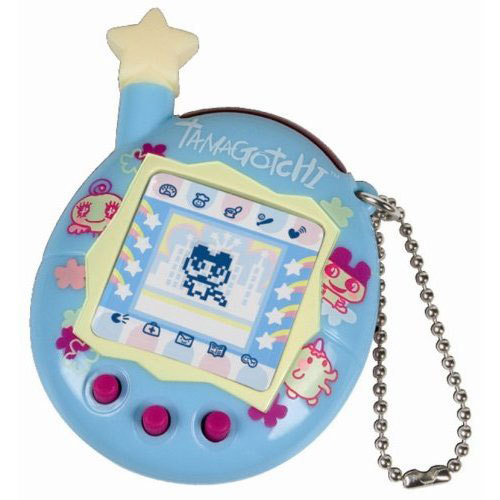
Dear Rich: How are trade secrets made official? Do you have to have someone sign a NDA? NDAs won’t protect just any business information; the information must qualify as a trade secret. To qualify, the info you're trying to protect must not be generally known or ascertainable through legal methods and must provide you with a competitive advantage or have economic value. In some ways, trade secrets are like tamagotchis -- remember those little creatures from Japan that needed constant digital tending or they would pass on. If you have a trade secret, you must always conceal it, disclosing it only to those bound to maintain confidentiality. An NDA helps to conceal a secret because it is an agreement promising to keep a secret. If broken, the agreement provides remedies against the discloser. Other advantages of using an NDA are:

  • It places the party receiving the information on notice that you consider the information confidential. 
  • It specifies what information is defined as confidential, which helps prevent misunderstandings and resolve disputes.
  • It can establish a method for resolving disputes—for example, mandating that the parties arbitrate any disputes instead of going to court.
  • It can guarantee that any dispute will be decided in your geographic area.
  • It can establish which state’s laws will govern disputes. For example, if you are entering into an agreement with a company in another state, you may prefer to have disputes resolved under your state’s trade secret laws rather than the laws of the other party’s state.
  • In some cases, you may have a longer period of time to file a lawsuit than if you did not have a signed agreement.
There are many decent NDAs available on the web but we prefer the ones posted by the Dear Rich Staff  at this website

Friday, June 3, 2011

Software Beta Tester NDA Needed

Dear Rich: What do I do about people who are beta testing my mobile app. Do we need to have them sign NDAs? If you're trying to maintain secrecy about the software and you want to place some limitations on copying and other activities, you should use a beta tester nondisclosure agreement (NDA). We have one posted here. (Click on the links for explanations regarding each provision.) You may find that some of the language is overkill, for example, the security provisions in Section 4. Modify to match your needs.