Showing posts with label quotes. Show all posts

Monday, August 31, 2015

Wants to Create a Book Using Onstage Banter

Dear Rich: We are working on a book that provides a compilation of stage banter quotes from rock concerts -- onstage quotes of famous singers and songwriters. We do not make commentary about the quotes, but some will certainly come across as flattering while others will likely come across as not-so-flattering. There are approximately 180 quotes at this point. Big note here: some quotes are culled from the Internet, most are transcribed by us (both from YouTube videos and the like and also from CD and DVD live recordings). Regarding the quotes -- are we protected under "fair use" to use these quotes in a publication for commercial gain?  Also, what about libel? And if we got the quotes from CDs and DVDs, is the content copyrighted to the extent that we cannot reproduce it via transcription? We are planning to use photos found on "Creative Commons." (We are only using CC BY and CC BY-SA photos and will credit the copyright holder.) Do we need to get a "Model Release" from each singer/songwriter to cover ourselves? Also, what about "Property Rights" of the venue in which the photo was taken? 
We don't think you have much to worry about. As we've indicated before, short phrases are usually not protected under copyright law. So, copying and reproducing one, two or even three line quotes typically won't cause a problem.
Fair use? Longer quotes --  say four or five lines or more -- may be excused under fair use principles. Even though you are not providing commentary, we think the act of curating these quotes may be transformative (and it's hard to imagine that you are depriving the musician of any income by reproducing onstage banter). By the way, when you pull quotes from recordings, you are not infringing the sound recording copyright (unless you copied the recording, not the text) and you're not infringing the song copyright either.
What about libel? It's unlikely you're libeling anyone by reproducing onstage banter. You certainly wouldn't be libeling the musician who made the statement (there's no such thing as "self-libeling"). As for third parties, it's always possible that a musician's blathering may libel a third party but we imagine that these statements have already been published somewhere and nobody's objected. So that shouldn't be an issue. Misattribution may be a problem if you are attributing an awful statement to a musician who didn't make it. But that's an issue for your fact-checking department.
The photos. You should be fine using Creative Commons licensed photos assuming you abide by license conditions. You don't need a model release (or property rights permission from the venue) as your uses within your book are for editorial purposes. To sidestep all right of publicity issues, avoid using photos of celebrities in the advertising and packaging (the cover) for your book.
P.S. Hope you included Lou Reed!

Monday, September 8, 2014

Can I Quote Carlos Castaneda?

Dear Rich: After many years of compiling Carlos Casteneda's work and systematically organizing it, I have the basic notes to begin writing a study guide that will use a good deal of quotation. Casteneda is said to be the father of the new age movement and I believe the attorneys for the Casteneda estate are most likely quite protective of the work. I want to avoid encroaching in any way on the copyrights. Here are some considerations. Most of the information I am publishing has been published before between 30 - 40 years ago. I believe my research to be "transformative" as I have compiled the works in an academic and systematic way never done before. My compilation and thus retelling is entirely new and my own. I wish to make no money on this endeavor and would be happy to donate any proceeds (if there are any). Casteneda himself has stated that he did not make up any of the information in his books. Therefore, his works can be argued to be more factual than creative. His first book was his undergraduate thesis at UCLA, and his third book was his graduate thesis. This is truly an academic endeavor to be used by anthropologists and anthropology students in an academic setting.  In the unabridged version of your letter, you mentioned several fair use cases: Love v. KwitnyTwin Peaks v. Publications Int’l, Ltd., Warner Bros. Entertainment, Inc. v. RDR Books, (and check out Castle Rock Entertainment, Inc. v. Carol Publ. Group), all of which are summarized at our Stanford fair use post. (You also cite Cambridge University Press v. Georgia State University, which is currently on appeal at the 11th Circuit.) One common thread through many of these lawsuits is whether the infringing work used too much of the copyrighted work. When too much is taken the use is no longer "fair" because judges believe that the consumer is buying the infringing work for what it takes, not what it adds.
How much is too much? We don't know how much you've taken, but that will likely be the key issue (not whether you are a nonprofit, or whether Don Juan is fact or fiction). When measuring "how much is too much?" judges sometimes look to the total number of words taken, or sometimes they look to the percentage taken (the court in Cambridge University Press proposed an educational fair use standard of 10% from a 10 chapter book). In other cases, quality of the quotes, not quantity is what matters (that is, did you take the "key" quotes that comprise the heart of Castaneda's works?). At the same time, other factors, especially your educational purpose weighs in your favor. Having a transformative purpose helps but keep in mind the defendant in Warner Bros. Entertainment, Inc. v. RDR Books had a transformative purpose but still lost his battle over using Harry Potter.
Is it fair use? We can't tell you. A copyright attorney, after viewing your work, may provide you with a fair use opinion but unfortunately the only person who can tell you for sure is a judge ruling in a lawsuit ... always an expensive proposition. Of course, this will only be an issue if somebody is enforcing Castaneda's rights, that party sees your work and can afford to pursue you.

Thursday, April 3, 2014

Wants to Use Alice in Wonderland Quotes

Dear Rich: I had sort of an epiphany while watching the  Tim Burton version of "Alice in Wonderland." It prompted me to start writing a book called "The Six Impossible Things I Believe Before Breakfast." I plan to self publish but am concerned about permissions. I will use about 8 dialogue quotes in the book and then I have come up with my own 6 Impossible Things I Believe Before Breakfast inspired by Alice's. For example Alice's 1st Impossible thing is "There is a potion that can make you shrink" Mine is "There is an enemy that can make you shrink" Do I need permission to expound on an idea inspired by watching a movie? If so, who do I get it from? No permission is needed. Lewis Carroll's Alice's Adventures in Wonderland was published in 1843 and lives comfortably in the public domain. Even if it were not in the public domain, we think you would be safe revising eight quotations from the book under fair use principles.

Thursday, July 18, 2013

Can Nonprofit Use a Quotation in a Commercial?

John Bartlett -  The man behind the book
Dear Rich: I would like to use a quote in a commercial for a non-for profit institution/hospital. We will not give credit. The copy is something like: "It's been said" and then the quote is used. We're only using 9 words of 11 in quote. We are paraphrasing a bit. Do I have to determine if the "quote" has a copyright and who holds the copyright? Can a "phrase" or "quote" be copyrighted? And finally, how would I go about finding out who holds the copyright. My feeling is that I should be able to use the quote under "fair use" law. I know it is a TV commercial, but it is not for profit and for the betterment and education/information of the community. We answered a similar question about using "No Soup for You" as well as a related question about using movie quotes in a book. Both of those entries establish that short phrases and quotations are not protected by copyright law. (Here's an article we wrote on the subject, too.) Even though you're okay under copyright law, as a general rule we'd urge you not to rely on your theory that you're entitled to claim fair use because your use is for the betterment of the community. Nonprofits may have charitable and educational purposes but they are money-making ventures and in copyright cases, courts usually treat them the same as for-profit entities (You can read more about nonprofits and fair use here.) The exception is that a nonprofit use may be considered when examining the "purpose of the use" factor, one of the four fair use factors (and not determinative by itself).
But wait there's more ... There are two other things to consider: (1) Has the quote been registered as a trademark? (2) Is the quote so closely associated with a living person that by using it you are implying that person's endorsement? As for the first question, you can research the issue at the USPTO. We've prepared an explanation on how to search. The second question is less likely to be a concern as we doubt your use will trigger a right of publicity claim. However, it wouldn't hurt to conduct an informal survey of friends and workers and ask, "What do you think of when you see this ad?" If everybody answers, "Didn't Donald Trump say that?" you may want to regroup, especially if you're running a national campaign that might be seen by The Donald.

Wednesday, November 7, 2012

Why is Faulkner Suing Woody Allen?

Dear Rich: You have been advising people that it's okay to use quotations without infringing ... but the Faulkner estate recently sued several companies for using a Faulkner quote.  Is it okay or isn't it? Speaking of Faulkner, we recently read The Sound and the Fury for the first time and we have to say that was one heck of a confusing book. We kind of liked it but if it weren't for the Cliffs Notes-style explanation in Wikipedia, we're not sure we could positively distinguish Quentin and Ms. Quentin. We tried the movie version for clarity and that was a big mistake (although that's a pretty unique cast!) Right, you had a question. Yesthe Faulkner estate recently sued over the use of two Faulkner quotes. The first lawsuit is over the quote “The past is not dead! Actually, it's not even past." The estate sued Sony Pictures over the use of that quote in Woody Allen's "Midnight in Paris," (more details here), and they also sued Northrop Grumman and the Washington Post over an ad that used a second Faulkner quote, "We must be free not because we claim freedom, but because we practice it," (more details here). The two complaints are similar (see the movie complaint; see the Grumman complaint). They both have three claims --  copyright infringement, Lanham Act violation, and commercial appropriation. We'd bet our mortgage that the copyright infringement claim will fail for the reasons expressed in yesterday's blog. As for the other two claims, we have a feeling that the estate is unhappy with the associations (military contractors, Woody Allen) and is trying to push the limits of "endorsement" claims, which could be troublesome considering that Mississippi has little precedent for right of publicity claims.
Takeaway Dept. We'll stand by our position on copyright and quotations but add the caveat that being "right" doesn't mean that copyright owners can't sue you. If you're planning an advertisement that uses a quote from someone who is alive or recently deceased, get it reviewed by a lawyer.

Tuesday, September 11, 2012

Can I Use Quotes WIth Photobook?

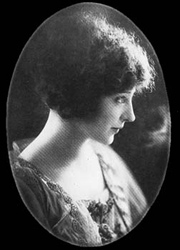
Portrait of Anais Nin (1920)
I made a photograph book for my school project from my photographs and quotes From Martha Graham (1894-1991), Anais Nin (1903-1972) and Stephen Nachmanovitch (1950-present). Now I like to reproduce them and want to know what I shall do. Also, please let me know what are the options to reproduce a photo books for a reasonable price and find a distributer? Yes, you are fine to use all three quotes in conjunction with your photos. As we've discussed in other "quote" related questions, your rights are partially based on fair use, partially based on the fact that copyright doesn't protect short phrases, and partially based on the fact that some quotes are so short as to qualify as being "trivial" or "de minimis" uses.
Reproduction and distribution. We couldn't tell you who to use or your options for making photo books (that's what Google is for) but we know there are lots of companies like shutterfly, lulu, and snapfish that produce those kinds of things.
Making Postcards or Posters? We're not sure what other types of reproduction you have in mind but if you intend to break out an image and quote for purposes of a poster or a postcard, a living person such as Stephen Nachmanovitch (or in some states, the estate of a dead person), may object under right of publicity laws. To successfully make such a claim, he would need to demonstrate that you were exploiting his personna. We think that's a longshot (or as a meteorologist might put it, "less than 10 per cent chance of rain") but we're lawyers and have to consider all possibilities.

Monday, August 20, 2012

Wants to Use Quotes About God

"God the Father" by Pompeo Girolamo Batoni
Dear Rich: Question No. 1 - If one is writing a book on quotations arranged by topic/subject, does the author need to get the permission for the quotations. Question No. 2 - I am writing a non-fiction book about the variety of human thoughts on God. My book will contain a lots of quotation from old and new ages about God. Do I need to get permission to use the quotations from different people.  Question No. 3 - My book has a section on how children think about God and I want to use about six independent short quotes from a book called "Children's Letters to God." I am referencing this book and other books on the same topic and using 4-5 quotes from each book as illustrative examples for my chapter on how children think about God. We sought divine advice on your questions but none has arrived as of time of our publication. So, we're forced to spout some time-honored copyright rules. Your ability to use quotations and short phrases is partially based on fair use, partially based on the fact that copyright doesn't protect short phrases, and partially based on the fact that many quotes are so short as to qualify as being "trivial" or "de minimis" uses. In addition, you don't need to worry about using quotes that were published before 1923 (see this chart for more details). As for using several quotes culled from a book that features quotations from children's letters, the rules may be a little different, depending on how long the quotes are, how many are taken, and whether your use qualifies as a fair use. In addition you need to avoid taking so many that you are stepping on the other author's compilation copyright.

Wednesday, June 6, 2012

How to Find Quotes to Use on Greeting Cards

Dear Rich: I have created a card line from my art. I want to use inspirational quotes. I was able to contact Mary Oliver's staff and they said no. Anais Nin's estate want money to use them. Other than those two I am having a hard time determining. Rumi? Rilke? Movie quotes? Music quotes? Others I haven't heard of before but have lovely things to say. Can you help me sort it out? First, the animated GIF issue. As regular readers may have noticed, we've settled down quite a bit and we seem to be finding our pace. Thanks for your helpful comments and feedback.
Right, you had a question. Attempting to negotiate permission from famous poets or songwriters (or their estates) can be expensive, frustrating and time-consuming. If we may recommend an alternative, legal course to pursue -- find similar writers whose works are in the public domain. One way to find out what potential consumers might like is to use Google's new Knowledge Graph feature. If you type Mary Oliver into Google, for example, a box appears on the right of the listings (see above) showing you what Oliver-searchers are also searching for (surprise - Jalal ad-Din Muhammad 'Rumi' is No. 1). How do you know which writers are in the public domain? This article provides the basics and if you need more help, consult Steve Fishman's helpful book.


Monday, February 6, 2012

Using Quotes and Seeing Ghosts

Dear Rich: I put together a book with quotes from various famous individuals and my own professional photos to encourage inspirational thought. I do not want to produce the book before I can clear the licenses. How does one go about clearing the licensing for that? Some authors, such as Seneca lived around 75 B.C. I guess for these authors I don't need a clearance? You guessed right. There is little chance that Seneca will rise from the grave (Dracula-style) and retain Boies, Schiller to smite all those who have malapropped his quotations. In any case, any reputable law firm would inform him that his texts, all published long before 1923 are in the public domain. As for the rest of your quotes, we think you're fine to use them for reasons we expressed two years ago and which we're too lazy to rewrite (and thereby up our SEO). You may wonder whether you can trust our response because as Seneca says, "advice is worth what you pay for it." But keep in mind he made that remark before the existence of freebies.

Friday, January 27, 2012

Wants to Use Heinz Quote

Dear Rich: There is a very well-known quote by someone named Heinz von Bergen (often found online as "Heinz V. Bergen"), which reads as follows:"Information is the seed for an idea, and only grows when it's watered." I have searched far and wide on the Internet for some source that would clarify if this quote is in the public domain, and/or information on Heinz von Bergen himself. We don't mean to offend, but this quote sure sounds like the kind of thing Steve Carrell might spout on an episode of The Office.  Anyway, does information (which is a collection of facts) actually grow? (It seems to us that information exists and we discover or categorize it.)
Right, you had a question. Regardless of whether you can find any information on the originator of this quote --  and our hard working staff couldn't find much on Heinrich von Bergen, Heinz von Bergen, Heinrich v. Bergen, or Heinz v. Bergen -- you can use any short quote freely. As we've noted in the past (type "short phrase" or "quotes" into the Search Dear Rich Box, right) copyright doesn't protect short phrases.
PS Dept. If you're looking for "idea" quotes, what about this one as an alternative -- "A half-baked idea is okay as long as it's in the oven."

Tuesday, November 29, 2011

Wants to Quote Movie Dialogue in Novel

Dear Rich: I don't see anything in your Getting Permission book on getting permission to quote dialog from films. I assume that the process is similar to getting permission to quote song lyrics, but it would be better if you covered this in detail. I want to quote with attribution some movie dialog in a novel I am writing. Any suggestions? Speaking of film dialogue, we were surprised recently when reading the French classic Pere Goriot to find a line about someone "making him an offer that he cannot refuse." Did Balzac travel to the 20th Century, watch the Godfather, return to the past and copy the movie dialogue for his novel? We guess we'll never know.
Right, you had a question. The rules for using film dialogue in a novel are the same as for all text uses (explained in Chapter 2 of the book). As you're probably aware, there is no fixed amount of words that you can use without permission, although some uses are so minimal as to be considered de minimis (scroll down). The difference with using film dialogue is that it's often difficult to figure who owns the rights and even harder to get permission for the use.
Why is it difficult to get permission for movie dialogue? Generally the studio (or a producer) owns all rights to the movie including the dialogue. But in some cases, screenwriters may retain rights. In other cases, if the movie were based upon a book, the author may retain certain rights. That's the challenge when using one layer from a multi-layered work -- determining who has the right to grant permission. Even if a studio does own the rights to the dialogue, you still have the practical problem of finding the person authorized to grant permission (and convincing that person not to hang up on you).
What's a novelist to do? If you're publishing the book yourself, you're probably less at risk because you won't be indemnifying against infringement. Publishers get uptight about stuff like that and insist on some security in the form of warranties and indemnity. On the other hand, a publisher may be able to assist you with getting rights and permissions from a studio. If you're on your own and you're still concerned about getting chased, consider whether you can make a realistic fair use claim. That is, can you demonstrate that your use of the dialog is transformative -- for example, Woody Allen's use of dialogue from Casablanca in Play It Again, Sam, was transformative (though Allen likely acquired permission for that and the film clips).
Speaking of great movie dialogue ... we're partial to Things Change (Don Ameche's swan song). It's got dialogue -- written by David Mamet and Shel Silverstein -- with some serious staying power.

Wednesday, August 3, 2011

Wants to "Own" Shakespeare Phrase for Merchandise

Dear Rich: I have a plan to use a "theme" idea involving stories that were told to me by friends of mine at a retreat. I would use these stories in a book and title it with a quote from a Shakespeare play that fits the subject matter very well. I recorded and transcribed the stories and prepared the book proposal. I received permissions from the original participants and have developed stories beyond original telling and will use pseudonyms for the participants. My questions: (1) Can I use the Shakespeare phrase as title of book, in logo and brand, on cards, plaques, and entire product line? I searched the trademark database for phrase and there were no results. I grabbed .com domain name with phrase and there were no other domains using the phrase. (2) What do I need to do to "OWN" that phrase so that I can feel free to license it to appropriate product partners, or to enter into strategic partnerships with various companies to create gift packets with book and products, like candy and greeting cards. I also want to take the idea on the road to gather more stories after my website will launch and then once the book is published as the part of the book tour. (3) Do you think that I need a lawyer to guide me through these early stages so that the correct and necessary legal infrastructure is set in place to allow for graceful launch of this commercial universe? If so, do you have any referrals? 
All that glistens is not gold. Your plan is admirable and ambitious but we're always a little wary of attempting to plan the launch of a commercial universe all at once. We think it's usually better to take it step by step and see what works and what doesn't. With that caveat in place, here are the answers to your questions.
Good enough to call your own.  The idea of "owning" a Shakespeare phrase for merchandise is possible but it requires money and diligence. As you're aware, "ownership" of the phrase would require that you acquire trademark rights. (And as with all intellectual property rights, your claim will only have value if you have the money to go after those who infringe your trademark.) For each class of merchandise, you will need to register a trademark claim (between $275 and $325 per class, depending on how you register). So, candy would be in one class, greeting cards another, etc. By the way, if you register the phrase for greeting cards, that would give you the right to use the phrase for a line of cards; it wouldn't guarantee your exclusive right to use the phrase as the card's message. You can get the trademark registrations only by using the mark on the goods in commerce -- that is, you'll need to be selling the goods to get the rights. However, you can reserve the mark by filing an intent-to-use application, provided you have a bona fide intent to use the marks on the goods. Also, you cannot get trademark rights for a single book, but you can get it for a series of books.
What's in a name? As for using Shakespeare quotes for a book title, no problem, though you might want to check this site to avoid any confusion.
Let's kill all the lawyers. As for your last question, the Dear Rich Staff cannot refer you to any attorneys although there are many online sources for locating attorneys (including our employer's legal directory). As for doing the legal work yourself, that's always possible. Publishing the book won't bring up many legal issues and it sounds as if you have the necessary releases. More can be found in our Getting Permission book. As for the licensing deals, those probably will involve a lawyer and we would recommend contacting one once you have a solid offer in hand.