Showing posts with label artwork. Show all posts

Tuesday, September 30, 2014

Can We Use Illustration for Cover of Book?

Dear Rich: I run a non-profit educational website called Simply Charly that explores history's greatest movers and shakers. And we're planning to publish a series of books using many of the illustrations we own on the covers of the books. I was wondering if we'll run into some copyright issues using our own illustrations. You need to look at the paperwork associated with the acquisition of the images. As a general rule, if you: (1) employed the artist who created the covers, (2) hired the artist and had him or her sign a work made for hire agreement, or (3) paid the artist and received an assignment of copyright, than you can use the illustrations for covers --  that is, you own the copyright and are free to use the works as you please. (By the way, no written agreement is needed if the artwork was created by employees.) That said, assignments and work made for hire agreements may have additional requirements that affect your rights. Theses agreements may transfer copyright but may condition the transfer on the payment of fees or royalties for certain uses --- for example, $1,000 will be paid if the illustration is used as a cover.
If you acquired a license ... If you acquired image rights under a license, then you are "renting" the images and would probably need to return to the artist for additional permission to use the artwork on the cover of a book. The license agreement probably explains the limitations.
P.S. Dept. We like your books and covers ... if only we weren't so busy with Words With Friends.

Thursday, December 12, 2013

Wants to Sell Merchandise With Celebrity Images

great dictators cornhole boards from dear rich staff
Dear Rich: I have a question about the right of publicity. I want to start a website where I post artwork of a celebrity every day of the year, with the capacity to sell merchandise of the artwork. Is it legal for me to draw semi-abstract art of living and dead celebrities without their permission (not including their name on the artwork itself), and sell such merchandise? If so, is there an authoritative source I can point to in order for a printing company to allow me to do so? We think you can probably get away with selling the artwork even with the name of the celebrity (for example as limited edition prints) but we think you may run into a problem selling t-shirts, night lights, cornhole boards, coffins and other celeb-branded merchandise. (Celebs like to control branded merch, no matter how kooky.)
Artwork or merchandise? What's the diff?  Right of publicity laws prohibit you from commercially exploiting a person's name, image or persona. On the other hand, the first amendment grants you certain freedoms to express yourself with so-called informational or "communicative" uses -- for example, original artwork, articles, books, or documentaries. Although each state has its own laws and rulings, the trend has been to permit limited edition art prints. For example, in an Ohio case, an artist painted Tiger Woods at the Masters Tournament and later sold more than 5000 prints of the image superimposed with other great golfers. (Here are some details on the artwork). A federal court of appeals ruled that the sale did not violate Tiger's right of publicity. A related ruling regarding paintings of the University of Alabama's football team -- though it dealt more with trademarks than the right of publicity -- also was in favor of the artist. A similar result was reached in a case involving the use of football player Jim Brown's name and image in a sports video game (The court considered the game to be art, though "not Anna Karenina or Citizen Kane.") However when the image use is on merchandise, the cases tend to rule in the favor of celebrities. (The term "right of publicity" was first used in a case involving a ball player's image on baseball cards.)
No copyright infringement. Also, we're assuming that the artwork is not derived from copyrighted photographs (or that your artistic abstractions make the source photo unrecognizable). Otherwise, you may be opening yourself up to another set of problems.


Thursday, February 14, 2013

Can Artist Copyright Art and Text Together?

Dear Rich: I've designed a greeting card line which includes illustrations as well as illustrated/hand lettered text. Illustrated/hand lettered text will also appear on the card's interior. I will soon be submitting my scanned art as a collection to the copyright office. Can this illustrated text be copyrighted with my main artwork? Would it be a problem because, even though they are illustrated words and phrases, they are still words and phrases? Thank you for helping clarify this gray area of copyright protection. Yes, you can copyright a combination of words and text, even if the text by itself is not copyrightable. Even a phrase as unprotectible as "Remember Me," can be registered in connection with an image. The artist cannot stop others from using the phrase by itself, but the artist can stop others from using the same combination of imagery and text.

Thursday, August 30, 2012

Can I Use Watercolor Versions of Photos?

Dear Rich: I am doing a documentary on a school board desegregation lawsuit that began in 1962 and ended in 2010. Three of the attorneys are still practicing and one is a state appellate court judge. I downloaded their pictures with their bio. I then sent the pictures to a watercolor artist who made a portrait of them in an impressionistic style so there are similarities such as direction of the subject's head and direction of eyes and other features and other general similarities such that you could presume that the watercolor portrait came from the downloaded pictures. The websites where I got the pictures (the law firms and courts) are openly available on the Internet and I am going to release my documentary on the Internet completely free of charge. I was planning on having these watercolor portraits in a dedicated frame as I do a voice over about the role each one played in the case. Is this fair use? If the similarities are like those between our watercolor (left) and the unadorned version (right), then it's probably not fair use. Of course we can't say for sure because that may depend on various factors such as: how long the watercolor appears in the film (the less time, the better your outcome), the size within the frame, (smaller is better for fair use purposes) and whether the artist's modifications result in a change in perspective -- that is, a person viewing the watercolor gets a different impression of the subject than they might from seeing the original photograph. There are various cases in which artwork is modified (and a derivative is created) and the results are not considered fair use. (You can read about similar cases here).
What really matters ... It doesn't matter that the photographs are widely available on the Internet or that you are offering your documentary for free. The copyright owner (either the photographer, or the party who commissioned the picture) can still pursue you for infringement. We're not so sure that will happen as the owner may never see your work (and may not care, either). But defending fair use is not something you'll want to do. If you don't want to ask for permission, you should limit the use of the imagery to the shortest screen time possible and (if possible) limit the size so that the image fills only a portion of the screen. That may strengthen your position ... should you need to defend it.

Monday, May 7, 2012

Artist's Rights in Public Mural

Dear Rich: I was hired to do a mural in a San Francisco apartment building. There's no contract and I get a flat fee. I'm being paid by the company that manages the building. Who owns the mural? If you're asking who owns the copyright, we think you own it. If you're asking who owns the mural itself, we think the owner of the building owns it. In other words, you would control the duplication, and distribution of copies of the work and you would have granted an implied license to the building owners to display the work in the apartment house. But wait .... by creating a fine art works you also acquire rights under a federal law, the Visual Artists Rights Act (VARA) and a state law, the California Art Preservation Act (CARA).
VARA. VARA protects an artist's rights in a work of fine art (of less than 200 copies) if it is a painting, drawing, print, or sculpture. The artist acquires the right to prevent the intentional distortion, mutilation, or modification of the work. The rights granted under VARA —known as attribution and integrity—are not transferable. Only the artist can exert these rights. Although copyright protection normally lasts for the life of the author plus 70 years, the rights granted under VARA last only for the life of the artist. That is, once the artist has died, the work can be destroyed under VARA without the destroyer seeking consent from the artist’s estate. If the artwork is created under the terms of a work made for hire agreement, the artist acquires no rights under VARA.
CARA. The California Art Preservation Act provides for civil penalties and injunctive relief for the intentional or grossly negligent destruction or mutilation of a work of fine art, defined in the statute as any original painting, sculpture, or drawing that is of "of recognized quality."Under the California statute (California Civil Code Sections 986-989), for example, an artist is entitled to 5% of the resale of a work of fine art. These rights survive for 20 years after the death of the artist.
CARA + VARA. Both of these laws enable an artist in California to prevent the mutilation or destruction of a commissioned art that becomes a fixture or part of the building. For example, when a building owner painted over a famous L.A. mural without first providing notice as required under California law, the artist sued under the California and federal laws and recovered 1.1 million.
But is it art? At least one court has ruled that in order for VARA to apply, the work at issue must have more than “artistic merit” or “some level of local notoriety”; it must be of “recognized stature” as an artistic work. In that case, the court permitted unauthorized dismantling of a 6,000-pound swan sculpture.

Thursday, March 8, 2012

Can They Do That to My Artwork?

click for our close-up
Dear Rich: For almost a decade I have been doing creative and artistic work for a non-profit organization. (I have been doing this for free because I support the charity’s work and ideals.) My work is later sold to the public and has been, for many years, the largest single fundraising project of the organization. Recently, however, when my current project was almost (but not quite) ready to go out to the printer, someone else in the organization volunteered to error-check and offer creative suggestions about my unfinished work. Then, entirely without my knowledge or permission, she took my project to our organization’s Board of Directors who decided, again without my knowledge or permission, to extensively edit my work and then send it out for printing. From my point of view they “butchered” my work, but the legal question is whether they had the legal right to make unauthorized changes to my work and then to publish it without my permission. Now, yes, they still put my name on it as the author and artist, but I was embarrassed to have my name associated with the finished product after all the changes they made. Let me also point out that in all the years I have done this, no one has ever asked for any changes of any kind to my finished work, so our relationship was such that my work was published exactly as I submitted it. I understood that the basic paradigm of intellectual property rights is that original and creative works belong to their creator. Since I never transferred possession or ownership to the organization, I feel that my work has been stolen. Do I have a case? Wow, your question took us so long to read that we started daydreaming about raccoons. We're not sure why ... maybe it's got something to do with those nocturnal muddy paw prints we've been seeing around during the day. (Click on the little culprit on the right.)
Right, you had a question. Actually, you have two questions: (1) Can they modify your work without your permission, and (2) Who is the copyright owner of the work? The first question is tied to the second because if you owned the copyright, any unauthorized modifications would be considered an infringement (unless excused as a fair use).  As to the second question -- you own copyright unless the work is considered a work made for hire (and we think the Supreme Court addressed your main question).
CCNV v. Reid. In this 1989 case, the Community for Creative Non-Violence ("CCNV"), a nonprofit dedicated to eliminating homelessness, decided to create a float for the Washington D.C. Christmas Pageant. One director conceived of the idea of a statue as an analogy to the nativity scene with a homeless family huddled over a steam grate. The CCNV hired a sculptor named Reid. After compromising on the material to be used, Reid prepared a sketch. The CCNV requested some changes. Reid agreed to create the statue and received a $3,000 advance. The CCNV constructed the steam grate portion of the exhibit. Reid delivered the statue and was paid a final payment of $15,000. After the pageant and a month on display, the CCNV wanted to take the statue to other cities. Reid, who now had possession of the sculpture, objected claiming that the statue was too fragile. Reid wanted to take the statue on a less demanding exhibit tour. Both parties claimed copyright in the work. The Supreme Court held that the sculpture was not a work made for hire because Reid was not an employee, as defined under law.
Proving you're an IC. To determine employee or independent contractor status the Supreme Court stated that the following factors are weighed:
  •  the skill required in the particular occupation; 
  •  whether the employer or the worker supplies the instrumentalities and tools of the trade; 
  •  the location of the work; 
  •  the length of time for which the person is employed; 
  •  whether the hiring party has the right to assign additional work projects to the hired party; 
  •  the extent of the hired party's discretion over when and how long to work; 
  •  the method of payment; 
  •  the hired party's role in hiring and paying assistants; 
  •  whether the work is part of the regular business of the hiring party; 
  •  whether the hiring party is in business; 
  •  the provision of employee benefits; and 
  •  the tax treatment of the hired party. 
Where does this leave you? We have a feeling that you fulfill IC status because you were not commissioned to create the work, apparently you were not paid for the work, and unlike the CCNV case, you conceived of the subject matter of the artwork. That would put the copyright under your ownership. Any unauthorized modifications made subsequently by the nonprofit would be an infringement. The nonprofit may dispute this and argue that you consented to the modifications and permitted the publication of the modified work under your name. These are all matters of factual proof -- for example, the courts would look at the emails exchanged or the documents that were executed.
Joint authorship? In the CCNV case, the CCNV did some supervision of Reid and contributed a portion of the work (the steam grate.)  A lower court later determined that the sculpture was a work of joint authorship -- that is, the parties had the intention that their contributions be merged into inseparable or interdependent parts of a unitary whole. We don't think you will have the same outcome, especially if you conceived of the artwork and prepared the initial work by yourself. However, because you're considering doing battle with the nonprofit, you should consult a copyright attorney in your area to get an opinion from someone who's privy to the work and the facts.

Friday, February 17, 2012

Can we use lyrics within artwork?

Dear Rich: Can I use lyrics in a series of art posters I'm creating? The posters are a collage featuring images of musicians and events from the year that the song was a hit. So, for example, I have images that match a few lines from Marvin Gaye's song, What's Going On, along with a few lines from the lyrics. We're not sure why you bothered asking the Dear Rich Staff. After all, the folks over at Yahoo Answers seem to have already addressed this issue. Oh wait, we see why ... because the Best Yahoo Answer kind of sucks. We're guessing it's the 'Best Answer' because it's the answer that best suits the needs of the person asking the question. Oh well, it will all be over soon!
Right, you had a question. A few months ago we answered a question about using lyrics in a book, and for the most part, the same rules apply when using lyrics in connection with artwork. Limited use of lyrics -- perhaps four or five lines -- may be excused as a fair use. But more extensive quoting of the lyrics requires permission. Of course, if you're just doing a one-of-a-kind artwork, it's unlikely to be an issue (unless you write to the lyricist to share your excitement). But if you're mass producing posters with lyrics and distributing them via the web, you're more likely to trigger a cease and desist letter.


Wednesday, January 4, 2012

Can We Use Cars in CD Cover Art or Movie?

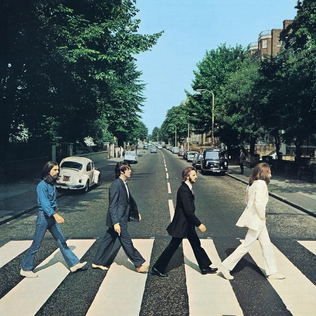
Dear Rich: On music CDs and in the movies I see images of different kinds of cars, and I wonder if the artist has had to pay any royalty to the car manufacturer. For example, the Beatle's Abbey Road album has a white Volkswagen Beetle right behind George Harrison. Does this imply endorsement of Beatle's music by Volkswagen Motor Company? And remember Walt Disney's use of a Volkswagen in the movie, The Love Bug. There are many classic old Fords and Chevys seen in movies all the time. Also, there is a musical group called REO Speedwagon. Using a car's image or trademark may (or may not) trigger problems on a CD cover or in a movie ... it depends on a few factors.
The Abbey Road Cover. The image of a VW on the Abbey Road cover (above) is unlikely to trigger any trademark issues because the usage is primarily editorial -- that is, it's an incidental use and no particular attention is drawn to the car. Of course, at the time, fans saw hidden meanings in the presence of the car (Beetle =  Beatle) but it turns out the car was simply a vehicle owned by someone in a nearby flat. (BTW, the license of the car was stolen soon after the album came out). If consumers were likely to be confused into thinking that Volkswagen (or any other car manufacturer whose vehicle appears on the street) endorsed the Beatles (or vice versa), the car company never saw fit to take action. After all, if the world's most popular band at the time is including your product on a popular album, that's not something you're likely to complain about. (In general, it was a less litigious world back in 1970.) BTW, an editorial use of a trademark -- for example, a picture of a Ford truck in a documentary about trucks -- is not infringing.
Herbie and VW Marks. As for Herbie and the Love Bug movies, Disney removed the name and logos (scroll down) from Herbie in the first movie in the series. Apparently the company was concerned about claims of trademark infringement. But several years later when the sequel appeared (Herbie Rides Again) in 1974, VW sales were down and the VW company insisted that Disney put the trademarks and names back. (The names and marks stayed on Herbie for the subsequent four Love Bug sequels.)
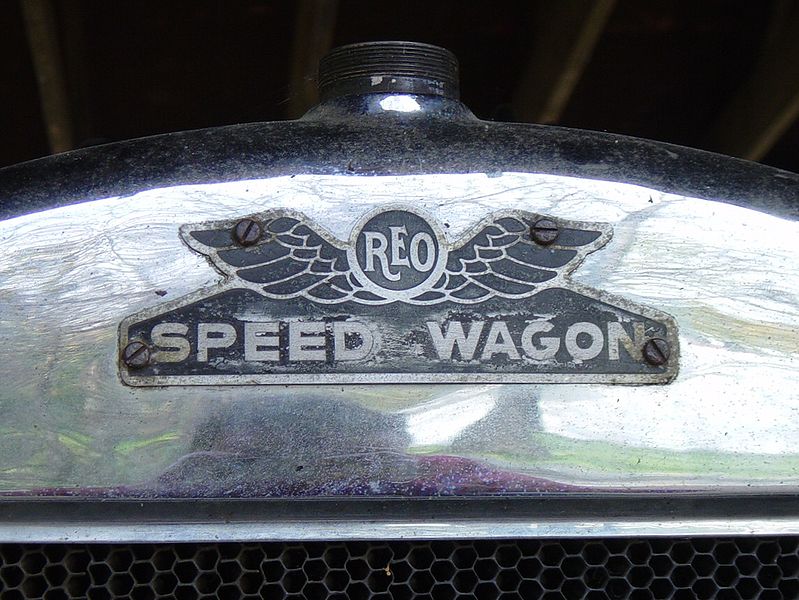
REO Speedwagon. The band, REO Speedwagon, was able to get away with using the name and logo of the REO Speed Wagon company probably because the auto company had likely abandoned any claims to the mark when it ceased production in 1936 (or some time in the later 1940s -- we're not sure) or perhaps when the later owners of the REO Motor Company declared bankruptcy in the early 1970s. An abandoned mark is free for anyone to use, although ceasing production of an automobile is not always a clear sign as to the status of the mark.
As a general rule, you want to avoid making people think the car company is affiliated or endorses your product or service -- for example, calling your band Miata -- or diluting a famous mark by tarnishing its reputation in a commercial context. However, we also note that there's plenty of leeway in these standards as the Caterpillar company found out when they tried unsuccessfully to prevent the use of their villainous tractors in a George of the Jungle movie.

Monday, September 26, 2011

Can Rangoli Be Protected By Copyright?

Dear Rich: I am working on a children's book that explains how to do a type of folk art known as Rangoli. Rangoli is very popular and is made by millions of people all throughout India. The nature of this type of art, which has been practiced for many years, is that there are extreme similarities in the designs that people create, and designs are also passed on so that they are perpetually duplicated. As I research this topic, I find that people claim to have a copyright to designs they post on their websites even though some of them are clearly duplicates with the only difference being a slight change – either in the design or the color scheme, or possibly none at all. So, my questions are: (1) Can people claim a copyright to those designs that were clearly derived from other people’s work? What happens if there are designs in my book that fall in this same category? (2) What happens if, in the creative process, you inadvertently duplicate a design someone made of which you are completely unaware? Is there anything that can protect you in this instance? (3) How can anyone truly claim a copyright to art that has been duplicated by so many people for so many years? How do I protect myself? Rangoli artists often share elements -- for example, lotus flowers and leaves, swans and parrots, and certain human imagery. Many times these elements are copied and re-arranged and other times, an artist may create unique elements by hand, without copying. When elements are original, the copyright can be claimed by the artist. When elements are in the public domain -- taken from much older works -- a derivative copyright can be claimed as to the manner in which the elements are re-arranged and as to new elements that are added. But the less modification that is made to public domain elements, the thinner (and less enforceable) the copyright. In other words, the degree of originality matters when seeking to enforce rights over a traditional Rangoli work.
If you copy. If you reproduce someone's original work, or derivative designs over which people claim copyright, then the owner may pursue you in court. That's provided that the owner can register the work, convince a court that it is protectible, and that your use does not constitute fair use. That may be an uphill battle for some Rangoli creators, and not so difficult for some others.
Inadvertent duplication. As for Question #2, if you inadvertently duplicate a Rangoli work -- that is, you create it independently without copying --  then you would not be liable for copyright infringement.  As long as you can prove you didn't copy and you created something independently, there is no infringement.
Bottom line. We think there are so many centuries of Rangoli art available, and so you should be able to safely include older public domain Ragnoli works. If you want to reproduce a work and you're unsure of whether it's protected, our suggestion is to keep the image as small as possible as the trend lately has been to permit thumbnail usage of artwork as a fair use. Finally, avoid copying and reproducing large groups of Rangoli from websites. That's because some Rangoli collections may qualify as a compilation copyright which protects the choice and order of the collection but not the individual works.

Friday, August 12, 2011

Is Dance Troupe Liable for Photo in Background?

N.Y.C. Garbage collector's strike, 1911- horse-drawn
cart being stoned (with 'scab' driver hiding inside).
Dear Rich: A member of my wife's dance troupe composed a piece about the Memphis sanitation worker's strike in 1968, and used a number of images from the time projected behind the stage during the dance. A magazine published a story on the performance, and included a picture of the dance that showed the projected image of striking sanitation workers. We've heard from someone at the magazine that the photographer's lawyer has contacted them. The image is of a historical event, and the topic of the performance was the impact of the strike. Isn't this fair use? If not, is the dance troupe liable? Yes, the dance troupe would be liable for infringement if a court determined that the photograph was copyrighted, was displayed without authorization, and did not qualify as a fair use. As Dear Rich readers are aware, what makes fair use such a slippery concept is that it can only be proven by going to court and most people can't afford to take the issue that far.
What do the courts say? There are a handful of cases where unauthorized imagery has appeared as the background in theatrical works, including theater, film, and TV. In one of the better known cases, a court of appeals determined that it was not a fair use to post the poster of a “church quilt” in the background of a television series (for a total of 27 seconds). The court was influenced by the prominence of the poster, its thematic importance for the set decoration of a church, and the fact that it was a conventional practice to license such works for use in television programs. (Ringgold v. Black Entertainment Television, Inc., 126 F.3d 70 (2d Cir. 1997).) On the other hand, several copyrighted photographs appeared in the film Seven, prompting the copyright owner of the photographs to sue the producer of the movie. The court held that the photos “appear fleetingly and are obscured, severely out of focus, and virtually unidentifiable.” The court excused the use of the photographs as “de minimis” and didn’t require a fair use analysis. (Sandoval v. New Line Cinema Corp., 147 F.3d 215 (2d Cir. 1998).) Your situation is likely somewhere in between these two cases. We've summarized other fair use cases here (to give you a flavor of how judges rule) and we discuss the four fair use factors, here. We think your case could go either way and will likely be dependent on the duration of the photo's display, whether the display is considered informational and/or for purposes of commentary, and whether the combination of the dance performance and photograph creates a transformative use of the image. This may be one of those cases where an attorney's advice is needed. Assuming you're in Memphis, can you avail yourself of this organization's legal services?

Thursday, May 19, 2011

Do I Need Permission to Publish My Animation?

Dear Rich: I have worked in animation for 30 years (as an animator, visual development artist and storyboard artist) and I decided to put together a compilation book of my own artwork (from games, TV shows, and animated Feature films) to sell. It would be self published, probably in a print run of 500 copies, and I would primarily sell it directly at comic book shows and my own website (and perhaps at some specialty shops). I am wrestling with whether to go ahead and print it, without seeking permissions. But, after much deliberation, I began the request process with a few clients that I have recently been working with and so far so good; I have been getting permission with only one firm "NO" so far. But there’s another issue. I used to work at an animation studio that did everything from commercials to TV shows, games, and even effects for feature films. I did TONS of design work for them, on properties they were trying to develop themselves and for clients coming to them for development. The tricky part is that this particular studio has been out of business since 1996 and so I have no way of knowing who actually owns the rights to some of the artwork. So, here are my questions: (1) Do I need to get permissions at all? (2) What is the worst case scenario for not getting permission? (3) Is it legal to just say that I tried to locate the rights holder and could not? And (4) What happens to the intellectual properties of a company that has been out of business for 15 years? Can we answer your questions in reverse order? For some reason we find that more fun. (And speaking of permission, thanks for letting us use one of your images.)
(4) What happens to the intellectual properties of a company that has been out of business for 15 years? The successor to the business owns it. If there is no successor it becomes an orphaned work and a minor annoyance for those who must get permission. For example, if an author has assured her publisher that she will get permissions for her book, she'll have a problem with an orphaned work, and the publisher may make her take the work out. We don't think you need to worry much about that issue, as we explain below.
(3) Is it legal to just say that I tried to locate the rights holder and could not? It's still infringement but it's not a bad idea to put a statement like that on the copyright page and to disclaim copyright in those works. That doesn't mean you may not have to eventually pay for their use but if you can document your attempts to find the owner, that will go a long way to mediating any damages you might be assessed (in the way outside chance you end up in court).
(2) What is the worst case scenario for not getting permission? The worst case is that you run into one of these types and you can't seem to remove their teeth from your pants leg. They will drag you into court and not let go until you get out your checkbook. In your case, this worst case is not a very likely outcome. You have several factors buffeting your position.
First, you have an excellent fair use argument, similar to the argument raised in this case involving the artist Basil Gogos. Gogos created covers for monster movie magazines and the copyright owner of the monster movie magazines sued over the use of the covers in a Gogos biography. A court determined that the use was transformative and permitted it as a fair use. One of the factors in the artist's favor  was that the magazines were no longer in print. Another was that the artwork was part of a biography/retrospective of the artist. Another reason that you may not have to worry is the limited publication. It would be difficult for a copyright owner to claim much in the way of damages if only 500 copies were distributed (and money is the main motivator for lawsuits).
1) Do I need to get permissions at all? See above. By the way, did you know it's easy, fast and kind of fun to search copyright office records? We're working on a video to explain the process but until then, check out the Copyright Office search engine.